



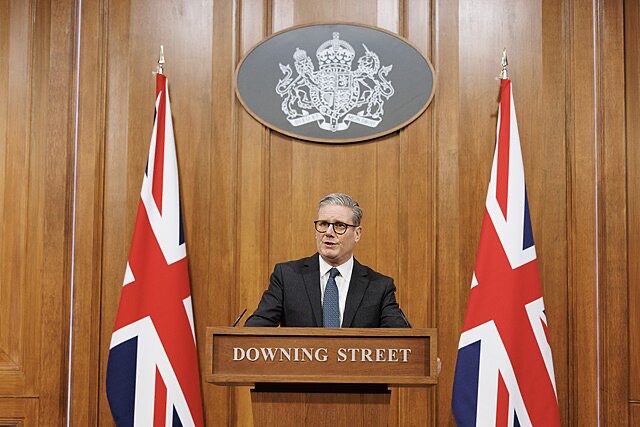
Foreign Secretary Yvette Cooper will convene international leaders from 35 nations on Wednesday to coordinate diplomatic efforts aimed at reopening the Strait of Hormuz to commercial shipping, the Prime Minister confirmed on Tuesday morning.
The emergency summit will “assess all viable diplomatic and political measures” to break Iran’s stranglehold on the critical waterway through which one-fifth of global oil supplies transit, with Tehran’s blockade driving UK diesel prices 29 per cent higher to 184.2p per litre since hostilities commenced on 28 February.
France, Germany, the Netherlands, Italy, Japan, Australia, South Korea, Canada and the United Arab Emirates will participate in discussions focused on developing a two-phase approach to restoring maritime access, according to government statements.
British officials confirmed initial efforts would concentrate on mine-hunting operations to clear explosive devices from shipping lanes, followed by a secondary phase establishing protective escorts for tankers navigating the area. Working-level meetings will continue beyond Wednesday’s summit to finalise operational details.
Military planners will examine how to render the strait “accessible and safe” once fighting concludes, though Royal Navy warships are not expected to actively police the reopened waterway.
The diplomatic push comes hours after President Donald Trump told Britain and other allies to “go get your own oil” in protest at their refusal to join American-Israeli bombing campaigns against Iran. However, the President reversed course this morning via Truth Social, declaring strait reopening constitutes his primary condition for ceasing military operations.
Petrol prices have climbed 16 per cent to 153.7p per litre whilst households brace for substantial energy bill increases, prompting the AA to advise motorists reduce speeds by 10 per cent to improve fuel efficiency amid mounting costs.
Chancellor Rachel Reeves resisted pressure to offset price surges through fiscal intervention, warning such measures would fuel inflation and interest rate rises. “If I promised that I could alleviate every price increase for every person, I wouldn’t be telling the truth, because all that you will be doing if you do that is pushing up inflation, interest rates and taxes in the future,” she told BBC Breakfast.
Fuel duty remains frozen until September with the scheduled increase under review given current prices, though Australia has already implemented relief measures for drivers.
RAF Regiment gunners intercepted over ten Iranian drones overnight whilst UK Typhoon and F-35 jets alongside Wildcat helicopters maintained defensive missions across Cyprus, Jordan, Bahrain, Qatar and the United Arab Emirates.
The summit represents Britain’s most significant diplomatic initiative since declining to participate in offensive American operations, positioning London as coordinator for international efforts to resolve the crisis’s economic fallout whilst maintaining distance from military strikes.
