



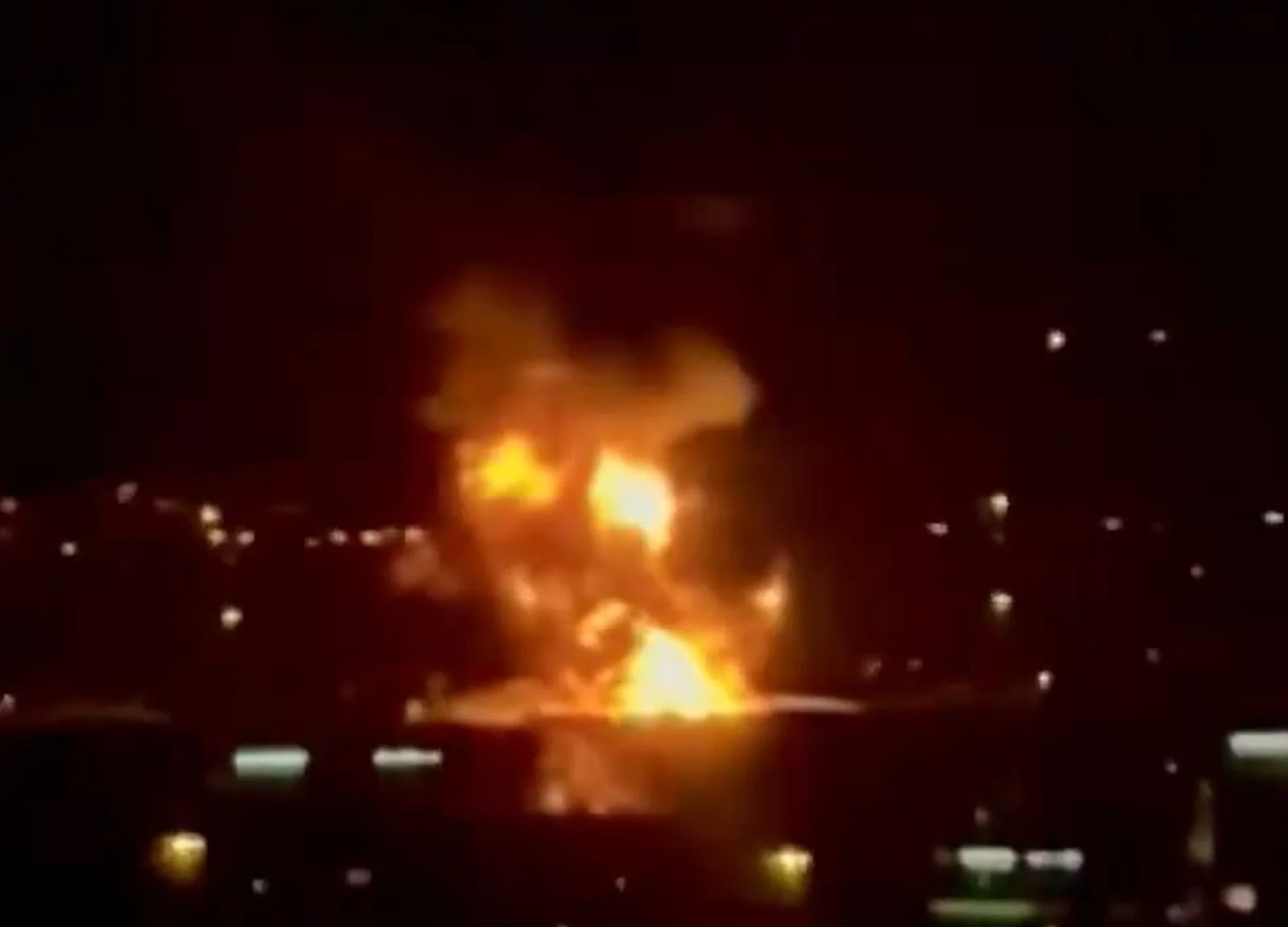
Travellers have been issued an urgent warning to stay away from Dubai International Airport after all flights were suspended in the early hours of Monday morning following an Iranian drone strike that set a fuel tank ablaze near the world’s second-busiest aviation hub.
The airport closed as a precautionary measure at just before 5.30am local time, with flames and smoke visible against the night sky. A statement confirmed the closure was enacted “to ensure the safety of all passengers and staff,” while Dubai Civil Defence teams said the situation remained “under control, with no spread of the fire.” No injuries were reported.
Emirates, the UAE’s national carrier, issued a direct warning to passengers. “Please do not go to the airport,” the airline said, adding that the safety of passengers and crew was its “highest priority and will not be compromised.”
The scale of the disruption was immediately apparent. Flight tracking data from FlightRadar24 showed that by 7.30am local time — ordinarily one of the airport’s busiest periods — just a single aircraft was airborne over Dubai, operating out of the smaller Sharjah International Airport rather than the shuttered DXB. A number of international flights were diverted to Al Maktoum Airport in the southwest of the city, including an Emirates Airbus A380 that had travelled from Tokyo only to find its destination closed. That aircraft had been among several international flights held in a holding pattern off the coast of Oman before eventually being redirected.
The attack on Dubai International is the latest in a sustained and relentless campaign against Gulf state targets since the outbreak of war on 28 February. The UAE alone has faced more than 2,000 missile and drone strikes during that period, directed at a broad range of targets including American diplomatic missions, military installations, oil infrastructure, ports, hotels and residential areas. Just days before Monday’s strike, at least four people were injured when two drones came down near Dubai International.
Monday morning brought further incidents, with the Emirati Ministry of Defence confirming at 8.54am that it was actively dealing with additional “missile attacks and incoming drones originating from Iran.”
The Foreign Office has advised against all but essential travel to the UAE since hostilities began. Defence Secretary John Healey confirmed earlier this month that more than 37,000 British nationals had been evacuated from the wider Middle East region.
Any prospect of a swift resolution appears uncertain. Speaking aboard Air Force One on Sunday night, President Donald Trump acknowledged that talks with Iran were ongoing but suggested a deal was not imminent. “I don’t think they’re ready,” he said, before adding that identifying who to negotiate with had been complicated by the fact that “most of their leadership has been killed.”
The status of Dubai Airport and the timeline for resuming normal operations had not been confirmed at the time of publication.
