



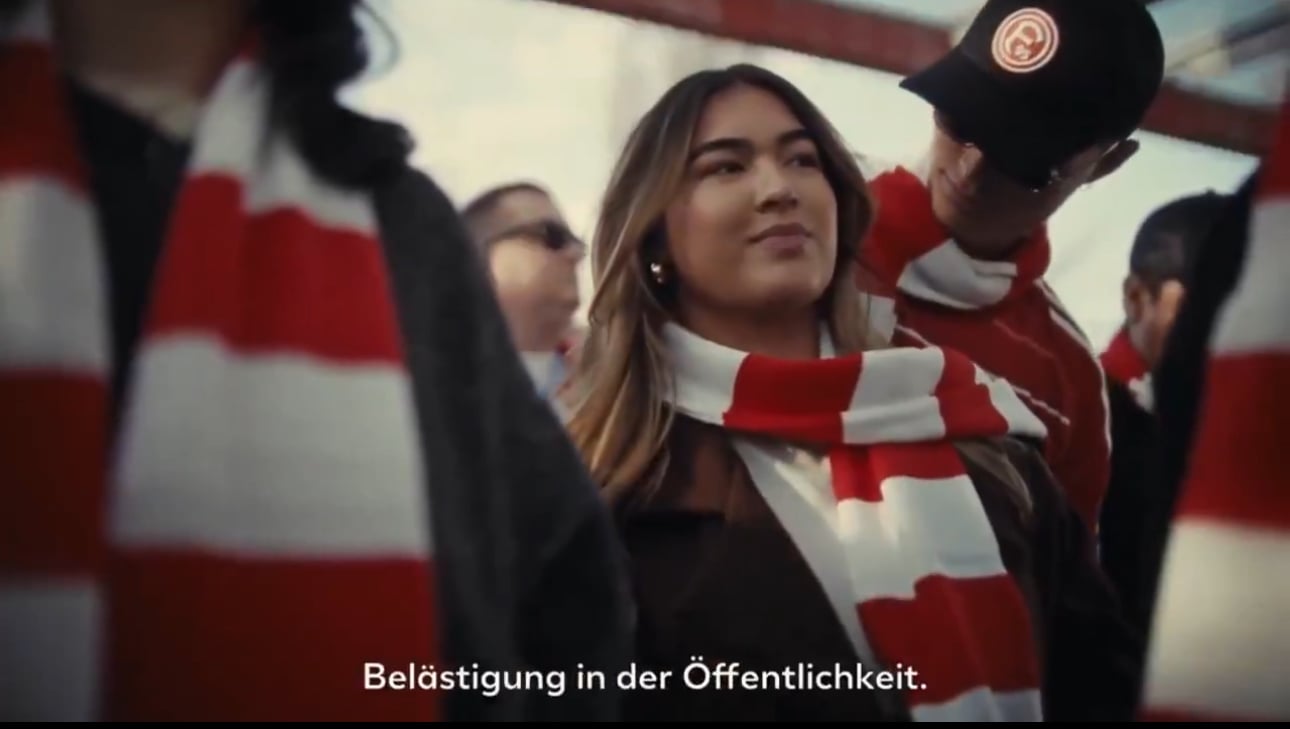
A German television advertisement produced by L’Oréal Paris depicting White men as perpetrators of street sexual harassment has drawn criticism online after official German crime statistics consistently show non-German nationals are significantly overrepresented as suspects in sexual offence cases.
The campaign, part of L’Oréal Paris’s global Stand Up Against Street Harassment initiative run in partnership with anti-harassment NGO Right To Be, has been integrated into Germany’s long-running soap opera Gute Zeiten, schlechte Zeiten on RTL. The campaign promotes bystander intervention techniques and carries messaging including the slogan “Your lipstick is not to blame.” Critics on X have pointed out that the perpetrators depicted in the German version of the campaign appear to be White German men — a casting choice at odds, they argue, with what Germany’s own official police records show about who commits such offences.
Germany’s Federal Criminal Police Office, the BKA, publishes annual Polizeiliche Kriminalstatistik data tracking criminal suspects by nationality. Non-German nationals make up approximately 13 to 15 per cent of Germany’s population but account for between 35 and 41 per cent of criminal suspects overall in recent years, with the disproportion more pronounced in rape, sexual assault and public sexual harassment categories. In 2025 figures for rape and sexual coercion cases, non-German suspects represented a substantially higher share than their population proportion would suggest. BKA data also shows asylum seekers and certain nationality groups to be particularly overrepresented in sexual offence categories, a pattern that has persisted since at least 2015.
Germany’s absolute majority of criminal suspects in sexual cases are still German nationals, given population size. But the per capita suspect rate for non-Germans is estimated at two to four times higher when adjusted for age and sex demographics. Critics acknowledge that factors including age distribution — young single males are overrepresented in violent and sexual crime statistics globally — and urban concentration complicate direct comparisons, and that second-generation migrants with German citizenship are classified as German in the statistics.
L’Oréal and the campaign’s backers have not commented directly on the criticism. Awareness campaigns of this nature typically use locally recognisable actors and focus on broad cultural messaging rather than perpetrator demographics. However, critics argue that campaigns specifically designed to change social behaviour around public sexual harassment are less effective, not more, when they ignore the statistical patterns that define the problem they claim to address.
The L’Oréal advertisement is the latest flashpoint in an ongoing debate in Germany and across Europe about whether mainstream media and corporate campaigns are accurately representing who commits certain categories of crime — or whether commercial and ideological pressures are producing a systematically misleading picture of risk.
