



The Taliban has formally recognised child marriages under a sweeping new family law regulation, establishing specific legal provisions governing marriages involving minors and codifying rules that effectively render a girl’s silence as consent to marriage — the latest in a series of measures that have systematically stripped Afghan women and girls of their most basic rights.
The 31-page regulation, titled Principles of Separation Between Spouses, outlines the conditions under which marriages can be contracted and dissolved under Taliban-interpreted Islamic law. According to Article 5, marriages arranged for children by relatives other than their father or grandfather are considered legally valid provided the spouse is deemed socially compatible and the dowry appropriate. A child may seek annulment upon reaching puberty, but only through a formal court order, according to independent Afghan outlet Amu TV.
Among the most striking provisions is Article 7, which establishes an explicit double standard for marriage consent. Under the regulation, silence from a “virgin girl” is interpreted as her consent to marriage, while the same silence from a male or a previously married woman is not. In a country where women and girls face severe punishment for speaking out, critics warn the provision effectively removes any meaningful right of refusal.
The regulation also grants Taliban judges sweeping powers to intervene in marital disputes — including cases involving apostasy, prolonged absence of a husband and accusations of adultery. Judges may use imprisonment and physical punishment to enforce compliance with their rulings.
The new rules sit alongside a penal code introduced earlier this year that drew widespread international condemnation. Under that code, husbands are permitted to beat their wives provided no serious bodily harm results. Article 32 specifies that only if a beating with a stick produces severe injury — a wound or bodily bruising — and the woman can prove it before a judge will the husband face any sanction, with a maximum of 15 days in prison. The practical barriers to meeting that threshold are significant: a woman must remain fully covered while presenting her injuries, and must be accompanied by a male chaperone — typically the husband himself.
Article 34 adds a further layer of confinement, stating that a woman who repeatedly goes to her father’s house or that of relatives without her husband’s permission and does not return on his request faces three months in prison. Her relatives may also face punishment.
The regulations do not prohibit or condemn sexual or psychological violence against women, nor do they provide any mechanism for women to seek refuge from domestic violence.
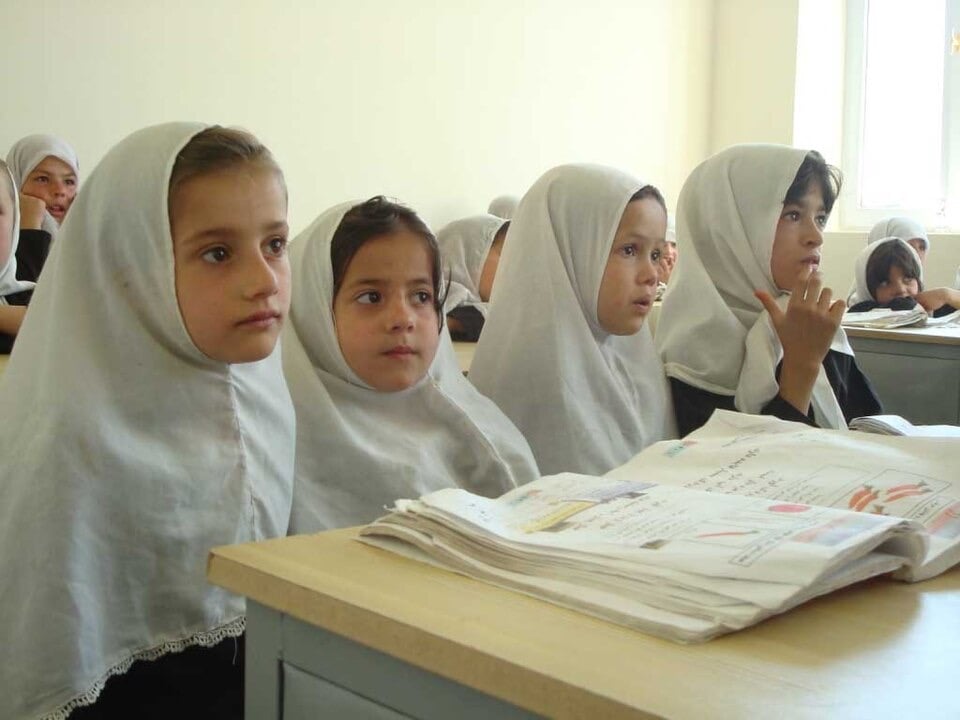
Since returning to power in August 2021, the Taliban have banned girls from attending school beyond sixth grade, restricted women’s employment and movement, and introduced a penal code that legal experts say places women on the same legal footing as enslaved people. The reach of Taliban social control has extended even to barbers, with officials now detaining those who trim men’s beards too short following a January decree making it obligatory to grow beards longer than a fist.
