



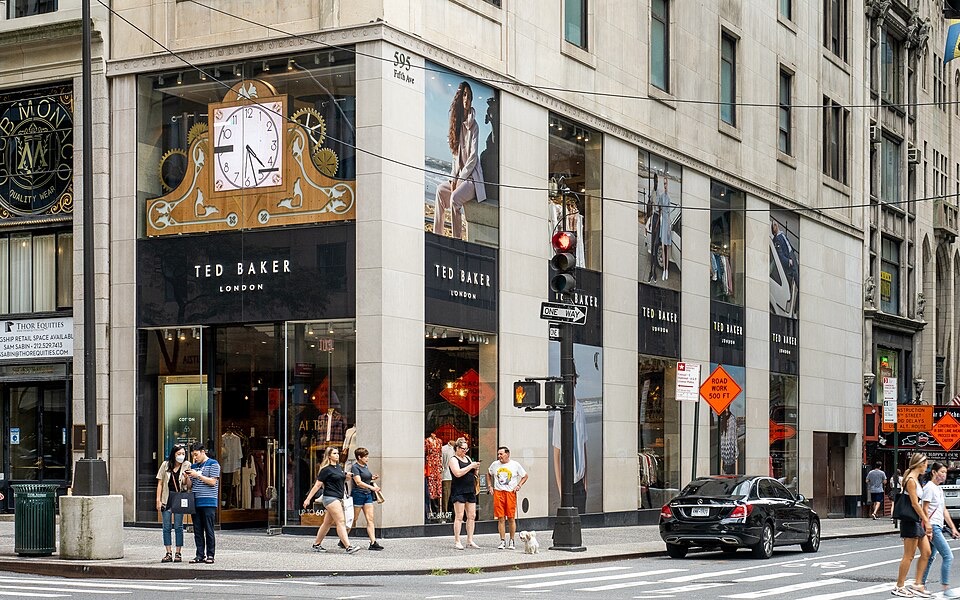
Ted Baker has made its return to the British high street, two years after the collapse that shuttered every one of its physical stores, with the opening of a new boutique inside Selfridges at Manchester’s Trafford Centre.
The brand, which was founded in Glasgow in 1988 and grew to operate more than 500 stores worldwide at the height of its success, vanished from the high street by August 2024 after the firm behind it, No Ordinary Designer Label, appointed administrators. The closure marked a dramatic fall for a label that had spent nearly four decades establishing itself as one of Britain’s most recognisable fashion names, starting out as a menswear shirt specialist before expanding into womenswear, accessories, eyewear and lifestyle products.
The new shop-in-shop, which opened on 6 May, has been designed to feel less like a conventional retail space and more like a walk-in wardrobe. Described by the brand as a “physical expression” of its latest summer campaign, dubbed Bringing the Light, the boutique blends hand-painted florals and 90s-inspired designs with what Ted Baker calls “the energy of a Manchester evening.” The space mixes light, shadow and texture to create an immersive shopping experience, offering a curated edit of ready-to-wear summer occasion pieces alongside lifestyle items and accessories.
The opening has been supported by a prominent in-store presence throughout Selfridges, including high-impact billboard displays and digital screens that play on the brand’s characteristically playful British humour, alongside references to its iconic emblem — the humble pigeon.
Ted Baker described the launch as “a key moment in the brand’s continued expansion across premium retail destinations,” signalling ambitions that stretch well beyond a single boutique.
The road to this point has been turbulent. The brand had already been under significant financial strain for years before its final collapse, cutting hundreds of jobs in 2020 and raising £100 million to shore up its finances. Its ultimate demise came after owner Authentic Brands Group fell through on a deal with a Dutch operating partner, forcing the closure of all physical stores. The brand continued to trade online through 2024, but its high street presence had gone entirely — until now.
