



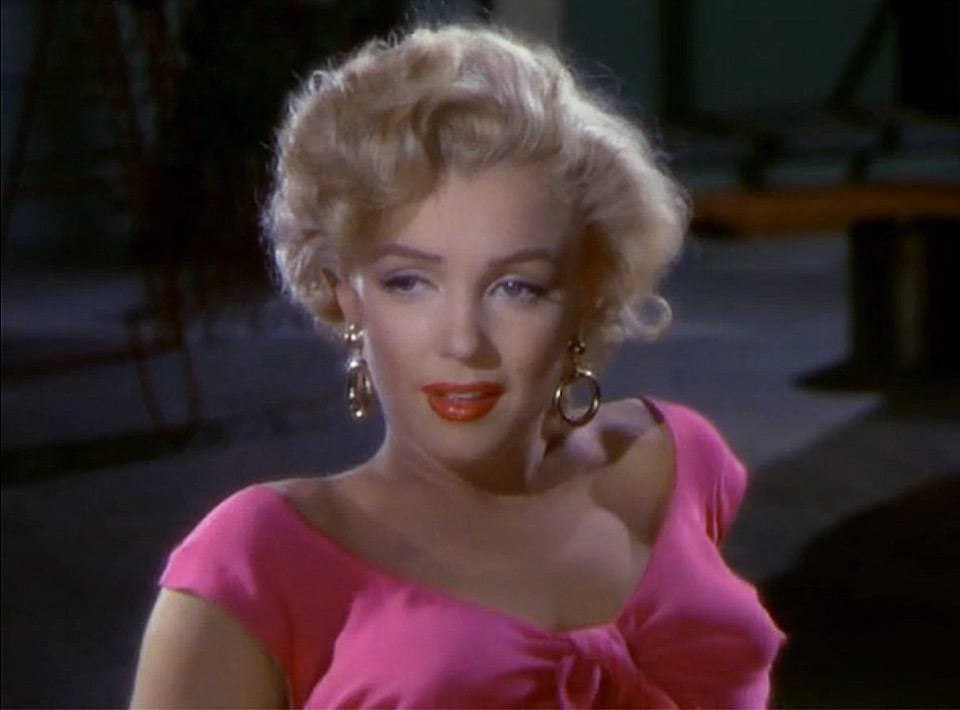
A full recording of Marilyn Monroe’s final interview, conducted just weeks before her death in the summer of 1962 and largely unheard for more than six decades, reveals an actress who was upbeat, making plans for the future and looking forward to a new chapter in her career — not a woman on the verge of suicide.
The interview, conducted over four hours by Richard Meryman, Life Magazine’s associate editor, was played in full to The Times and will be published in book form later this month to mark what would have been Monroe’s 100th birthday. Only a small portion of the conversation was ever published in Life Magazine at the time, and the original recordings, along with more than 400 photographs taken by photojournalist Allan Grant inside Monroe’s home — the only images ever captured of her there — remained unseen for decades.
What emerges from the full recording is a portrait sharply at odds with the narrative of a depressed and declining star. Monroe spoke enthusiastically about decorating her Los Angeles home, saving her first swim in the pool “for a friendly occasion,” and feeling liberated by being single. She spoke of wanting to be cast in more mature, complex roles — drawing a comparison to Sophia Loren, who she admired for winning over critics as she aged. “When I’m older, I’ll play all kinds of parts,” she told Meryman. “How come they haven’t put more care into casting other parts? Not just, you know, ‘the spring lovers’.”
She also spoke with striking composure about the prospect of one day no longer being famous. “Fame is fickle,” she said. “It’s nothing I’m counting on. I’ll find a way to exist; I have since I was five years old.”
Meryman himself was adamant that nothing in the recording suggested a woman in crisis. “There was none of the fearful moping and preening in front of mirrors I had heard so much about,” he said. “She was entirely cheerful and utterly disorganised.” When asked in 1992 about her death, he said he was “dumbfounded.” “I never saw any sign that this was a woman giving her last interview, a woman on the verge of suicide. I’ve listened to those tapes a dozen times to see if I somehow missed some clues. I still don’t know the answer.”
The interview was recorded at a moment when Monroe’s career was in the early stages of recovery. She had endured a difficult run of critical and personal setbacks — among them the failure of The Misfits and a series of health problems involving addiction and depression. But by the summer of 1962, things were shifting. Fox had renewed her contract for Something’s Got to Give after firing her for missing filming due to sinusitis. She had been named “World Film Favourite” at the Golden Globe Awards. And in May that year, she had performed her celebrated rendition of Happy Birthday to President John F Kennedy at Madison Square Garden.
The Life interview was part of a deliberate effort to rehabilitate her image, and Monroe was acutely aware of the narrative around her. “They’ve slandered me in the press, saying that I’m depressed and in some kind of a slump and hidden away,” she said. “So then I take a little extra time with my hair, with a little extra flip, a little extra eyeshadow. A little more glitter. I don’t know. It’s just my way of saying, ‘Ha!'”
Monroe was found dead at her home on 4 August 1962, with empty medicine bottles beside her bed. The concentration of barbiturates in her system was several times the lethal limit, leading authorities to rule out an accidental overdose and record a verdict of probable suicide. Theories about foul play persisted for years, prompting Los Angeles county district attorney John Van de Kamp to open a threshold investigation in 1982. No evidence of foul play was found.
The complete transcript, described by journalist Sam Shaw as Monroe’s “most honest” interview, sees her speak candidly about her childhood, the studio system, fame, celebrity and what it meant to be a sex symbol — at times joyous, silly, serious, philosophical and pensive.
Marilyn: The Lost Photographs, the Last Interview by Marilyn Monroe, Allan Grant and Richard Meryman is published on 28 May.
