



A well-intentioned asylum pathway designed to protect vulnerable partners fleeing violent relationships has been systematically corrupted by immigration consultants charging £900 to fabricate domestic abuse allegations—a fraud that transforms unsuspecting British spouses into accused criminals whilst fast-tracking residency for migrants whose temporary visas face expiration.
The exploitation centres on Home Office regulations permitting domestic abuse victims living in the UK on partner visas to apply for indefinite leave to remain after a mere three-month waiting period—a dramatic acceleration of the standard five-year timeline that normally applies to migrants establishing permanent residency through work and residence. The humanitarian provision, intended to prevent victims from remaining trapped in abusive relationships through visa dependency, has been weaponised by advisers who coach clients on fabricating psychological abuse claims that circumvent immigration controls whilst leaving innocent partners vulnerable to police investigation and arrest.
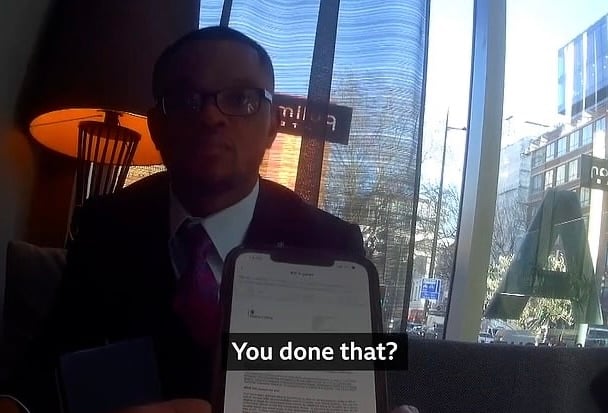
BBC journalists operating undercover documented Eli Ciswaka of Corporate Immigration UK offering precisely this service, explaining that he would construct a narrative about the reporter’s fictitious wife “mentally abusing” him through “psychological domestic abuse” characterised as “when someone is playing with your mind.” The lawyer assured his prospective client that the accused partner “would not be affected and would not be questioned by police as ‘there is no crime'”—a guarantee that subsequent reporting revealed as demonstrably false given documented cases where fabricated allegations triggered criminal investigations against wholly innocent individuals.
The human cost of such schemes emerges starkly through testimony from Aisha—not her real name—whose Pakistani husband whom she met via Muslim dating app during the Covid-19 pandemic became “fully controlling, very abusive” after marriage whilst demanding she provide him with a baby to strengthen his immigration status. After enduring rape and deciding to leave the relationship, Aisha reported her partner’s abuse to police and the Home Office, which duly warned him that his visa would expire without spousal support.
His response proved devastatingly predictable: fabricating counter-allegations of domestic abuse that resulted in Aisha’s January 2023 arrest, forcing her eight hours away from the infant she was breastfeeding whilst leaving her suicidal upon return home. “I’ve suffered four years of hell because of the Home Office,” she stated, accusing officials of “allowing this to happen” through inadequate safeguards against precisely the fraudulent claims that immigration advisers now openly market.
What Freedom of Information Data Reveals About Exploitation Scale
Official statistics obtained through transparency requests show 5,596 migrants applied for indefinite leave to remain as domestic abuse victims between September 2024 and 2025—figures demonstrating substantial utilisation of the pathway though unable to distinguish genuine victims from fraudulent claimants whose fabricated allegations the system currently lacks mechanisms to identify systematically.
Particularly striking is the gender breakdown: 1,424 applications originated from men, representing 66 percent increase compared with the equivalent period two years earlier. Whilst male domestic abuse victims certainly exist and deserve protection comparable to female counterparts, the dramatic surge in male applications coinciding with documented evidence of organised fraud schemes suggests substantial portions of the increase stem from coached claims rather than organic rise in genuine male victims seeking refuge.
Jabran Hussain, a Bradford-based criminal lawyer, confirmed that some of his clients’ lives had been “turned upside down” following false accusations from partners exploiting the immigration loophole. “This route was well-intended and it was there to protect some of the most vulnerable in society—victims of domestic violence,” he observed. “But I think there’s certain people out there that see it OK to abuse that for their own gain or to get settlement here fast-track.”
The observation captures the fundamental tension: abandoning or substantially restricting the domestic abuse pathway would harm genuine victims whose circumstances the regulation was designed to address, yet maintaining current provisions without enhanced fraud detection enables systematic exploitation that simultaneously corrupts immigration controls whilst weaponising domestic abuse allegations against innocent partners who face investigation, arrest and reputational damage despite having committed no offence.
Why This Fraud Fits Pattern of Immigration System Exploitation
The domestic abuse scheme represents merely one vector within broader ecosystem of immigration fraud that the same BBC investigation exposed through separate reporting on advisers charging up to £7,000 to coach migrants into posing as gay to claim asylum based on persecution risks they would supposedly face if deported to Pakistan or Bangladesh where homosexual acts remain illegal.
These consultants provide clients with fabricated cover stories alongside instructions for falsifying evidence including supporting letters, photographs from LGBT nightclubs and medical reports—manufactured documentation designed to persuade asylum adjudicators that applicants genuinely face deadly persecution rather than merely seeking to circumvent visa expiration through fraudulent sexual orientation claims.
The sexual orientation asylum pathway has experienced dramatic growth, with claims reaching 2,133 in 2023—Pakistanis accounting for 578, Bangladeshis for 175, and Nigerians for 103. Whether this surge reflects genuine increase in persecuted LGBT individuals seeking British refuge or systematic fraud enabled by coaching services remains impossible to determine given the inherent verification challenges surrounding sexual orientation claims that rely heavily on applicant testimony rather than objective documentation.
Overall asylum applications topped 100,000 in 2025, with 35 percent originating from individuals whose student, work or tourist visas had expired—a proportion far exceeding small boat arrivals that dominate political rhetoric about migration control. The statistic suggests that substantial portions of asylum claims represent immigration status preservation attempts by individuals already present in Britain whose legal basis for residence has lapsed, rather than refugees fleeing persecution who arrived specifically seeking protection.
Earlier revelations exposed one Cameroonian man, Marius Kamna, who secured asylum after claiming gay identity despite possessing secret wife and child—a deception the asylum panel adjudicating his case never learned about because the heterosexual marriage in Cameroon remained undisclosed. When confronted, Kamna insisted his marriage represented the deception rather than his asylum claim, stating “I had so many secrets, I was persecuted”—a formulation attempting to reframe deliberate fraud as protective concealment necessitated by genuine persecution.
Separate Mail investigations have documented brazen Facebook fixers selling UK visas to illegal migrants for as little as £12,000 through sham jobs, forged certificates and contrived payroll records designed to dupe authorities into accepting applications for care home, warehouse and fast food positions that recipients often never actually work upon arrival.
The Government Response and Enforcement Challenges Ahead
Safeguarding Minister Jess Phillips condemned the domestic abuse pathway exploitation as “utterly shameful,” declaring that “the unacceptable abuse of this route, which protects genuine victims from the devastation of domestic abuse” demonstrated deplorable tactics she had “personally seen” inflict severe impact.
“Let me be clear: try to defraud the British people to remain in the UK and your application will be refused, and you will find yourself on a one-way flight out of Britain,” Phillips stated, promising that “sham lawyers facilitating this advice abuse will be put behind bars and their dirty money seized will be reinvested to shut down the crime they once bankrolled.”
The robust rhetoric confronts enforcement reality that prosecuting immigration fraud requires evidence standards difficult to meet when fabricated abuse claims involve no physical violence or objective documentation, relying instead on psychological abuse allegations that Home Office adjudicators must assess through applicant testimony and circumstantial factors. Distinguishing genuine psychological abuse—which certainly occurs and merits protection—from coached fabrications proves extraordinarily challenging without investigative resources that current caseload volumes render impractical to deploy systematically.
Ciswaka, when contacted by the BBC, denied being willing to fabricate domestic abuse stories—a denial contradicted by the undercover footage yet illustrating how advisers offering such services can retreat into claims of misunderstanding or assert they were merely explaining hypothetical scenarios rather than offering actual fraud facilitation when confronted with evidence.
The pattern suggests that absent substantial enforcement actions resulting in actual prosecutions and imprisonments that deter both fraudulent applicants and the advisers coaching them, ministerial warnings will prove insufficient to eliminate schemes whose financial incentives—£900 fees for advisers, permanent residency for clients—substantially exceed deterrent effects of threats rarely executed.
For genuine domestic abuse victims navigating the pathway whilst knowing their claims face heightened scepticism due to systematic fraud by coached applicants, the corruption imposes additional trauma atop the abuse they fled. For innocent partners falsely accused to facilitate immigration fraud, the experience of arrest and investigation whilst separated from breastfeeding infants or subjected to reputation-destroying allegations represents profound injustice that no subsequent exoneration can fully remedy.
The domestic abuse pathway’s corruption exemplifies the broader challenge confronting immigration systems: humanitarian provisions designed to protect vulnerable populations become exploitation vectors when verification mechanisms prove inadequate whilst criminal networks identify and market loopholes that legitimate applicants would never discover independently. Whether enforcement can restore integrity without eliminating protections that genuine victims require remains the unresolved question that ministerial rhetoric cannot answer through promises alone.
