



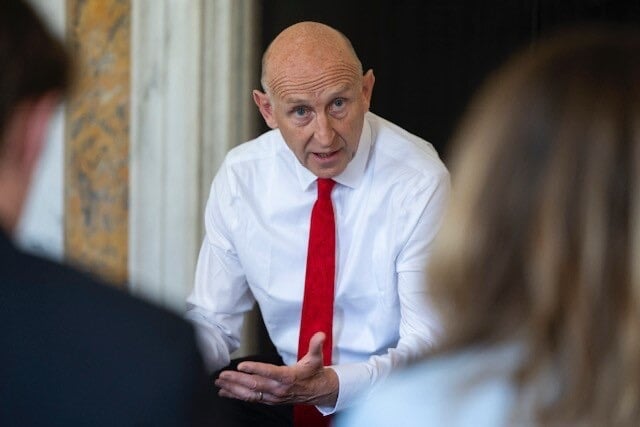
Britain is deploying sophisticated air defence capabilities across multiple Gulf nations to bolster regional protection against Iranian aerial attacks, Defence Secretary John Healey has confirmed during a visit to the Middle East.
Advanced Sky Sabre missile systems alongside Royal Artillery personnel will arrive in Saudi Arabia this week for integration into the kingdom’s defensive network, the Ministry of Defence announced, forming part of an enhanced British military presence across the region.
Mr Healey outlined the scope of reinforcements during his Gulf tour, detailing how four partner nations will receive upgraded defensive capabilities. The deployments include extending UK Typhoon fighter jet operations in Qatar whilst Bahrain and Kuwait have received additional air defence teams and equipment.
The Lightweight Multirole Launcher has already been positioned in Bahrain, whilst Kuwait now hosts Rapid Sentry—a ground-based short-range missile launching weapon—complemented by the RAF’s Orcus counter-drone system designed to provide early detection of Iranian Shahed suicide drones.
Mr Healey characterised the reinforcements as providing “Britain’s best” to safeguard Gulf partners, emphasising the defensive nature of operations amidst escalating regional tensions.
Six nations including Cyprus and Jordan have benefited from regular RAF defensive missions throughout the conflict, with British forces conducting protective sorties as Iranian aerial threats have intensified against American and allied positions.
The Sky Sabre deployment represents one of Britain’s most advanced air defence platforms, requiring specialised Royal Artillery battery operators and battle space managers to coordinate with host nation defensive networks. Integration with Saudi Arabian systems is scheduled to commence immediately upon arrival this week.
Britain’s expanding regional footprint contrasts sharply with its refusal to participate in offensive US operations against Iranian territory, a position that has generated tension with Washington. Prime Minister Sir Keir Starmer has maintained London will provide only defensive assistance to allies whilst declining to join strikes against Iran itself.
The deployments arrive as fuel and energy shortages threaten British households, with the final confirmed jet fuel shipment from the Middle East expected to dock this week. President Donald Trump has publicly criticised Britain’s limited engagement, demanding London independently secure energy supplies or purchase American petroleum.
Mr Healey’s Gulf visit underscores efforts to strengthen bilateral security relationships with regional partners independently of the broader US-led campaign, positioning Britain as a defensive guarantor rather than offensive participant in the escalating confrontation with Tehran.
