



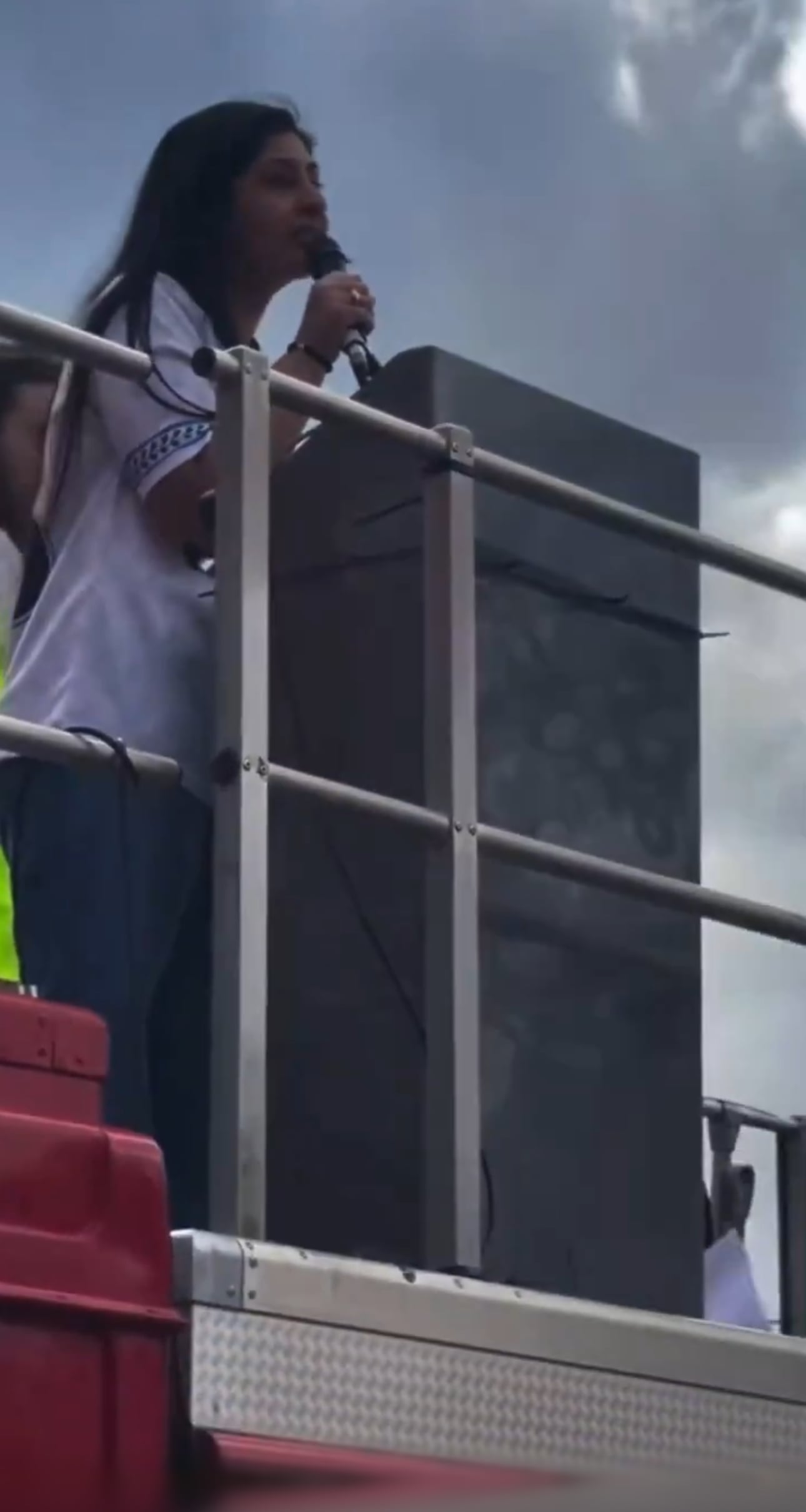
Independent MP Zarah Sultana is facing demands for a police investigation after declaring “this country belongs to us” and vowing to “fight them in the streets” during a London anti-far-right demonstration, as accusations of policing double standards reach a flashpoint.
The Muslim parliamentarian, who formerly represented Labour before aligning with left-wing initiatives including the Together Alliance, addressed what organisers claimed was a 500,000-strong crowd on 28 March assembled to oppose groups characterised as far-right.
“This country belongs to us… and where necessary we fight them in the streets,” Ms Sultana reportedly told demonstrators. Her remarks prompted the crowd to chant “Whose streets? Our streets!”—a standard protest slogan employed across various political movements.
The full statement, according to reports, was: “We will defeat them at the ballot box but when necessary we fight in their streets as well.”
Critics have accused the MP of inciting violence, though legal experts note UK incitement laws require evidence of intent to provoke immediate unlawful disorder rather than metaphorical political calls to action. Similar phrasing has appeared in Ms Sultana’s previous speeches challenging what she terms fascism through both electoral and street-level organising.
The Public Order Act 1986 covers threatening or abusive behaviour likely to cause harassment or provoke violence, whilst the Serious Crime Act 2007 addresses encouraging specific criminal acts. However, successful prosecutions based purely on ambiguous rhetoric without clear calls to violence or resulting disorder remain uncommon.
Anti-fascist movements have historically employed “fight in their streets” language to signify counter-protests and community resistance rather than physical confrontation, though opponents argue such framing of political adversaries as existential threats inflames tensions.
Ms Sultana has not publicly responded to the accusations, and authorities have not announced charges.
The controversy intensified following the arrest of citizen journalist Active Patriot on the same day for “malicious communications” over a social media post claiming police ignored migrants harassing a woman. The journalist, known for documenting immigration-related incidents and alleged policing failures, was detained for hours with his phone seized before being released on bail with restrictions.
Supporters characterised the arrest as suppressing journalism exposing uncomfortable realities about what they term “two-tier policing”—the perception authorities respond more aggressively to certain viewpoints whilst showing leniency toward inflammatory speech from pro-Palestine, anti-far-right or left-wing activists.
The incidents have reignited accusations of selective enforcement, with critics pointing to rapid action against migration critics contrasted with tolerance of rhetoric from opposing political camps. The legal threshold for communications offences requires assessment of intent and potential impact, with police retaining discretion over which cases merit prosecution.
