



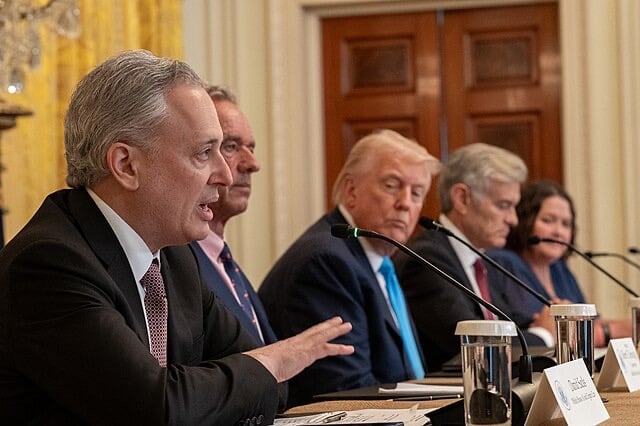
One of Donald Trump’s most prominent White House advisers has publicly distanced himself from the President’s handling of the war with Iran, warning that the conflict risks escalating to a point where Israel might consider deploying a nuclear weapon.
David Sacks, Trump’s appointed czar for artificial intelligence and cryptocurrency, made the remarks on the All-In podcast — becoming the most senior figure within the Trump administration to openly break with the President over the ongoing military campaign. Sacks cautioned that an “escalatory approach” carried serious risks, warning: “Israel could get seriously destroyed. And then you have to worry about Israel escalating the war by contemplating using a nuclear weapon.”
Israel is widely believed to possess a nuclear arsenal but has never publicly confirmed it, maintaining a longstanding policy of deliberate ambiguity on the matter.
Sacks, a close ally of Vice President JD Vance who donated around $1 million to a super PAC supporting Vance’s 2022 Ohio Senate campaign, argued that the United States had already achieved its core military objectives against the Islamic regime and should now pursue a negotiated exit from the conflict. “This is a good time to declare victory and get out,” he said, adding that de-escalation would require reaching “some sort of ceasefire agreement or some sort of negotiated settlement with Iran.”
His position appears broadly aligned with that of Vance, who has kept a notably low profile throughout the conflict while Secretary of State Marco Rubio and Defence Secretary Pete Hegseth have taken on the more public-facing roles. Trump himself acknowledged last week, speaking to reporters at his golf club in Doral, Florida, that Vance had been “less enthusiastic” about the war. Reports have previously indicated that Vance privately urged caution before hostilities began, advising that if action were taken it should be swift and decisive.
The war began on 28 February when the US and Israel launched strikes on Iran, killing Supreme Leader Ayatollah Ali Khamenei on the opening day of the campaign. Iran and its Lebanese ally Hezbollah have since responded with strikes on Israel and other countries across the Middle East. Iran’s UN ambassador has stated that more than 1,300 people have been killed in Iran as a result of US and Israeli attacks. Israel has reported 12 deaths from Iranian strikes, while the US has confirmed the deaths of 13 of its own troops.
The conflict has sent shockwaves through global financial markets and driven oil prices sharply higher. With Sacks now publicly calling for an off-ramp, attention will turn to whether his intervention signals a broader shift in thinking within the White House about how and when to bring the conflict to a close.
