



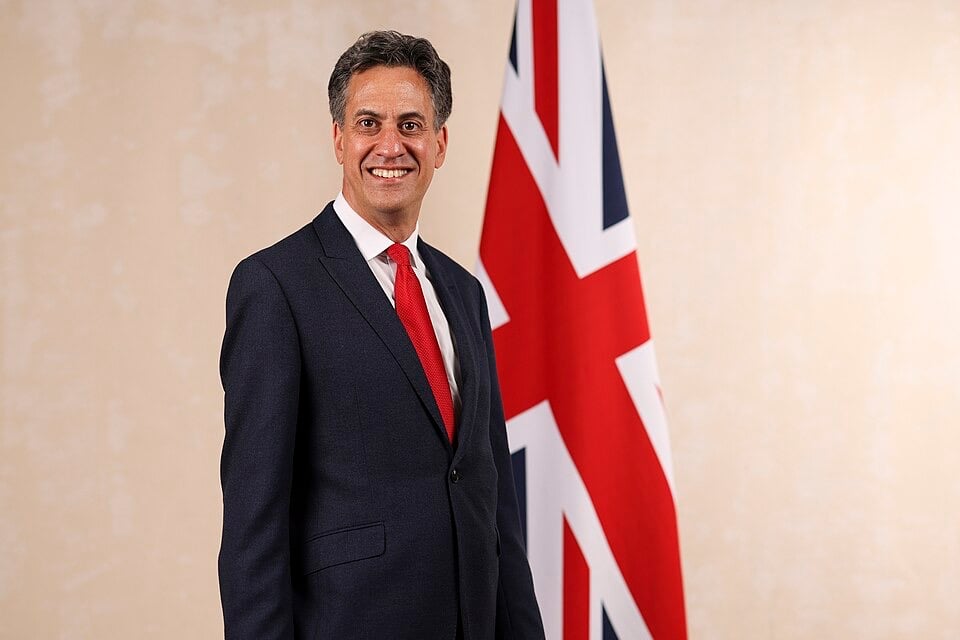
Keir Starmer has thrown his weight behind Ed Miliband’s ambitions to accelerate Britain’s transition to clean energy, using the King’s Speech to unveil a flagship Energy Independence Bill — while remaining silent on the future of contested North Sea oil and gas fields.
The bill, presented during Wednesday’s State Opening of Parliament, commits the government to going “further and faster to deliver clean energy,” with a particular focus on expanding wind and solar capacity and developing hydrogen power. It also includes plans to reform planning rules to ease the installation of renewable energy infrastructure and to change the remit of energy regulator Ofgem, enabling it to regulate energy brokers and crack down on unfair practices.
Conspicuously absent from the announcement was any decision on the Rosebank and Jackdaw oil and gas fields in the North Sea. The bill instead restates Labour’s existing commitment to issuing no new licences for oil and gas exploration and maintaining the ban on fracking — a position that has drawn sustained criticism from those who argue Britain should draw on its own reserves rather than remain exposed to volatile global energy markets.
That exposure has already proved costly. Energy bills remain £190 higher than when Labour took office, despite a pre-election pledge to cut them by £300. They are expected to rise further still when the next price cap takes effect in July, with analysts anticipating that the ongoing conflict in Iran will add further upward pressure. The government made no announcement of targeted support to help households absorb those additional costs, though the King’s Speech stated that ministers would “expand the Government’s toolkit” to direct assistance at low-income and vulnerable households — without committing to specific measures.
The bill also restates Budget commitments to shift some green levies from energy bills onto general taxation, a move that allows the government to present household bills as lower without reducing the overall cost to the public. Separately, private sector landlords face new requirements to invest up to £10,000 in energy efficiency upgrades for their properties.
Labour has set a target of generating at least 95 per cent of Britain’s electricity from clean sources by 2030, encompassing renewables, nuclear, hydrogen, and gas offset by carbon capture and storage. The ambition has attracted criticism, including from the Tony Blair Institute, which has argued the government should prioritise lowering energy prices rather than focusing primarily on the pace of the green transition.
Miliband has consistently resisted calls to expand North Sea production, insisting that investment in domestic renewables offers a more durable path to energy security. Critics counter that abandoning existing fossil fuel capacity while bills continue to rise leaves consumers bearing the cost of an ideological commitment to a timeline that has yet to deliver tangible savings.
