



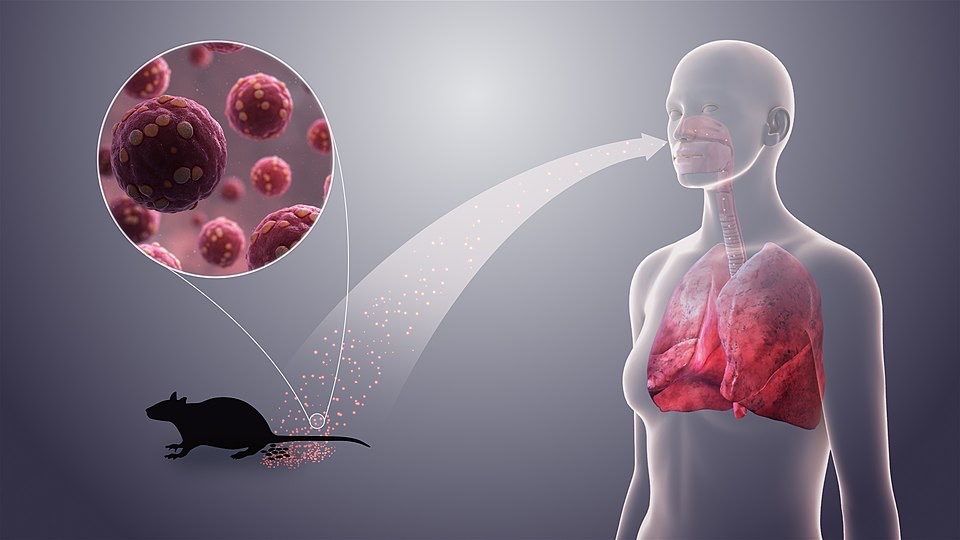
The World Health Organisation has warned that further cases of hantavirus are likely to emerge among passengers from the stricken Dutch cruise ship MV Hondius, while stressing there is no sign of widespread community transmission and that the global risk remains low — as repatriation flights scatter passengers across more than 20 countries and health authorities begin the complex task of tracing everyone who may have been exposed.
As of 11 May, the WHO had confirmed seven cases of Andes hantavirus linked to the outbreak, with two additional probable cases awaiting laboratory results. Three people have died — two confirmed to have been caused by hantavirus, with the third death still under investigation. Patients are currently hospitalised in South Africa, the Netherlands, Germany, Saint Helena, Spain, France and Switzerland.
The MV Hondius departed Ushuaia, Argentina, on 1 April, carrying 147 passengers and crew on a voyage across the South Atlantic that included stops in Antarctica, South Georgia Island, Tristan da Cunha, Saint Helena and Ascension Island. The first patient, who later died, is believed to have contracted the virus before or during the early stages of the voyage. His wife disembarked at Saint Helena showing gastrointestinal symptoms and died on 26 April in Johannesburg.
After being anchored off Cape Verde — a country deemed unable to manage the medical emergency on board — the ship was approved to dock in Tenerife on 10 May, despite objections from the Canary Islands’ president. Spain cited its moral and legal obligation to the passengers in granting approval. On arrival, 22 individuals including 19 passengers and three crew were taken off, screened, and repatriated on chartered flights to six European countries and Canada.
Twenty-two passengers repatriated to the UK — including one German national residing in Britain and one Japanese national evacuated at Japan’s request — landed in Manchester and were taken to Arrowe Park Hospital in the Wirral for 72-hour quarantine in self-contained flats, before beginning 45 days of self-isolation at home. On 10 May, medical clinicians and specialist equipment were delivered to the remote island of Tristan da Cunha by paratroopers from the 16 Air Assault Brigade to assist British nationals still on the island.
In the United States, the CDC dispatched a team to meet the ship in the Canary Islands and is working to repatriate American passengers to a facility in Nebraska with specialised medical capabilities. At least six passengers are being monitored by healthcare authorities across five US states: Arizona, California, Georgia, Texas and Virginia.
The Andes virus is the only known hantavirus capable of spreading between humans. The WHO has emphasised that such transmission is rare, typically requiring close and sustained contact, and that only limited person-to-person spread has been observed in previous outbreaks. The CDC confirmed the overall risk to the public remains extremely low, but has issued health advisories to public health agencies, laboratories and healthcare professionals, and urged anyone who had contact with a symptomatic passenger and is now experiencing symptoms to seek medical advice immediately.
The US CDC has classified its response as a level three emergency. The WHO and national health agencies say the investigation is ongoing, and further cases among the ship’s passengers are considered probable as the incubation period for the Andes virus can extend up to 42 days from exposure.
