




Four Palestine Action protesters convicted of smashing their way into an Israel-linked defence factory with crowbars and sledgehammers could be sentenced as terrorists next month, after a judge’s pre-trial ruling found the raid had a “terrorist connection” — despite none of the defendants facing any terrorism charges.
Charlotte Head, Samuel Corner, Leona Kamio and Fatema Rajwani were convicted of criminal damage last week at Woolwich Crown Court following the nighttime raid on the Elbit Systems UK site near Bristol on 6 August 2024. The four drove into the facility using an old prison van, smashing computers and drones, spraying red paint across walls and floors with fire extinguishers, and filming themselves throughout in red boiler suits. Corner was additionally found guilty of causing grievous bodily harm after fracturing a police officer’s spine during the incursion.
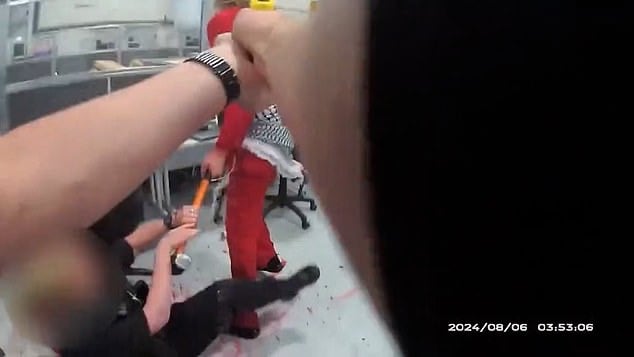
It can now be reported that Mr Justice Johnson, in pre-trial rulings made before the trial began, determined the charges carried a “terrorist connection.” The judge is due to pass sentence on 12 June and may apply that finding regardless of the fact that Palestine Action’s proscription as a terrorist organisation — imposed by the Government in July 2025 — was subsequently declared unlawful by the High Court in February this year. The Court of Appeal is currently considering the Government’s appeal against that ruling, but it remains unclear whether a decision will have been reached before sentencing takes place.
The implications for the defendants could be severe. Supporters have warned that sentences passed with a terrorist connection would be significantly longer, would have to be served in full without early release, and could result in years of post-prison monitoring by counter-terrorism police. Activist group Defend Our Juries condemned the prospect in stark terms. “For the first time in British history, a judge is seeking to sentence protesters as terrorists despite the jury convicting them only on criminal damage charges,” the group said. “Not one of the 24 defendants has a terrorism charge, let alone conviction. Their action took place a year prior to the proscribing of Palestine Action. The ban on Palestine Action was ruled unlawful by the High Court in February.”
Supporters of the defendants have also alleged a “stitch-up,” pointing out that jurors were not told during the trial about the terror connection finding or that it could result in aggravated sentences.
The pre-trial rulings also prevented the defendants from presenting documents relating to their belief that Elbit was supplying weapons to Israel for use in Gaza, and restricted the extent to which they could argue the raid was a necessary act to prevent harm to Palestinians. Mr Justice Johnson concluded that allowing such arguments to be developed extensively risked jurors treating the legality of Israel’s military operations as relevant to the criminal charges they were deciding.
The defendants had claimed their actions were necessary to protect Palestinian lives, saying they aimed to cause maximum damage to military equipment to prevent it from being used against civilians in Gaza. Two other activists, Zoe Rogers and Jordan Devlin, were cleared of criminal damage following the trial. At an earlier trial, all six original defendants were acquitted of aggravated burglary.
The case sits within a broader legal battle over the boundaries of protest and state power. Hundreds of Palestine Action supporters have been arrested on terrorism charges since the original proscription order, typically for holding placards in support of the group at public demonstrations. Those arrests were paused following the High Court ruling but have since resumed while the Court of Appeal deliberates.
