



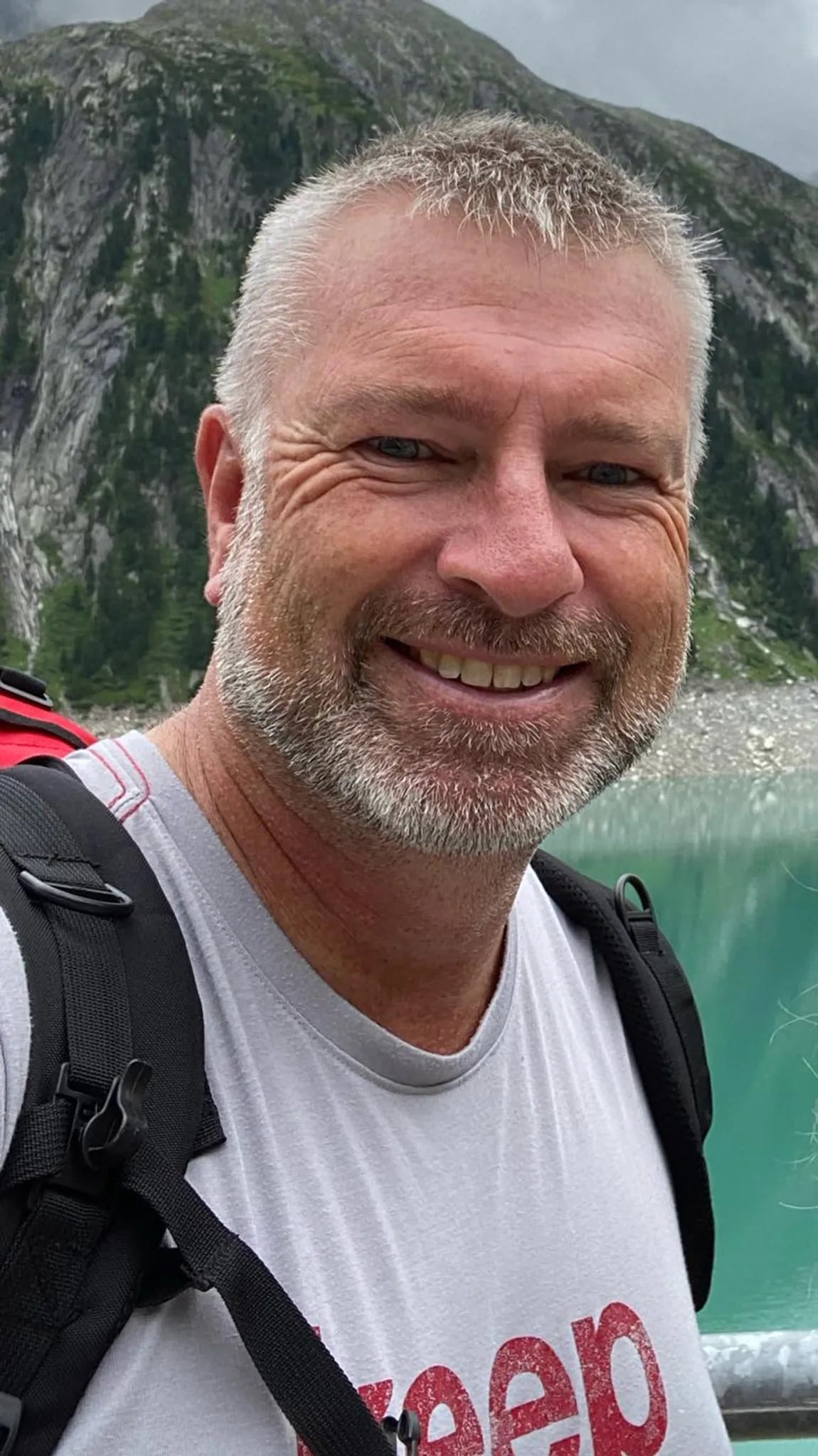
A British tour guide who was critically airlifted from a hantavirus-stricken cruise ship has broken his silence, saying he has “no idea” how long his recovery will take as authorities scramble to track dozens of passengers who disembarked the vessel and have since scattered across the globe.
Martin Anstee, 56, a former police officer working as an expedition guide aboard the MV Hondius, is now being treated in isolation in a Dutch hospital after contracting the deadly Andes variant of hantavirus. Speaking to Sky News from his hospital bed, Mr Anstee said he was “doing okay” but that “there are still lots of tests to be done” and that doctors should have “a clearer picture” later this week. His condition, described as critical when he was airlifted on Wednesday, has since improved to serious but stable.
His wife Nicola told The Telegraph the past few days had been deeply distressing. “The fear with this virus is it can deteriorate very quickly,” she said. “I don’t believe he’s in imminent danger now, but it was horrible.” She said the family had been relieved when Martin was evacuated from the ship, adding: “It’s quite important with this virus they get early medical care. He had it quite mild, then it got a bit more serious, and now he’s stable again.”
Mr Anstee was airlifted alongside two other patients — a 41-year-old Dutch doctor and a 65-year-old German national. Three people have died so far: a 69-year-old Dutch man, his wife, and a German passenger who died on 2 May. One body is reported to remain on the ship.
The World Health Organisation confirmed yesterday that all cruise ship cases were caused by the Andes variant — the only known strain of hantavirus capable of spreading directly from person to person. Investigators believe the virus may have been brought aboard by the deceased Dutch couple after they visited an Argentine landfill site during a birdwatching excursion.
The case of the Dutch man’s wife has raised particularly serious concerns about the virus’s spread beyond the ship. After her husband died, she flew from the remote island of St Helena to Johannesburg. She then attempted to board a KLM flight home to the Netherlands, but was removed from the aircraft before take-off. She was subsequently hospitalised and died from the virus. A KLM flight attendant who had been in contact with her has since been admitted to hospital in Amsterdam displaying symptoms consistent with hantavirus.
Authorities are now racing to locate approximately 40 passengers who disembarked the MV Hondius early at St Helena. Their current whereabouts are largely unknown, with one passenger reported to have travelled to destinations spanning North America, Taiwan, Australia, England and the Netherlands. Two British passengers are self-isolating at home in the UK, but officials have not been able to account for the others. A suspected French case has also emerged in connection with the outbreak.
Professor Robin May, chief scientific officer at the UK Health Security Agency, indicated that British passengers who remain on the ship and are showing no symptoms will be required to self-isolate for 45 days.
