



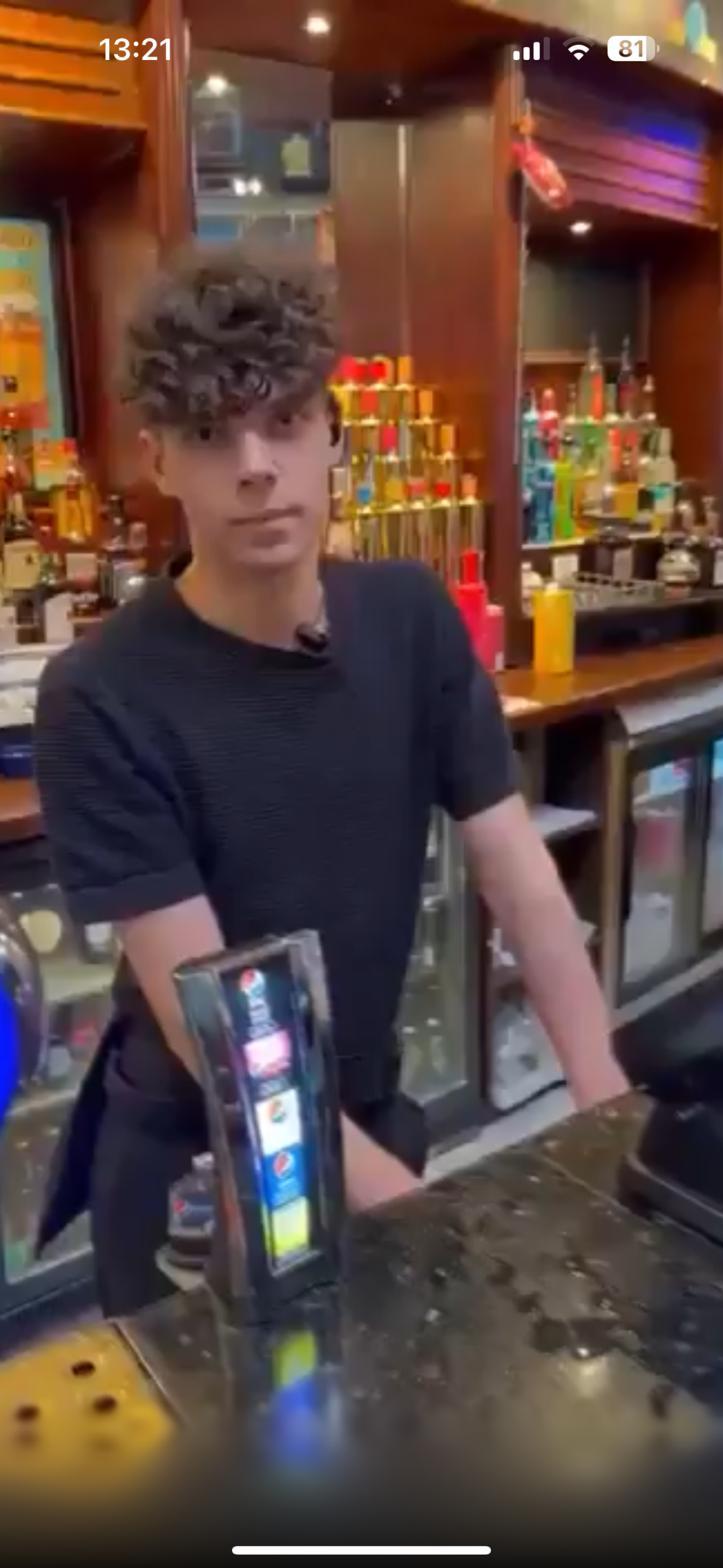
A Wetherspoons manager has sparked widespread outrage after being filmed refusing to serve customers who identified themselves as Reform UK supporters, in a clip that has gone viral and raised serious questions about political discrimination in licensed premises.
The video shows the manager explicitly confirming he is declining service to the customers on the basis of their political allegiance, stating “I’m deciding that” when challenged. The incident has drawn fierce criticism from across the political spectrum, with many arguing it represents precisely the kind of viewpoint discrimination that has no place in a pub — one of Britain’s most traditionally democratic social spaces.
The timing could not be more pointed. Reform UK is currently polling as the largest party in Britain, with recent surveys placing the party between 25 and 28 per cent of voting intention. YouGov placed Reform on 26 per cent in polling conducted between 26 and 27 April, More in Common put the party on 27 per cent in a similar timeframe, and Opinium had them at 28 per cent. Labour and the Conservatives are both languishing in the high teens to low twenties. Refusing to serve the supporters of the country’s most popular party is not a niche act of defiance — it is a refusal to serve a substantial portion of ordinary British pub-goers.
The legal position is also clear. Under the Equality Act 2010 and licensing regulations, a pub may refuse entry or service on grounds of disorder, intoxication or capacity issues. Turning people away because of their political views crosses into territory that legal observers describe as viewpoint discrimination — a form of treatment that has no basis in law when applied to a mainstream, lawful political party.
The incident carries a particular irony given that Wetherspoons founder Tim Martin has publicly praised Reform’s policies on the hospitality sector, specifically its proposals for VAT cuts and tax parity between pubs and supermarkets, describing such changes as transformative for the industry. The suggestion that Reform supporters — often working-class customers who are the core demographic of high-street Wetherspoons pubs — are somehow undesirable is one that sits uneasily with the chain’s entire commercial model.
Critics have been quick to point out the broader pattern the incident reflects: a tendency in parts of public life, academia, media and some private businesses to treat right-populist political views as beyond the pale of acceptable opinion, even when those views are held by millions of voters and backed by no legal prohibition. The practical effect of such gatekeeping, observers argue, is not to discourage those views but to deepen the resentment and sense of cultural exclusion that drives support for anti-establishment parties in the first place.
Wetherspoons has been approached for comment. Many are now calling on the company to respond publicly and address whether the manager’s conduct reflects company policy — or a serious departure from it.
