



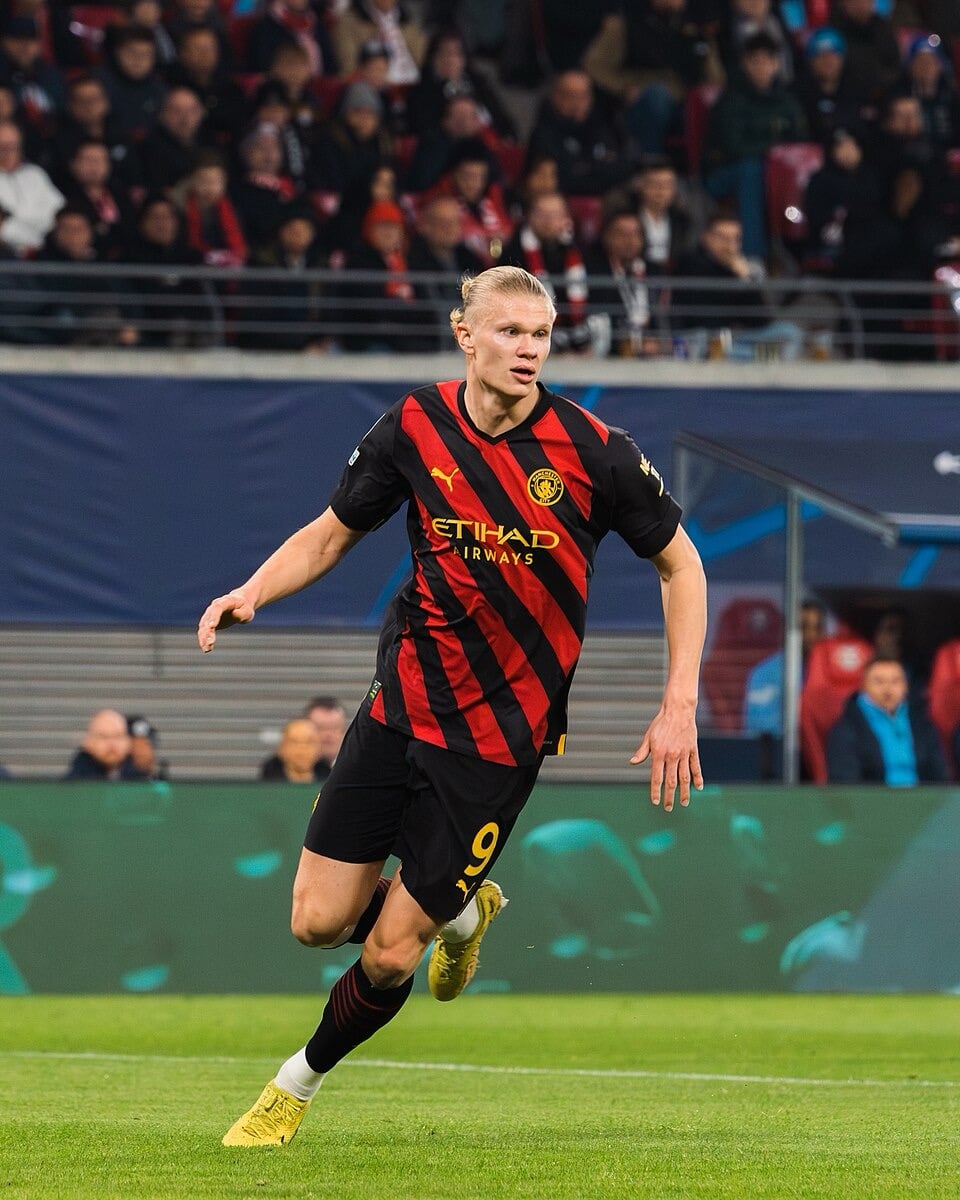
Erling Haaland is facing criticism in his home country after agreeing to front a global advertising campaign for Budweiser — a deal that has drawn sharp condemnation from health campaigners in Norway, where alcohol advertising is prohibited by law.
The Manchester City striker has joined World Cup sponsor Budweiser and former Liverpool manager Jürgen Klopp to launch the brand’s “Let It Pour” promotional campaign ahead of this summer’s tournament. While the campaign is being rolled out across 40 countries, Norway is not among them — a distinction that has done little to soften the reaction from anti-alcohol organisations in his homeland.
Haaland said in a press release: “In my first World Cup, I’m going to give it my all on the pitch, so Budweiser’s Let It Pour campaign really resonates with me because it reflects exactly how I feel about the tournament.”
But campaigners were quick to respond. Inger Lise Hansen of Actis, an umbrella organisation working on drug policy and prevention, told Norwegian outlet Dagbladet that the partnership sat uneasily with Haaland’s public image. “I think this is very special — that someone who is concerned about health, which I feel Haaland is, chooses to be a marketing object for an alcohol brand,” she said. “This is not about people not being allowed to drink beer when they watch a football match, but that it is our sports hero who is helping to advertise a product that leads to injuries and risks.”
The criticism was echoed by Hanne Cecilie Widnes of IOGT, a voluntary drug prevention organisation, who focused on Haaland’s influence over younger fans. “It is tragic that Haaland does not see how negative it is for children and young people,” she said. “He is a great hero for many young people in many countries. It is challenging and very sad.” Widnes went further, calling on the Norwegian Football Federation to “put its foot down,” describing the arrangement as “very problematic.”
The Norwegian FA stopped short of condemning the deal, however. Runar Pahr Andresen of the NFF confirmed the federation had been informed of the collaboration and defended Haaland’s right to participate in a global campaign for one of Fifa’s major commercial partners. “Haaland has entered into a personal agreement with one of Fifa’s largest World Cup sponsors, which he naturally has the opportunity to do,” Andresen said.
He added that while the federation maintains guidelines for players on international duty, those rules do not prevent participation in worldwide marketing campaigns for Fifa-affiliated sponsors. “Since alcohol advertising is illegal in Norway, we as a federation cannot of course enter into agreements with beer producers in the Norwegian market,” Andresen said. “Budweiser is a global and longstanding sponsor of Fifa, and is fully entitled to market its products in countries where such marketing is legal.”
The row places Haaland at the centre of a broader debate in Norway about the responsibilities of elite sportspeople — particularly those who serve as role models for the country’s youth — when it comes to commercial partnerships with alcohol brands.
