



A British anti-Zionist activist is under police investigation for alleged Holocaust denial after a fellow train passenger reported her to officers by text message — sparking a fierce debate about free speech, citizen surveillance and where the line falls between political criticism and hate speech in modern Britain.
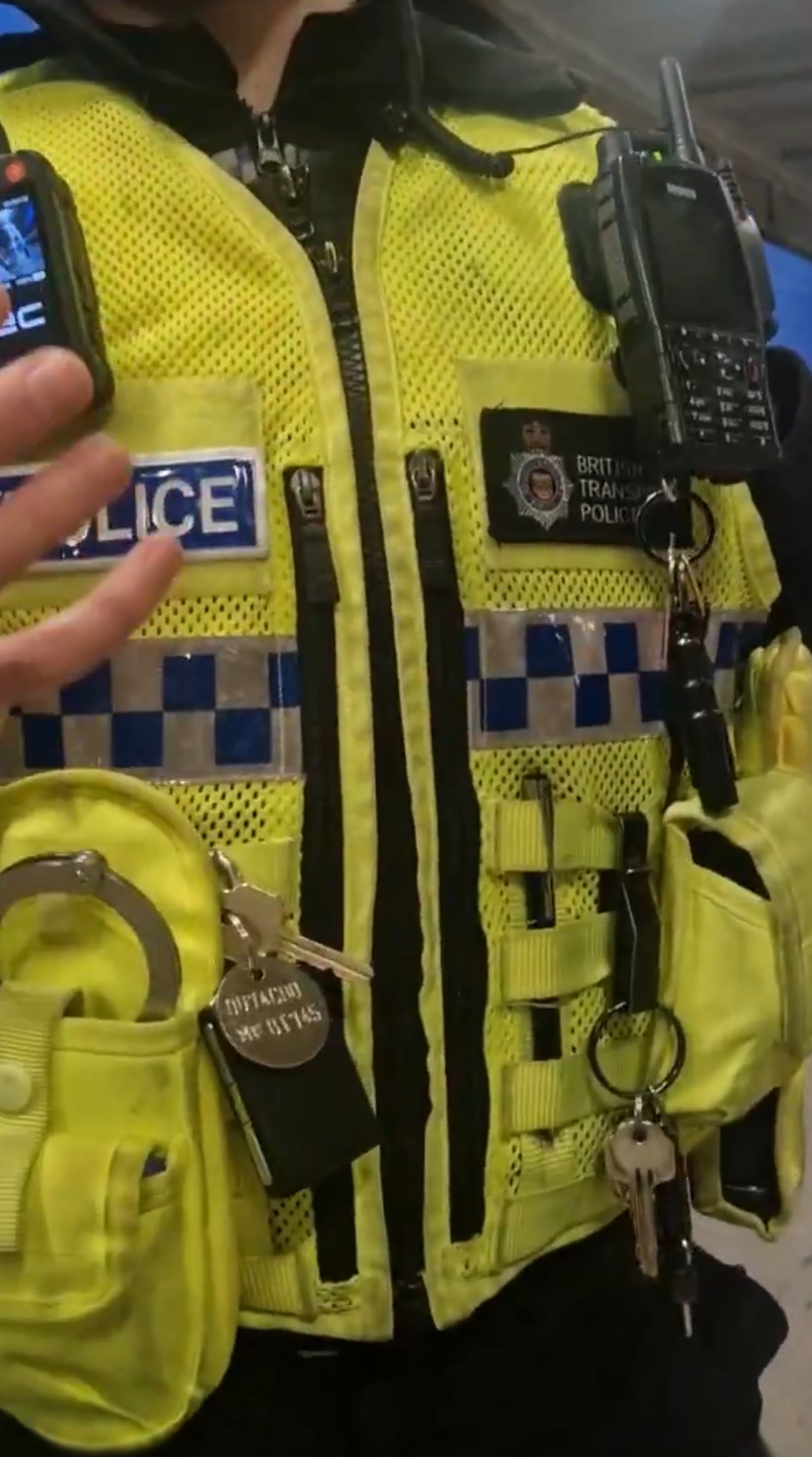
Fiona Rose Diamond was approached by British Transport Police at a train station after returning from an oncology appointment in London when officers informed her she was under investigation for a “racially aggravated public order” offence. The complaint had been triggered by a single text message from another passenger on the train who claimed to have overheard her conversation and felt “uncomfortable” with what they believed was Holocaust denial.
In a widely shared video statement posted on 9 May, Diamond denied the allegation. She said she was “under investigation for a ‘Racially Aggravated Public Order’ offence following an allegation of ‘Holocaust Denial,'” and described the complaint as “a calculated conflation designed to criminalise my anti-Zionism by falsely framing it as Holocaust denial and antisemitic.” Diamond said she was expressing political views about Zionism as a nationalist ideology — not hatred towards Jewish people — and noted that her own grandfather was Jewish.
The incident has unsettled many people not simply because of the allegations themselves, but because of what it symbolises culturally. Comparisons have been drawn with the informant cultures of the former East Germany under the Stasi, where ordinary conversations could lead to investigation simply on the basis of a report from a bystander.
The legal position in the UK is nuanced. Holocaust denial is not a specific criminal offence in Britain, unlike in Germany, France and Austria where it carries explicit legal prohibitions. However, speech can be investigated under public order legislation if it is deemed to stir up racial hatred or cause harassment, alarm or distress. Whether Diamond’s train conversation crossed that threshold is a matter the investigation is now tasked with determining.
The case has gone viral and exposed sharply divided opinions. Supporters argue the incident is a textbook example of overreach — a woman investigated on the basis of one overheard conversation reported by a stranger via text, with no physical evidence and no complaint from a named victim. Critics counter that if her words genuinely amounted to Holocaust denial in a public space, an investigation is entirely appropriate given the current climate of rising antisemitism in the UK.
Diamond is a known activist who has previously been involved in protests against digital ID schemes and Covid-era policies. She has consistently drawn a distinction between Judaism, which she says she does not oppose, and Zionism, which she frames as a political ideology open to legitimate criticism. That distinction — widely accepted in some quarters and contested in others — sits at the heart of an increasingly fraught national debate about where anti-Zionism ends and antisemitism begins.
British Transport Police were approached for comment.
