



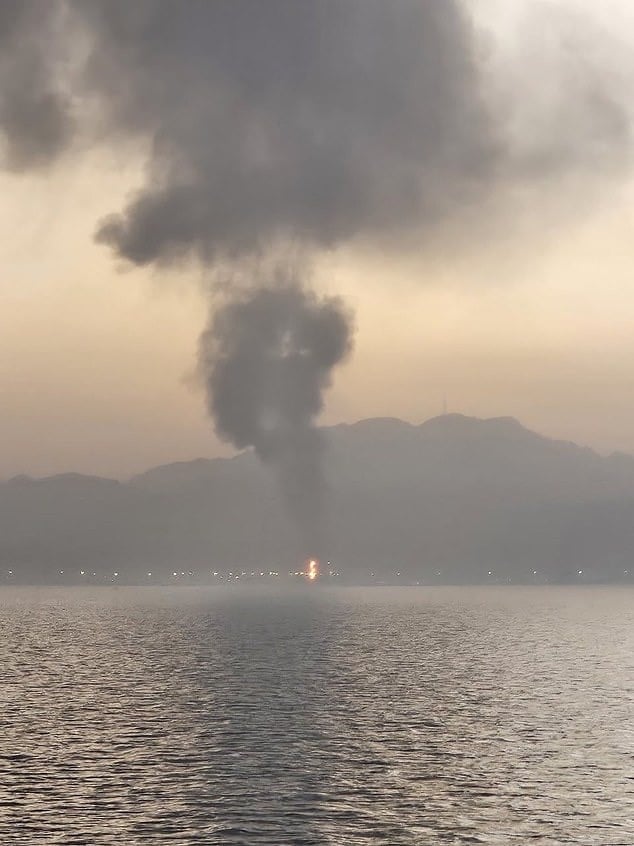
Explosions have struck Qeshm Island and the strategic port city of Bandar Abbas in southern Iran overnight, with Iranian state television confirming an active “exchange of fire” as American officials scrambled to insist the attacks did not signal an end to the fragile ceasefire — even as both sides edge closer to a sweeping peace deal.
Iranian state TV reported in Farsi that “the explosions at the Bahman pier on Qeshm Island occurred during an exchange of fire between Iranian armed forces and the enemy.” Fox News, citing US officials, reported that airstrikes were also hitting Bandar Abbas, though those same officials stressed they did not believe the strikes represented a “restarting of the war” or a collapse of the ceasefire. Iran’s top joint military command took a different view, stating that the United States had carried out air attacks on “civilian areas” with the “cooperation of some regional countries.”
Iran separately accused the US of violating the ceasefire by targeting two ships at the Strait of Hormuz, deepening the already volatile atmosphere surrounding negotiations.
The strikes come at an extraordinarily delicate moment. According to Axios, the White House believes a 14-point memorandum of understanding — currently being negotiated between senior Iranian officials and Trump envoys Steve Witkoff and Jared Kushner — could finalise a framework to end the war within 48 hours. The memo would lift US sanctions, free billions of dollars in frozen Iranian assets, and open a path to limited uranium enrichment. If signed, a 30-day window would open for both sides to negotiate a broader agreement covering the full reopening of the Strait of Hormuz and new restrictions on Iran’s nuclear programme.
A key provision would cap Iranian uranium enrichment at 3.67 per cent for 12 to 15 years — with automatic extensions triggered if Tehran violates terms — and require Iran to remove its stockpile of highly enriched uranium from the country, though the memo does not specify a destination. The framework draws pointed comparisons to the 2015 Obama-era nuclear deal that Trump spent years denouncing as the “worst deal ever,” echoing it on sanctions relief, frozen assets and the same enrichment ceiling.
The ceasefire itself has been a turbulent affair. It was brokered in early April following Pakistani mediation involving US Vice President JD Vance, Witkoff and Iranian Foreign Minister Abbas Araghchi, after Trump threatened that “a whole civilisation will die tonight” if Iran did not agree to terms. Trump extended it on 21 April pending negotiations, while keeping the naval blockade in place.
Markets reacted sharply to news of the proposed peace framework. Brent crude fell by more than 10 per cent to below $100 a barrel, while Dow futures rose 1.1 per cent, S&P 500 futures gained 0.9 per cent and Nasdaq futures climbed 1.6 per cent.
Behind the scenes, Israel is already preparing contingency strikes should the deal collapse. Senior Iranian officials and Iran’s energy infrastructure are squarely in the crosshairs, with bombardment plans said to have been ready for execution on the eve of the April ceasefire and accelerated again this week after Iranian missiles were fired toward the UAE on Monday. Prime Minister Benjamin Netanyahu, sceptical of Tehran’s peace overtures from the outset, is said by a source cited by CNN to favour “a short campaign aimed at pressuring Iran into further concessions in negotiations.”
With a peace framework potentially hours from being signed and fresh explosions lighting up the Strait of Hormuz, the next 48 hours may prove decisive.
