



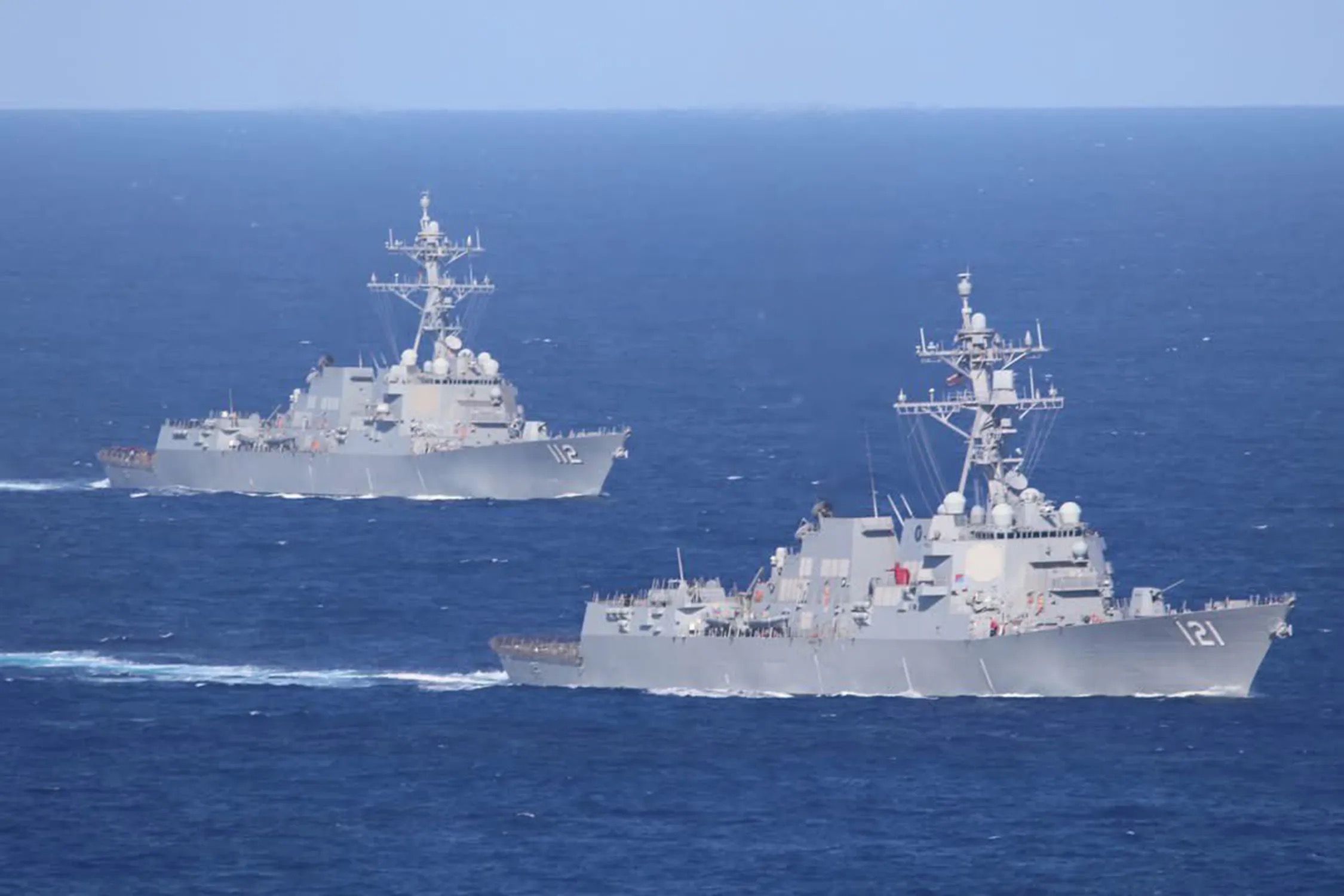
American naval forces are preparing for asymmetric warfare confrontations with Islamic Revolutionary Guard Corps speedboat fleets as President Donald Trump’s Strait of Hormuz blockade commences 3pm UK time today, despite Washington having destroyed over 155 conventional Iranian vessels since late February.
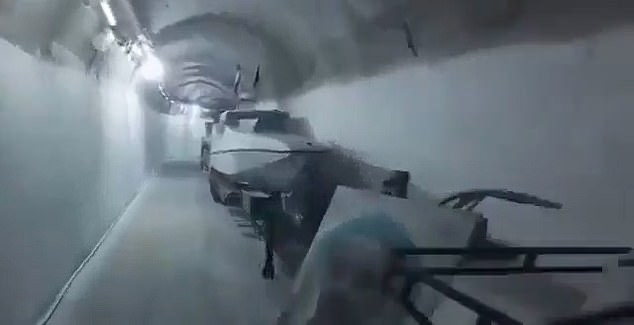
The IRGC’s nimble attack craft arsenal—equipped with missiles, mines and drones operating from underground coastal tunnel networks—remains largely intact following weekend peace talks collapse in Islamabad, with Tehran warning military vessels approaching the waterway would be “dealt with harshly and decisively” as ceasefire breaches.
Oil prices surged above $100 per barrel Monday morning in Asian trading—the first time since 2022—with benchmark crude jumping over 7 per cent whilst the dollar strengthened and US stock futures fell following Mr Trump’s blockade announcement affecting all Iranian Gulf and Gulf of Oman ports from 10am ET (2pm GMT).
US Central Command confirmed the blockade—applying exclusively to Iranian-bound vessels whilst preserving freedom of navigation for ships transiting to non-Iranian ports—follows weekend negotiations ending without agreement after Tehran rejected demands for complete uranium enrichment cessation, major enrichment facility dismantlement and highly-enriched uranium transfers.
Iran additionally refused halting Hamas, Hezbollah and Houthi funding alongside fully reopening the strait, with Foreign Minister Abbas Araqchi accusing Washington of “maximalism, shifting goalposts, and blockade” when “just inches away” from an “Islamabad MoU.”
The IRGC released purported audio recordings showing confrontations with USS Frank E. Petersen Jr and USS Michael Murphy—two guided-missile destroyers transiting Saturday on mine-clearance missions—with Iranian servicemen warning: “You will be targeted” unless vessels retreated to the Indian Ocean.
“Attention all vessels in Oman Sea, keep a distance more than 10 miles from them because I am ready to open fire on them, without any warning,” the IRGC officer broadcast according to state-controlled Islamic Republic of Iran Broadcasting footage.
Iran warned of antiship mines in main channels whilst advising vessels consult Revolutionary Guards for safe passage along coastline routes—the first indication Tehran may have deployed thousands of mines deliverable from small boats or fishing vessels.
Traffic collapsed to just four ships crossing the first ceasefire day compared with 100+ daily pre-war crossings, with Iranian officials telling mediators they would limit passages to roughly a dozen daily.
Mr Trump threatened intercepting vessels paying Iran’s reported $2 million transit tolls: “No one who pays an illegal toll will have safe passage on the high seas. Any Iranian who fires at us, or at peaceful vessels, will be BLOWN TO HELL!”
Satellite imagery documents widespread Iranian naval destruction including IRIS Dena—a warship torpedoed by US submarine near Sri Lanka killing at least 87 of roughly 180 aboard—alongside strikes on the Shahid Bagheri drone carrier and advanced IRIS Shahid Sayyad Shirazi stealth catamaran.
