



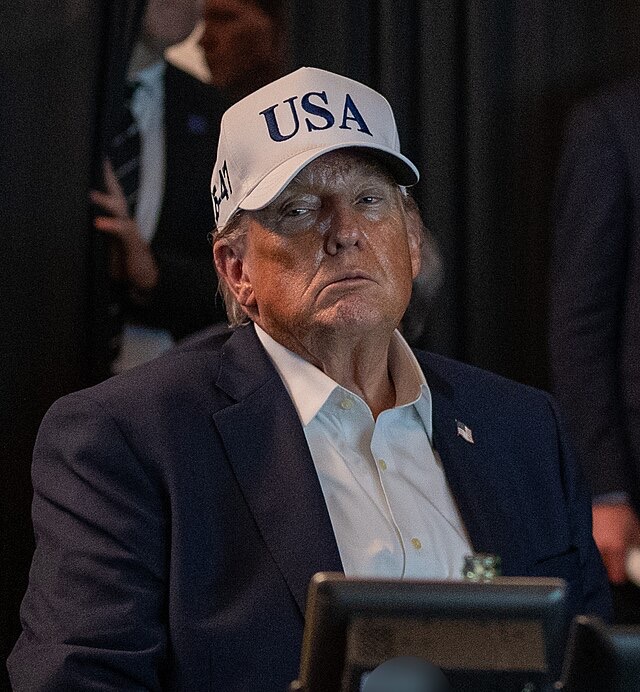
British households confronting the steepest energy and fuel costs in years face renewed economic pressure as oil markets reacted to the Iran peace talks collapse by driving Brent Crude above $100 per barrel—a threshold that threatens to entrench inflation, delay interest rate cuts, and force painful choices between heating homes and filling petrol tanks across a nation whose government can do little beyond urging diplomatic solutions that Washington appears determined to abandon.
The commodity price surge arrived as US Central Command announced implementation of a naval blockade beginning 3pm UK time today, targeting “any and all ships” attempting to transit the Strait of Hormuz through which roughly one-fifth of global oil and gas supplies normally flow. Yet the announcement’s practical meaning remains unclear given that Iran already prevents most tanker traffic from passing—raising questions about whether Trump’s dramatic escalation represents genuine strategic shift or theatrical gesture designed to project strength following diplomatic failure.
Prime Minister Sir Keir Starmer has made explicit that Britain will not participate in the American blockade, instead “working with France and other partners to put together a wide coalition to protect freedom of navigation”—a formulation that attempts to distinguish supporting open shipping lanes from endorsing Trump’s comprehensive interdiction operation. The refusal marks another fracture in the transatlantic alliance, with Downing Street evidently concluding that American strategy risks exacerbating rather than resolving the crisis driving British living costs to politically unsustainable levels.
The immediate economic consequences require no speculation. Pump prices have already rocketed, with petrol and diesel costs climbing toward levels last seen during 2022’s energy crisis. Energy bills are set to follow the same trajectory as suppliers pass through increased costs from gas markets that track oil price movements. Airlines have warned of higher ticket prices as jet fuel costs double, whilst supermarkets signal imminent price increases reflecting elevated importing and packaging expenses—a cascade of inflationary pressures that Chancellor Rachel Reeves confronts during Washington talks with IMF counterparts focused precisely on these economic consequences.
What Trump’s Blockade Actually Means Amid Existing Iranian Strait Closure
US Central Command’s statement that “the blockade will be enforced impartially against vessels of all nations entering or departing Iranian ports and coastal areas” whilst “not impeding freedom of navigation for vessels transiting the Strait of Hormuz to and from non-Iranian ports” establishes a peculiar distinction: comprehensive interdiction of Iranian maritime commerce alongside continued protection for shipping serving other Gulf states.
The operational logic becomes clearer when examining Trump’s explanation to Fox News: “We’re not going to let Iran make money by selling oil to people that they like, and not people that they don’t like. It’s going to be all or none, and that’s the way it is.” The formulation frames the blockade as enforcement mechanism preventing Iran from selective oil sales that benefit allies whilst excluding adversaries—though how this differs meaningfully from existing sanctions regimes remains unexplained.
Trump’s claim that “we’re going to clean out the Strait” through deployment of “highly sophisticated underwater minesweepers, which are the latest and the greatest, but we’re also bringing in more traditional minesweepers” suggests American strategy involves clearing Iranian explosives allegedly preventing normal shipping rather than merely enforcing blockade against Iranian vessels. His assertion that “the UK and a couple of other countries are sending minesweepers” directly contradicts British positioning, with Downing Street sources indicating that whilst Britain maintains mine-hunting drone systems in the region, these would deploy only once situations stabilise rather than during active hostilities.
The president’s characteristic bombast—threatening that “any Iranian who fires at us, or at peaceful vessels, will be BLOWN TO HELL!” whilst vowing to “finish up the little that is left of Iran”—frames the operation as defensive protection of international shipping rather than offensive economic warfare. Yet his simultaneous characterisation of Iranian behaviour as “WORLD EXTORTION” suggests recognition that Tehran’s Strait closure constitutes leverage that blockade implementation might paradoxically strengthen by eliminating any remaining incentive for Iran to permit passage resumption.
Why Britain’s Refusal Exposes Fundamental Strategic Disagreements
Sir Keir’s emphasis on “working with a wide coalition of partners to protect freedom of navigation” during conversations with French President Emmanuel Macron reflects European judgment that Trump’s approach conflates multiple distinct objectives—punishing Iran economically, clearing maritime obstacles, protecting shipping, and demonstrating American resolve—in ways that may achieve none whilst guaranteeing prolonged disruption to energy markets.
A UK government spokesman’s statement that “the Strait of Hormuz must not be subject to tolling” establishes British opposition to Iranian revenue extraction from shipping whilst simultaneously rejecting comprehensive blockade as response mechanism. The position attempts to thread impossibly narrow needle: supporting principle that Iran cannot charge tolls for Strait passage yet refusing to participate in American enforcement operation designed to prevent precisely that revenue generation.
The diplomatic incoherence reflects genuine policy dilemma facing European governments dependent on Middle Eastern energy supplies yet deeply sceptical that military escalation serves their economic interests. Britain’s cost-of-living concerns—explicitly cited by the government spokesman noting the need to “support the global economy and the cost of living back home”—override any strategic calculations about demonstrating solidarity with Washington when that solidarity would accelerate the very inflation British households cannot sustain.
Trump’s lacerating criticism of NATO—lambasting the “defensive alliance” for “refusing to get involved in the US-Israeli war against Iran”—exposes his fundamental misunderstanding or deliberate misrepresentation of the organisation’s purpose. NATO’s Article 5 collective defence commitment applies when member states face attack, not when members initiate military operations against non-NATO countries. European refusal to transform defensive alliance into offensive coalition supporting American regime-change objectives in Tehran represents adherence to founding principles rather than abandonment of alliance obligations.
The Wall Street Journal’s reporting that Trump weighs “resuming limited military strikes in Iran in addition to the blockade in order to find a breakthrough on the peace talks” suggests administration recognition that blockade alone may prove insufficient to force Iranian capitulation. Yet the logic of inflicting additional military punishment to encourage diplomatic engagement remains opaque—particularly when Iranian Foreign Minister’s claim that Tehran was “inches away” from agreement before talks collapsed suggests the breakdown stemmed from American rather than Iranian intransigence.
Trump’s renewed confrontation with Pope Leo XIV—whom he criticised following the pontiff’s earlier condemnation of the president’s Iran rhetoric—illustrates how thoroughly the conflict has fractured international consensus. When even the Vatican feels compelled to publicly challenge American policy, the isolation of Trump’s approach becomes undeniable regardless of how forcefully he insists that Iran will return to negotiations because the alternative involves being sent “back to the Stone Ages.”
The president’s attendance at a UFC match in Miami whilst Vice President JD Vance conducted marathon negotiations in Islamabad captures the peculiar governance style that sees Trump simultaneously directing military escalation, threatening apocalyptic destruction, and pursuing leisure activities as if the stakes were merely entertainment. Whether this reflects supreme confidence in American leverage or dangerous disconnection from the gravity of decisions under consideration remains subject to interpretation that partisan divides render impossible to resolve definitively.
For British households watching petrol prices climb and dreading energy bill arrivals, the geopolitical manoeuvring matters less than the immediate reality that costs keep rising whilst government lacks tools to provide relief. Starmer can work with Macron on coalition-building, articulate principles about freedom of navigation, and refuse participation in American blockades—yet none of these diplomatic positions will prevent oil markets from pricing continued Strait closure into commodity futures that determine what families pay for heating and transport.
The cruel arithmetic suggests that absent rapid diplomatic breakthrough or Iranian capitulation that current trajectories give no reason to anticipate, British living standards will deteriorate further whilst the government watches helplessly from sidelines of a conflict it cannot influence and a blockade it refuses to join. Trump’s insistence that his approach will succeed “in not too long a distance” provides cold comfort to constituents whose budgets cannot accommodate indefinite energy price inflation whilst awaiting vindication of strategies that European allies view as counterproductive escalation rather than path toward resolution.
