



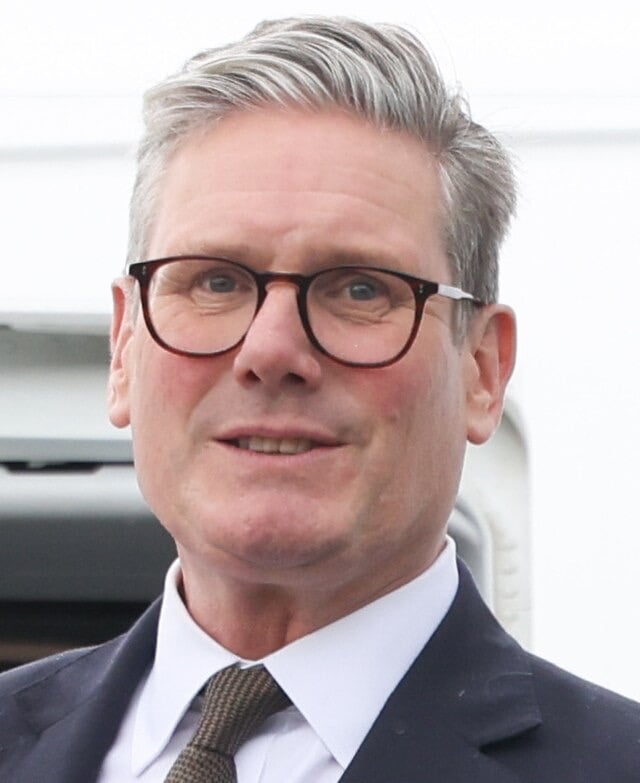
Several senior Labour figures are emerging as potential successors to Keir Starmer amid Westminster speculation about an internal challenge, though no leadership contest is currently underway.
A YouGov-Sky News poll in late 2025 found approximately half of voters expect Starmer to be replaced as prime minister by the end of 2026, reflecting ongoing discussion within political circles about his leadership.
Current Situation
Starmer recently invited numerous Labour MPs to his Chequers retreat in a last-ditch attempt to prevent them turning against him. One attendee told Politico the PM insisted to the room he “had been grievously lied to” about the Peter Mandelson scandal, though many felt “this was a line that couldn’t stand much scrutiny [because] if the Government wanted to, they could have got more information from the US.”
Another MP present stated: “I do think most people think his days are numbered…It’s more who [will replace him] rather than when, I suppose.”
However, Starmer’s biographer believes the situation “can be survivable,” telling Politico: “Politics is very uncertain and very febrile and anyone who says they’re sure they know what’s going to happen next is unwise. What can he do to make it more likely he survives? The short answer is there’s no magic bullet. It’s getting his head down, trying to do the right thing, keep talking about the issues which matter to people in the country.”
The Main Contenders
Angela Rayner (Former Deputy Leader)
Extremely popular with Labour members and regularly described as the strongest in-Parliament option. Recent Survation polling for LabourList found Rayner would defeat Starmer among members in a direct leadership contest, with around 48% backing her versus 37% for Starmer.
However, Starmer’s allies have sounded a general election alarm over her potential succession. A Labour figure told The Telegraph: “Presumably Angela Rayner, if she got elected, would have a completely different agenda. If you come in with a completely different agenda then the country legitimately says, ‘We didn’t vote for this’. And so what are the grounds for refusing a general election?”
The source added: “You can claim constitutional grounds, but in the world of frenzied media, of TikTok, YouTube and GB News, is it really sustainable? It doesn’t feel sustainable to me.” A Cabinet Minister concurred: “The pressure for an election would be enormous.”
Rayner herself previously criticized Rishi Sunak for not calling a snap general election after replacing Liz Truss in October 2022, stating: “The Tories have crowned Rishi Sunak without him saying a word about what he would do as PM. He has no mandate, no answers and no ideas. Nobody voted for this. The public deserve their say on Britain’s future through a General Election.”
Rayner also faces a hurdle over her taxes if she is to mount a challenge to Starmer.

Wes Streeting (Health Secretary)
Frequently cited as the bookmaker’s favourite and described as the “most likely successor,” Streeting is publicly denying any active bid to replace Starmer while clearly positioning himself as a future leader and outlining a philosophy for how he would govern.
Streeting has repeatedly rejected claims that he is plotting a leadership challenge, calling talk of a plan to replace Starmer “self-defeating nonsense” and saying he cannot “envision any scenario” where he would betray the prime minister. He has stressed that he is “not going to call for the prime minister’s resignation” and that he supports Starmer’s leadership, even as some Labour figures brief that he could become prime minister “by Christmas” if he moved against him.
However, allies of Starmer have privately briefed that No 10 is in “full bunker mode” and wants to “stop Wes,” seeing him as one of the main potential challengers if leadership moves begin after key fiscal events or elections.
Streeting has publicly backed Starmer, urging him to sack whoever is briefing the media about supposed plots and saying attacks on him from within No 10 show a “toxic” culture around the prime minister, not from Starmer himself. He argues that briefings about leadership challenges are “self-defeating and self-destructive” because they make it look like Starmer is fighting for his job instead of focusing on running the country.
Yet in policy speeches, he has delivered veiled critiques of Starmer’s style, saying ministers must stop “making excuses and blaming the system” and insisting that if the levers of government “don’t exist we build them” and if there are barriers “we bulldoze them” – a contrast with Starmer’s complaints that “pulling levers” doesn’t always work.
In a major January 2026 speech at London’s Guildhall, Streeting set out three core messages: that Labour needs a clear philosophy, that it should win arguments rather than avoid them, and that he is delivering in the health brief and could deliver in Downing Street. He praised the “New Liberal” tradition of thinkers like Hobhouse, Keynes and Beveridge, arguing that freedom means the ability to act, not just freedom from interference, and hinting at an openness to deals with the Liberal Democrats similar to Tony Blair’s era.
At high-profile events such as the Institute for Government’s “Government 2026” conference, he has pushed a message that ministers must “steer the trolley more forcefully” rather than blame a “wonky wheel” civil service, again presenting himself as an energetic problem-solver.
Journalists and colleagues widely describe him as a leading “future leader” prospect, with his big set-piece speeches framed as a pitch that he “would deliver in No 10” and has the philosophy Starmer is seen as lacking. Commentators frequently cite him as one of the government’s most articulate media performers and a central figure in speculation about who might one day replace Starmer.
Recent polling of Labour members shows Starmer currently leads Streeting in a direct matchup, approximately 42% to 30%, suggesting he is viewed as a rising figure but not yet members’ first choice. His big speeches, ideological framing and public profile are widely read as a careful long-term pitch for the top job, even as he keeps saying he is loyal to Starmer and not plotting a coup.
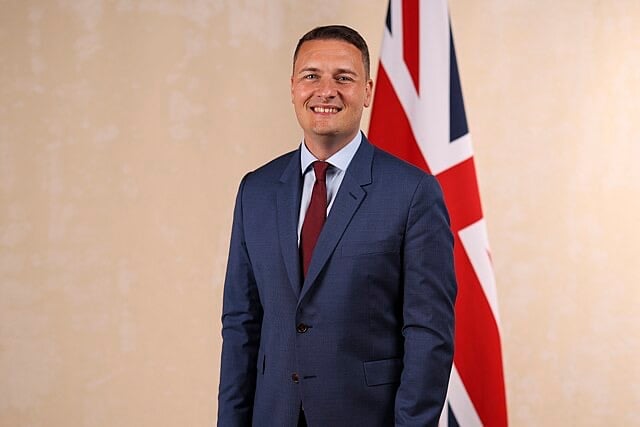
Andy Burnham (Greater Manchester Mayor)
Consistently emerges as the top “dream candidate” for Labour members. LabourList/Survation polling suggested Burnham would defeat Starmer among members by a clear margin, roughly 53% to 37%. Earlier surveys showed 57% of members placing him in their top three choices, with about 29% naming him as first preference.
However, his position outside Westminster as a regional mayor significantly limits his immediate prospects. Labour blocked his most recent attempt to return to Parliament in early 2026 by refusing to let him stand in the Gorton and Denton by-election.
The by-election was triggered after Labour MP Andrew Gwynne resigned following suspension over inappropriate WhatsApp messages. Burnham applied to be Labour’s candidate, which required special permission from the party’s National Executive Committee (NEC) because he is a directly elected mayor.
A 10-member NEC panel voted 8-1 to block his candidacy. Only deputy leader Lucy Powell backed him, while NEC chair and home secretary Shabana Mahmood abstained as protocol. The decision is final under party rules, meaning Burnham could not stand in that by-election.
Labour’s official explanation was that allowing Burnham to run would trigger two costly and disruptive contests: the Gorton and Denton by-election and then a Greater Manchester mayoral by-election if he won the seat. A party statement said the NEC “could not put Labour’s control of Greater Manchester at any risk” and argued voters do not like “avoidable” mid-term elections.
Local government secretary Steve Reed said Burnham was doing a “great job” as mayor and that keeping him in that role was in the interests of Greater Manchester residents.
Burnham said he was “disappointed” and “concerned” about the impact of the decision on upcoming elections. He complained that the media heard about the NEC ruling before he did, which he said “tells you everything you need to know” about how the party is being run.
Several senior Labour figures – including Ed Miliband and Angela Rayner – had urged the NEC to let him stand and avoid what they called a “London stitch-up”. Left-wing MPs such as John McDonnell and Richard Burgon attacked the decision as “weakness and cowardice”, “factionalism gone wild” and a “stitch-up” to protect Starmer from a potential leadership rival.
Other Labour MPs, like Rugby MP John Slinger, welcomed the “quick and clear decision”, saying it allowed the party to move on from leadership speculation.
Burnham is widely seen as a potential future leadership challenger, but under Labour’s rules he must be an MP to run for party leader. Many commentators and some MPs believe a key unstated motive for blocking him was to stop a high-profile rival coming back into Westminster at a moment when Starmer’s position is under pressure.
Officially, Labour denies that leadership politics were the reason, but the backlash from parts of the party shows many members and MPs do not accept the “cost and disruption” explanation at face value.
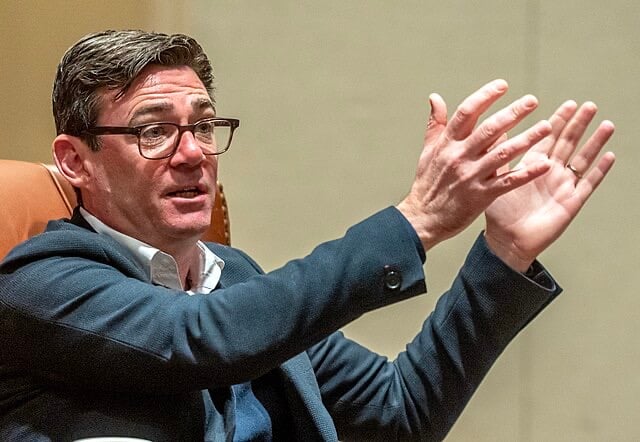
Shabana Mahmood (Home Secretary)
Seen as one of Labour’s key rising figures and a plausible future leadership contender, Mahmood has not publicly launched any bid to replace Starmer and presents herself as a loyal senior minister.
She serves as home secretary in the Labour government and has represented Birmingham Ladywood since 2010, giving her long parliamentary experience and a major domestic brief. In 2025 she was elected chair of Labour’s National Executive Committee (NEC), the party’s ruling body, putting her at the centre of decisions on rules, discipline and selections.
Commentators inside and outside Labour describe her as a pragmatic, highly disciplined operator with a coherent worldview. Some MPs and journalists explicitly talk about her as a “future Labour leader.”
Mahmood has been close to Starmer’s leadership project from early on, serving as national campaign coordinator in opposition and being credited with helping stabilise the party and improve its campaigning. She is regarded in No 10 as one of the most competent ministers and has sometimes warned colleagues that the government risks staying in an “opposition mentality” rather than focusing on governing for the whole country – seen as constructive internal criticism rather than a leadership pitch.
Ideologically she is often linked to the more socially conservative “Blue Labour” wing, stressing order, responsibility and parliamentary sovereignty, which gives her a distinct profile from some of Starmer’s other senior allies.
As NEC chair, Mahmood oversaw the process that considered whether Andy Burnham could seek a return to Parliament. She emphasised in interviews that a smaller officers’ group, not the full NEC, would make the decision and described this as “very standard practice.” Reports noted she followed protocol by abstaining on the key vote, which helped her appear as an impartial chair rather than a factional actor in what many saw as a highly political decision.
A detailed 2025 profile described her as a “rising star” with sharp political instincts, noting she has impressed both Labour colleagues and some Conservatives, and that backbenchers have started to see her as a possible future leader.
Supporters highlight her willingness to pursue institutional reform – for example, pushing for changes to sentencing guidance and arguing that the state should be restructured to give elected politicians more power over quangos and courts – as evidence she would pursue a bolder governing agenda.
Those close to her suggest that if she ever did run for the leadership it would be to force a serious debate about direction and honesty in politics, not because she is openly campaigning for the job now.
She regularly appears in betting markets as one of the shortest-priced options to replace Starmer, increasingly mentioned due to her prominent role on immigration and her positioning as an “obvious candidate” if Starmer falters.
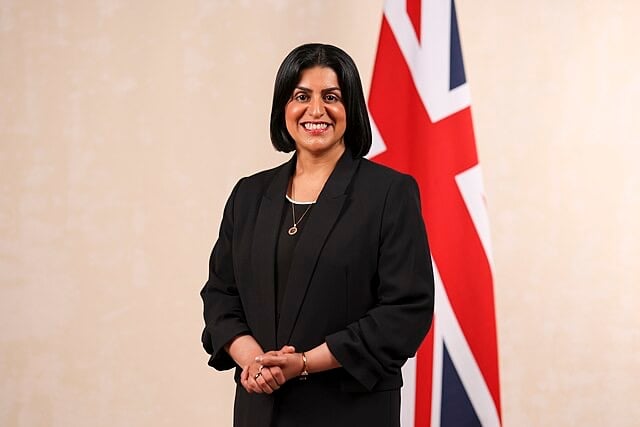
Ed Miliband (Energy Secretary)
Being talked about again as a possible replacement for Starmer despite insisting he does not want to lead Labour again, Ed Miliband serves as Labour MP for Doncaster North and holds a senior cabinet role focused on energy and climate.
He previously led Labour from 2010 to 2015, taking the party to the 2015 general election before resigning after defeat. He is associated with the “One Nation Labour” shift to the left of New Labour.
In late 2025 he told the BBC he has “no intentions” of seeking the Labour leadership again, saying “I’ve got the T-shirt, that chapter’s closed,” when asked directly if he might run if Starmer had to step down.
Despite this, a number of Labour MPs and commentators still see him as someone who could emerge as a compromise or left-leaning candidate if Starmer were forced out and the party looked for an experienced figure to step straight into Number 10.
Some Labour MPs on the left argue they would resist Wes Streeting or other candidates they view as too centrist, and that in such a scenario Miliband could become the main standard-bearer for a more traditional social-democratic platform.
Supporters say he now brings experience as a former leader, cabinet minister and policy thinker on climate and inequality, and is relatively free of recent scandals, which could make him attractive in a crisis.
Critics on Labour’s right still blame his 2010-2015 leadership for making the party less electable and are wary of returning to a figure they associate with that period’s defeats and what some describe as a “gaffe-prone” media image.
Recent internal polling shows Starmer would narrowly beat Miliband in a direct members’ leadership contest, with results roughly 44% to 41% within the margin of error. This suggests Miliband has a substantial but not majority base among active party members.
Betting and media “runner and riders” lists for a post-Starmer leadership often include Miliband among potential candidates, but usually place him behind figures like Angela Rayner, Andy Burnham and Wes Streeting in likelihood, reflecting both his denials of interest and his mixed legacy from his previous tenure as leader.
He is praised by members for his left-leaning policy agenda, though his explicit statements that he has no intention of running again distinguish him from other contenders who remain more ambiguous about their future ambitions.
The General Election Question
A major complication for any potential successor is the constitutional question of whether they would need to call a general election. While Starmer serves as prime minister because he is Labour leader, and replacing him would only require a Labour leadership election rather than a national vote, political pressure for a general election could prove overwhelming.
The precedent Rayner herself set in criticizing Sunak’s appointment without an election could create particular difficulties if she were to succeed Starmer without going to the country, especially given allies’ warnings that “the pressure for an election would be enormous.”
How Replacement Would Work
To replace Starmer before a general election, Labour MPs and members would need to remove him as party leader and elect someone else through a formal Labour leadership election.
Any potential successor would require victory in this election process, meaning current contenders should be viewed as potential rather than guaranteed replacements. The contest would involve both parliamentary and membership votes.
What Betting Markets Show
Betting markets throughout late 2025 and early 2026 have most frequently highlighted Wes Streeting, Andy Burnham, Angela Rayner and Shabana Mahmood as the shortest-priced options, though specific odds vary by outlet and over time.
Member Preferences
Polling consistently shows Andy Burnham and Angela Rayner as the most popular choices among Labour Party members. Separate surveys indicate members believe Burnham, Rayner, Miliband and Streeting could all defeat Starmer in a leadership race, underlining the breadth of alternative options popular at grassroots level.
The latest data suggests Rayner represents the strongest available parliamentary option, whilst Burnham remains the preferred choice overall despite his current position outside Westminster requiring him to first win a parliamentary seat before standing.
