



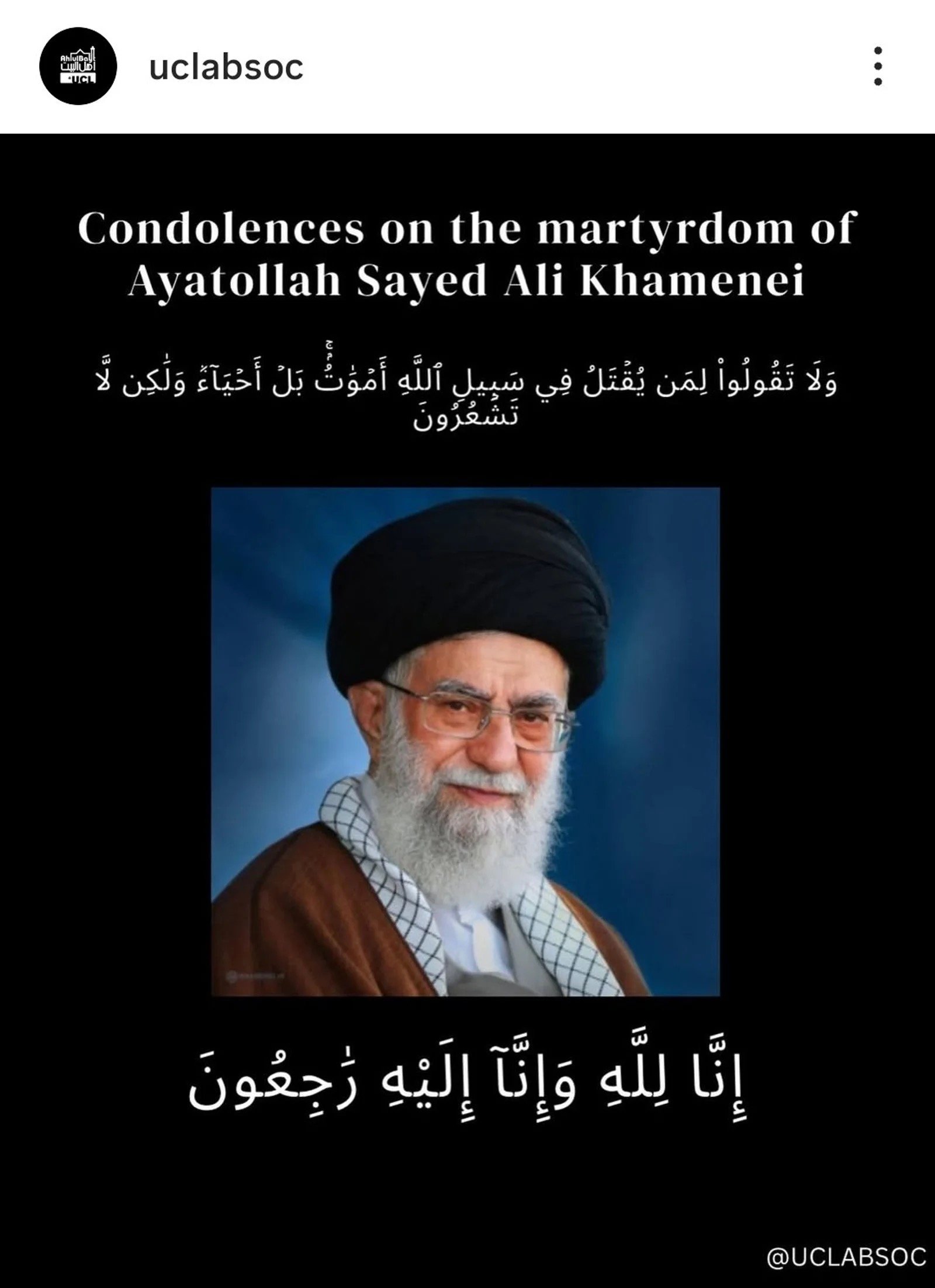
A Muslim student society at University College London has come under scrutiny after publishing a tribute to Iranian Supreme Leader Ali Khamenei following his death, describing his passing as an “unimaginable loss” and calling on Shia Muslims in the West to “remain aware and ready.”
The Ahlul-Bayt Islamic Society, based at one of Britain’s most prominent universities, posted a statement offering “sincere condolences” alongside a prayer for the deceased leader. The group’s mental health team contributed to the post, which referred to Khamenei’s death as “martyrdom” and framed his loss as one felt across the entire Muslim world, or Ummah.
The society moved quickly to address potential concerns about the nature of the post, stating it did not constitute “incitement, endorsement of violence, or unlawful mobilisation.” In a further statement, the group described the Ayatollah’s role as “broadly religious” for Shia Muslims, drawing a comparison to that of the Catholic Pope within Catholicism. The society also defended its right to publish the tribute, describing it as “lawful expression” protected under academic freedom and freedom of expression, and asserting that “students are entitled both legally and morally to mourn, to speak, and to organise within the law.”
However, the post drew swift and sharp criticism from a number of public figures within hours of its publication. James Price, a UCL alumnus and former government adviser, described it as “disgusting”, writing that he hoped “UCL acts appropriately on this.”
Author Dov Forman also weighed in, calling the post “extraordinary.” He wrote: “A UCL student society publicly mourning Ayatollah Khamenei and urging Shia in the West to stay ‘aware and ready’ — on a UK campus. Universities cannot keep pretending this is just ‘student expression.'”
UCL itself has not yet issued a public response to the controversy. The incident has reignited broader debate around the boundaries of free expression on university campuses and what obligations institutions hold when student groups publish politically sensitive material.
The Ahlul-Bayt Islamic Society’s post remains a matter of public discussion, with critics and the society itself presenting competing interpretations of where the limits of lawful expression on campus should lie.
