



British financial markets opened sharply lower on Monday morning as the outbreak of war in Iran sent shockwaves through global trading, driving down the pound, airline stocks and banking shares while pushing oil prices and defence stocks significantly higher.
The FTSE 100 fell 0.9 per cent to 10,810.50 within minutes of the 8am open, pulling back from Friday’s record close of 10,910.55. By 8.14am, sterling had also weakened, dropping 0.94 per cent against the US dollar to trade at 1.3354.
The sell-off follows Saturday’s outbreak of hostilities after Israeli and US forces carried out strikes on Iran under what has been described as Operation Epic Fury, killing Supreme Leader Ali Khamenei. Tehran has since launched retaliatory strikes on several countries in the region, including the UAE, deepening fears over the conflict’s reach and duration.
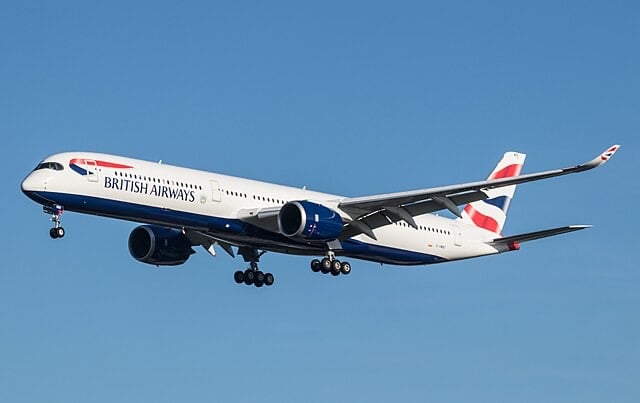
Travel and financial stocks bore the brunt of the losses. British Airways owner IAG led the fallers, shedding 9.78 per cent, with events and publishing group Informa down 6.7 per cent and hotel chain IHG dropping 5.3 per cent. Barclays, easyJet, Standard Chartered, HSBC and Burberry were all more than four per cent lower.
The picture was markedly different for energy and defence companies. BAE Systems — a key supplier to US and Gulf militaries — rose 6.9 per cent, while Shell and BP both gained more than five per cent as oil prices jumped sharply. Brent crude climbed almost 10 per cent to just under $80 a barrel, with US WTI up nine per cent to just over $73. UK natural gas prices surged 25 per cent to 98.5p per therm, approaching January’s 10-month highs.
Gold reached above $5,400 an ounce, up 2.4 per cent, while silver rose 1.7 per cent to $95.4 an ounce. Copper, coal and steel all moved lower, with iron ore broadly flat.
Asian markets had already signalled the turbulence ahead of London’s open. The Nikkei fell 1.35 per cent to just under 58,000 shortly after 7am, Hong Kong’s Hang Seng Index dropped 2.32 per cent — losing more than 616 points — and India’s Nifty 50 declined 1.93 per cent.
Chris Beauchamp, chief market analyst at IG, described global equities as being caught up in “broad-based selling”, with the FTSE 100 no exception. He noted the index “would be 50 points lower were it not for BP and Shell”, given the surge in oil prices. Beauchamp cautioned that markets “could be standing on the cusp of a much longer-term selloff than anything we have seen for months”, as investors reduce their exposure and monitor developments in a conflict widely expected to continue for weeks.
