



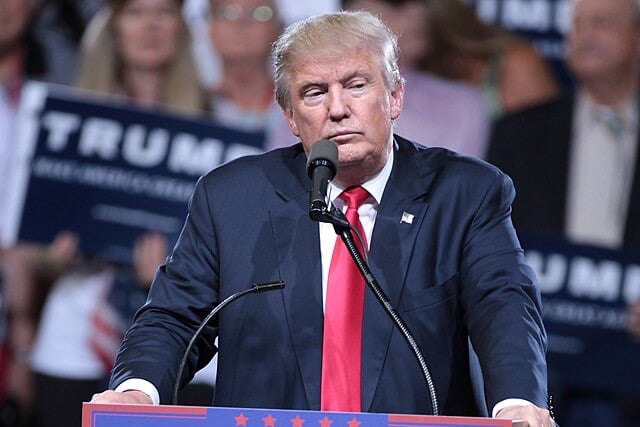
The White House has escalated its confrontation with Tehran to unprecedented levels, with President Donald Trump threatening to seize Iranian oil fields if the Islamic Republic fails to accept American terms by Tuesday evening—a move that would mark one of the most dramatic assertions of US military power in the Middle East since the 2003 Iraq invasion.
In a phone conversation with Fox News on Sunday, Trump indicated he is prepared to move beyond targeted strikes to outright territorial occupation. “If they don’t reach a deal—and soon—I’m considering blowing everything up and taking control of the oil,” the President told chief foreign correspondent Trey Yingst, setting an 8pm Tuesday deadline for Iranian compliance.
The threat represents a significant departure from conventional military doctrine and carries profound implications for global energy markets, regional stability, and international law governing territorial sovereignty.
Why the Strait of Hormuz Has Become the Flashpoint
At the heart of the escalating crisis lies the narrow Strait of Hormuz, the vital waterway through which nearly a fifth of the world’s oil supply typically passes. Iran has maintained a blockade of the strategic chokepoint since hostilities erupted on 28 February, vowing to prevent “enemy” vessels from transiting the passage.
Trump’s latest ultimatum demands the immediate reopening of the strait, coupling the threat with a promise to target Iranian power infrastructure if Tehran refuses. In characteristically blunt language posted to Truth Social on Easter Sunday, the President wrote: “Tuesday will be Power Plant Day, and Bridge Day, all wrapped up in one, in Iran. Open the Fin’ Strait, you crazy b**ds, or you’ll be living in Hell.”
The post, which bizarrely concluded with the phrase “Praise be to Allah,” signals an administration willing to employ increasingly unorthodox diplomatic communication as military pressure intensifies.
A Rescue Mission That Defined American Resolve
The diplomatic brinkmanship unfolds against the backdrop of what Trump has described as “one of the most daring Search and Rescue Operations in U.S. History”—a complex extraction that saw hundreds of special forces personnel and dozens of aircraft deployed to recover two F-15 airmen shot down over Iranian territory.
The operation’s most dramatic element centred on a colonel who evaded Iranian forces for 36 hours in mountainous terrain after ejecting from his aircraft on Friday. Armed only with a handgun and nursing ejection injuries, the officer climbed to elevations approaching 7,000 feet whilst Iranian forces—motivated by a $60,000 bounty on his capture—closed in on his position.
American forces employed Reaper drones to provide protective cover, whilst the CIA executed what Fox News termed a “deception campaign,” spreading false intelligence that the colonel had already been located and moved. The subterfuge appears to have confused Iranian pursuit teams during the critical hours before extraction.
When US special forces finally reached the stranded airman late Saturday, a firefight erupted with Iranian troops. The rescue convoy succeeded in evacuating both crew members—the pilot having been recovered hours earlier in a separate operation kept secret to avoid compromising the colonel’s extraction—but at significant material cost. Two C-130 transport aircraft became mired in sand at a remote Iranian airfield and were deliberately destroyed to prevent capture, along with an MH-6 Little Bird helicopter damaged during operations.
Iranian state media claimed IRGC forces had shot down the American aircraft, though US officials maintain the planes were destroyed by their own crews after becoming operationally disabled. Tehran further alleged that hundreds of soldiers and Basij militia fighters were “neutralised” by American forces during the engagement, whilst Iranian sources reported five fatalities from US strikes conducted during the rescue window.
The Diplomatic Breakdown and Military Escalation
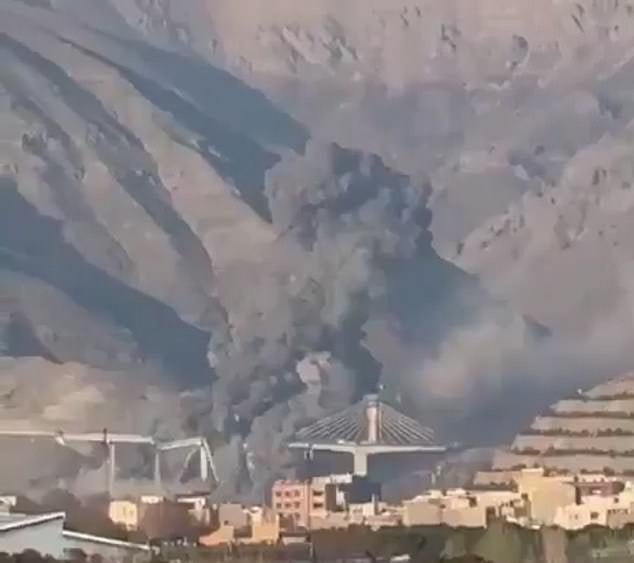
The rescue mission followed closely on US-Israeli strikes that destroyed the B1 bridge—a 136-metre structure linking Tehran to the western city of Karaj—in attacks that killed eight people and injured at least 95 others. Iranian state media reported that a second wave of strikes targeted the bridge whilst rescue personnel were treating casualties at the scene.
The infrastructure attack marked the implementation of Trump’s earlier promise to bomb Iran “back to the Stone Age,” a threat that has now evolved into the more expansive promise to target power generation facilities and potentially seize petroleum assets.
According to White House communications director Steven Cheung, Trump spent the Easter weekend “working nonstop” from the White House on the developing crisis, emerging only briefly on Sunday to return from Trump National Golf Club. The President had last appeared publicly on Wednesday at the Supreme Court for a birthright citizenship hearing, later delivering a televised address on the Iran conflict.
Britain’s Stake in the Persian Gulf Crisis
For the United Kingdom, the escalating confrontation carries immediate implications for energy security and naval operations in the Gulf region. British shipping remains vulnerable to Iranian interdiction in the Strait of Hormuz, whilst any sustained closure of the waterway would send shockwaves through global oil markets at a time when European nations are seeking to diversify energy supplies.
The prospect of American forces attempting to seize Iranian oil infrastructure would also present profound diplomatic challenges for London, potentially forcing the UK to navigate between supporting a key ally and upholding international legal frameworks governing territorial sovereignty. British military assets in the region could face pressure to support or distance themselves from operations that blur the line between conventional warfare and territorial annexation.
As Tuesday’s deadline approaches, markets and governments alike are watching to see whether Tehran will bend to American pressure or whether the conflict will enter a new and unpredictable phase of escalation.
