



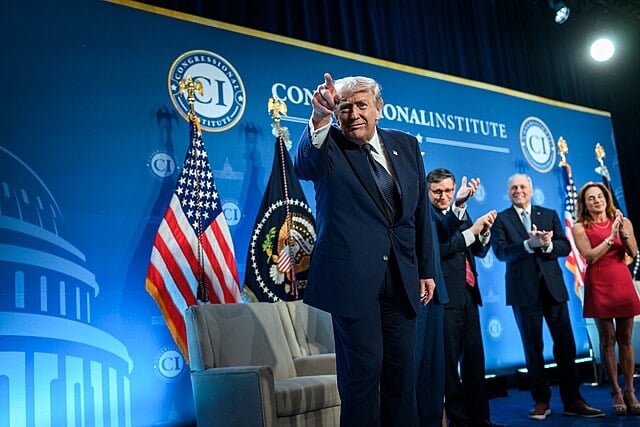
The United States will impose a naval blockade on the Strait of Hormuz following the collapse of 21-hour peace negotiations with Iran, President Donald Trump announced Sunday, threatening to interdict any vessel paying Tehran’s controversial transit tolls whilst warning Iranian forces will be “blown to hell” if they fire on American ships.
The dramatic escalation arrives as gas prices reach $4.20 per gallon—climbing over a dollar since the 28 February conflict commenced—with Trump facing mounting midterm election pressure to resolve a war that has killed over 3,000 Iranians, 2,020 Lebanese, 23 Israelis and more than a dozen Gulf Arabs whilst devastating regional infrastructure.
Vice President JD Vance returned empty-handed from Pakistani-mediated talks after Tehran refused what Washington characterised as essential commitments abandoning nuclear weapons development pathways, with Iranian parliamentary speaker Mohammad Bagher Qalibaf countering that the United States must “decide whether it can gain our trust or not.”
“Effective immediately, the United States Navy, the Finest in the World, will begin the process of blockading any and all ships trying to enter, or leave, the Strait of Hormuz,” Trump declared on Truth Social, adding: “I have also instructed our Navy to seek and interdict every vessel in International Waters that has paid a toll to Iran.”
The President separately told Fox News that NATO would “begrudgingly” support the blockade operation despite characterising the alliance as “shameful” for refusing earlier assistance, claiming: “They weren’t there for us, and they won’t be there for us.”
Trump singled out Britain for particular criticism, comparing Prime Minister Sir Keir Starmer to Adolf Hitler appeaser Neville Chamberlain after Starmer pledged sending equipment only “after the war is over”—a statement Trump described as appeasement-era capitulation.
The strategic gambit risks substantial American casualties given the Strait’s 21-mile width at its narrowest point, extensive Iranian mining operations and proximity to missile and drone launch sites throughout mountainous Iranian terrain.
“We need to see an affirmative commitment that they will not seek a nuclear weapon, and they will not seek the tools that would enable them to quickly achieve a nuclear weapon,” Vance explained following the negotiations breakdown.
Iran maintains its nuclear programme serves civilian purposes despite expert assessments that its enriched uranium stockpile—though not weapons-grade—requires only brief technical processing achieving military capabilities.
Trump defended his previous threat to annihilate Iran’s “entire civilization,” telling Fox: “I’m fine with it because it brought them to the table,” despite widespread backlash including from Republican lawmakers condemning targeting civilian populations.
The fragile two-week ceasefire expires 22 April with neither party indicating post-deadline intentions beyond Pakistani mediator appeals maintaining the truce.
