



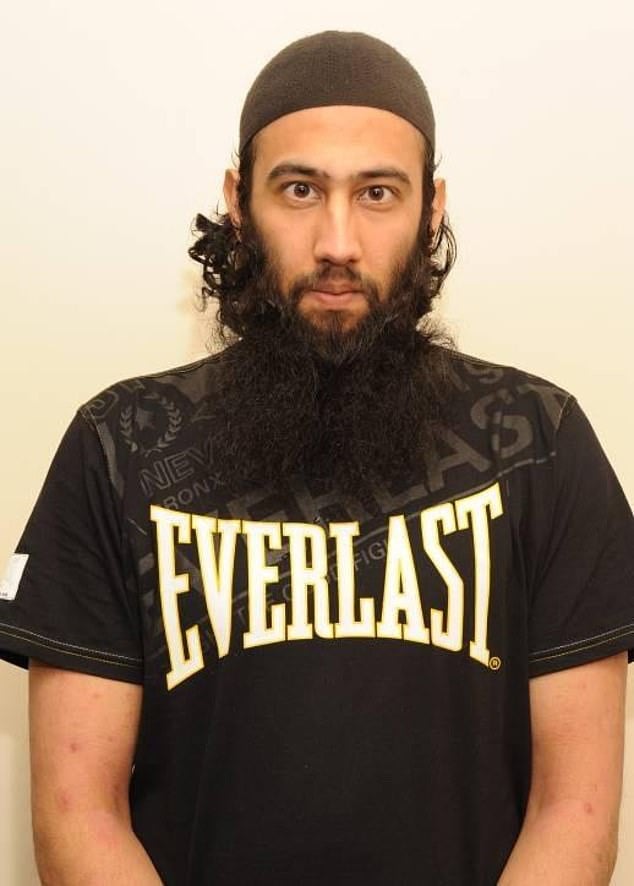
A convicted terrorist whose planned release sparked political fury will face fresh parole assessment after the Deputy Prime Minister successfully challenged the board’s decision to free him three years early.
Zahid Iqbal, 43, was among a gang jailed in 2013 for plotting to detonate a homemade bomb at a Territorial Army centre in Luton using a remote-controlled toy car as the delivery mechanism, with explosive construction guided by an Al Qaeda manual titled “Make a bomb in the kitchen of your mom – by the Al Qaeda chef.”
The Parole Board granted release approval earlier this year despite two prison monitoring experts urging the panel to reject the application—a decision that triggered immediate political backlash.
Shadow Home Secretary Chris Philp branded the ruling “disgraceful” and characterised Iqbal as a “dangerous lunatic” in correspondence to then-Deputy Prime Minister David Lammy, who subsequently challenged the decision as “legally irrational.”
Mr Lammy’s formal reconsideration application has now been granted, with a new expert panel set to reassess the case through examination of relevant documentation, prison behaviour records and testimonials from officials who have maintained contact with Iqbal during his incarceration.
Iqbal received a 16-year sentence after admitting one count of engaging in conduct preparing for terrorist acts, with additional evidence revealing he had arranged terrorism training in Pakistan and discussed weapons procurement.
The 43-year-old was initially released on 2 November 2021 following Parole Board direction but was recalled to custody in 2023 after authorities raised multiple concerns regarding his conduct.
Woolwich Crown Court heard in March 2013 how Iqbal and three co-conspirators—Umar Arshad, Syed Farhan Hussain and Mohammed Sharfaraz Ahmed—admitted preparing terrorist acts between 1 January 2011 and 25 April 2012, with courtroom observers noting the four men smiled and giggled whilst audio recordings of their bomb-making discussions played.
Sentencing judge Mr Justice Wilkie QC determined Iqbal and Ahmed posed continuing public risk, imposing extended sentences comprising 11 years imprisonment plus five years licence—during which they can be recalled to custody at any point.
“In each of their cases, their persistent commitment to terrorist activity, in a number of different ways, over a significant period of time and, in each case, their willingness to take practical steps to obtain terrorist training abroad, marks them out as particularly dangerous,” the judge stated.
The three other gang members were quietly released from prison in 2023. Arshad had received six years and nine months, Hussain five years and three months, whilst Ahmed was handed an 11-year sentence.
The judge noted that even after their homes were searched and they faced serious suspicion, the men continued accessing materials consistent with their terrorist mindset, persuading him they remained dangerous enough to warrant extended sentencing provisions.
