



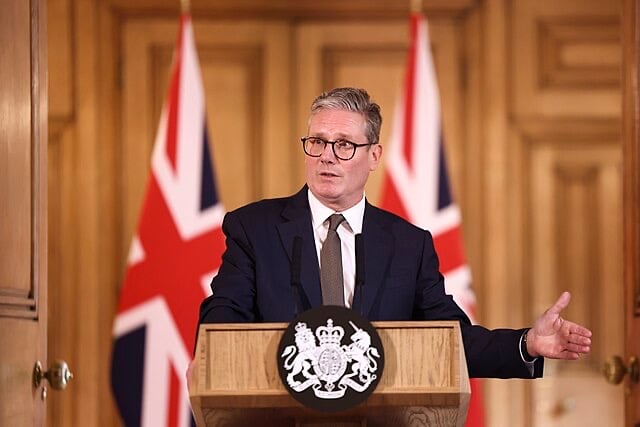
Sir Keir Starmer has publicly defended his decision to keep Britain out of the initial US and Israeli strikes on Iran, saying the choice was “deliberate” and made in the national interest, as he warned the conflict could continue for a significant period.
Speaking at a press conference on Thursday, the Prime Minister said his overriding priority was “protecting our people” and reiterated the UK’s longstanding position that a negotiated settlement remained the preferred path forward. “The long-standing British position is that the best way forward for the region and the world is a negotiated settlement with Iran where they give up their nuclear ambitions,” he said.
“That’s why I took the decision that the UK would not join the initial strikes on Iran by the US and Israel. That decision was deliberate, it was in the national interest, and I stand by it.”
Starmer also confirmed he had chaired a Cobra emergency committee meeting on Thursday as the government continues to manage Britain’s response to the escalating situation. He acknowledged the anxiety felt by many people across the country, saying he understood that citizens were “worried sick about their family and friends who are caught up in this.”
On the practical measures being taken to assist British nationals in the region, the Prime Minister confirmed that a government-chartered flight from Oman to Britain had taken off after being delayed overnight. The evacuation effort comes as more than 100,000 British citizens in the wider region have registered their contact details with the Foreign Office.
Starmer sought to reassure the public about the government’s commitment to British citizens caught up in the conflict. “I want you to know that your government is resolute in our response, at home and abroad. We will do everything we can to protect British lives, uphold British values and safeguard the national interest,” he said.
His remarks come amid mounting pressure on the government over its stance on the conflict, following public criticism from US President Donald Trump, who said he was “not happy with the UK.” The Prime Minister is expected to face further questions in Parliament over the coming days as the situation in the region continues to develop and pressure grows on Britain to clarify the precise terms of its involvement.
