



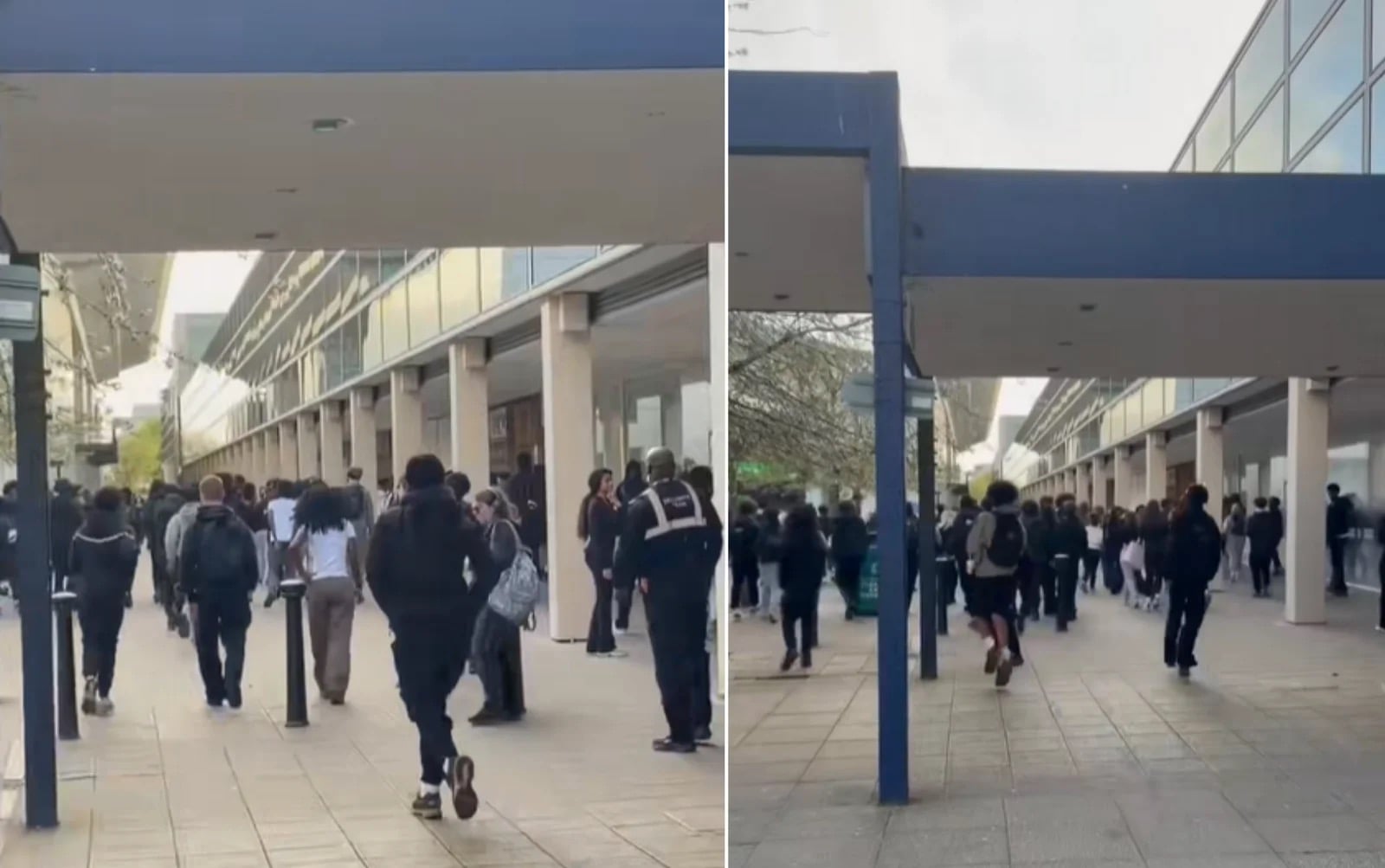
A police dispersal order was issued in Milton Keynes on Sunday evening after hundreds of balaclava-clad youths congregated in what had been advertised on social media as an “easter egg hunt”, marking the latest in a series of coordinated teenage disturbances to sweep across England in recent days.
Officers from Thames Valley Police were forced to intervene at Campbell Park following reports of a significant gathering that had been widely promoted across social platforms. Authorities authorised the dispersal order at 7.26pm, granting police enhanced powers to move people on and prevent any escalation of what had begun as a peaceful event but deteriorated as attendance swelled throughout the afternoon.
What Began as an Easter Event Descended into Confrontation
Police initially engaged with event organisers and monitored proceedings, which started without incident. However, as the crowd grew larger, the atmosphere shifted markedly, prompting concerns about public safety and potential disorder.
Footage circulated on social media captured officers in a tense standoff with a substantial group of young people wearing tracksuits and balaclavas outside Midsummer Place shopping centre. The clips show teenagers fleeing from police, with one officer seen pushing back a youth who appeared to be attempting to intimidate them. Another video depicted a girl grappling with officers, while separate footage shows a young person being brought to the ground by police as colleagues urged the crowd to move back amid the sound of sirens.
A small number of individuals were briefly detained by officers to prevent further trouble. One person was taken into custody but was subsequently released.

Why Coordinated Youth Gatherings Are Testing Police Resources
The Milton Keynes incident forms part of a broader pattern of teenage disturbances that have erupted across England in recent weeks, raising questions about the effectiveness of current policing strategies for spontaneous, social media-driven assemblies.
In Clapham, hundreds of young people descended on the area on March 28 and 31 following arrangements made on social media platforms. Those gatherings escalated into serious disorder, with participants looting shops, setting fires and assaulting police officers—incidents far more severe than the Milton Keynes confrontation.
The use of social media to organise mass gatherings of young people presents particular challenges for law enforcement. Unlike traditional demonstrations or planned events, these assemblies can materialise rapidly, attracting hundreds of participants within hours and overwhelming local police resources before appropriate responses can be coordinated.
The Wider Implications for Public Order Policing
Thames Valley Police defended their approach, emphasising that decisions were taken to protect the wider community, participants and officers themselves. According to a force spokesman, all powers were used proportionately for public safety.
“We understand that large gatherings in public spaces can cause concern, especially when they appear to grow spontaneously, and when videos circulate online,” the spokesman said. “Decisions were taken to protect the wider community, those taking part, and our officers; all powers were used proportionately for public safety.”
The statement reflects growing awareness within policing circles that social media-driven gatherings require a calibrated response—one that balances the need to prevent disorder against the risk of inflaming tensions through overly aggressive intervention.
The repeated pattern of masked youths assembling in substantial numbers, often with unclear intentions beyond the initial social media promotion, suggests these events may become a more regular feature of the policing landscape. The fact that participants in Milton Keynes chose to wear balaclavas and hooded clothing—despite the ostensible Easter theme—indicates an awareness among attendees that the gathering might attract police attention or escalate beyond its advertised purpose.
As spring progresses and warmer weather encourages outdoor gatherings, police forces across England may face further tests of their capacity to manage spontaneous youth assemblies that blur the line between legitimate social events and potential public order threats.
