



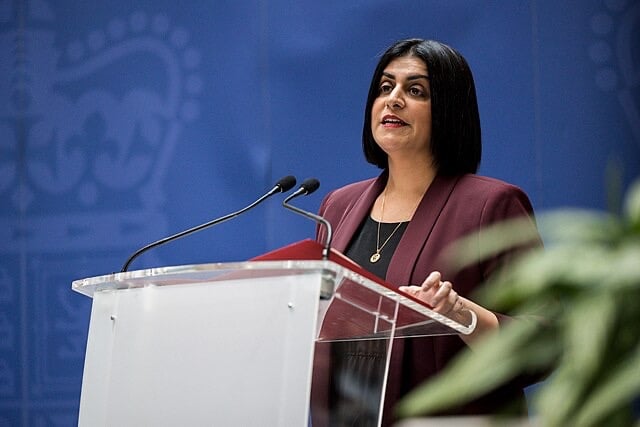
Failed asylum seeker families living in taxpayer-funded accommodation will be offered payments of up to £40,000 to leave the United Kingdom voluntarily, Home Secretary Shabana Mahmood has announced, with those who refuse facing forced removal.
The scheme, unveiled by Mahmood in a speech to the Institute for Public Policy Research think tank on Thursday, offers up to £10,000 per person, capped at four members per family. Families will have seven days to accept the offer before the government moves to remove them compulsorily. The Home Office estimates that if the trial — expected to target around 150 families — proves successful, it could save approximately £20 million, with the cost of housing a single family of three in asylum accommodation currently running to as much as £158,000 per year.
Mahmood argued that the payments represented a “significant saving to the taxpayer” and said the government was consulting on how to remove families with children who decline to leave voluntarily “in a way that is humane and effective.” She also said that failing to remove such families had created “a perverse incentive” to cross the Channel with children.
A government source defended the payment levels against criticism, pointing out that people smugglers charge between £15,000 and £35,000 per migrant to bring them to the UK, meaning the cost of travelling illegally would in most cases exceed the value of the incentive payment.
The announcement drew sharp criticism from across the political spectrum. Conservative shadow home secretary Chris Philp described the payments as “an insult to the British taxpayer” and called on the government to go “much further.” Reform UK’s home affairs spokesman Zia Yusuf called the £40,000 figure “staggering” and “a prize for breaking in illegally”, despite his own party having previously proposed financial incentives for voluntary deportations.
From the left, the Green Party accused Mahmood of echoing far-right rhetoric, while the Refugee and Migrant Children’s Consortium — a coalition of 100 organisations — raised concerns that families would have “just a week to make a potentially life-changing decision” without time to access legal advice, and warned the measures could leave children homeless. The Refugee Council similarly cautioned that the plans risked pushing families into rough sleeping, with associated costs falling on local councils and the NHS.
Within Labour itself, around 100 MPs have signed a private letter to Mahmood expressing concerns about her broader asylum reforms, including plans to make refugee status temporary — a measure they argue could undermine “integration and cohesion” and expose people who have lived in the UK for up to 20 years to potential removal.
Mahmood sought to address that internal resistance directly in her speech, arguing that “restoring order and control at our border is not a betrayal of Labour values, it is an embodiment of them,” and insisting the majority of the parliamentary party supported her direction of travel.
In 2025, there were 82,100 asylum applications in the UK, covering 100,600 individuals, of which 58 per cent were refused. Voluntary returns in the year to December 2025 stood at 28,004 — a five per cent increase on the previous year. The new scheme’s trial results are expected to inform whether the approach is extended more widely.
