



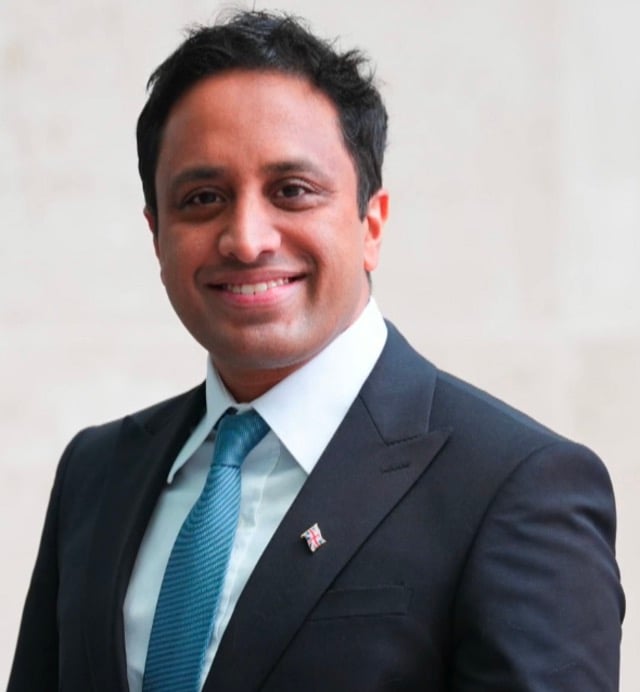
Reform UK has pledged to withdraw from the European Convention on Human Rights and impose visa freezes on six countries if they refuse to accept migrants with no legal right to stay in Britain, as part of sweeping immigration proposals unveiled by home affairs spokesman Zia Yusuf.
Pakistan, Somalia, Eritrea, Syria, Afghanistan and Sudan would face visa restrictions under the policy announced during Yusuf’s Dover speech today. The measures form part of what Reform describes as a programme to deport all illegal migrants currently in the UK, with an ambitious target of 288,000 deportations every year.
Yusuf promised the creation of a UK Deportation Command modelled on America’s controversial Immigration and Customs Enforcement unit, with capacity to detain up to 24,000 migrants at any time. The spokesman vowed to run five deportation flights daily if Reform wins power, with an RAF Voyager kept on standby for technical difficulties.
The party would introduce an Illegal Migration Mass Deportation Act to legally compel the Home Secretary to deport illegal migrants and prevent judges from intervening. Yusuf stated the UK is being “invaded” and said Britain would leave the ECHR to stop foreign criminals’ rights being “prioritised” over British people.
“How many more people must die at the hands of those who should never have been in our country in the first place?” Yusuf asked. “How many more victims’ families must be devastated in this way when their rights are placed beneath those of criminals? The answer is none, Vote Reform. We will leave the ECHR and end this madness.”
Defending his description of small boat arrivals as an invasion, Yusuf told the Dover audience: “I know many in the establishment gasp at that word. They may well clutch their pearls in the television studios, but the dictionary definition of invasion is an incursion by a large number of people in an unwanted way. Make no mistake, as home secretary, I will end and indeed reverse this invasion, because the patience of the British people is now exhausted.”
Additional policy proposals include replacing indefinite leave to remain with renewable five-year work visas and dedicated spouse visas. A proposed “Polanski Law” would criminalise aiding and abetting illegal entry into the UK regardless of intent.
Foreign nationals would be stripped of Universal Credit entitlement under Reform plans. Automatic home searches would be conducted for anyone referred to the Prevent counter-terrorism programme by three separate corroborating authorities.
The party promised a “vast expansion” of stop and search powers including “saturation policing” in high-crime areas. Diversity, equity and inclusion mandates for police would be removed to allow focus on “core duties.”
Yusuf announced Reform’s plans to “protect Britain’s Christian heritage” including granting immediate listed status to all churches to legally prevent their conversion into mosques or other places of worship. The Muslim Brotherhood and Iran’s Islamic Revolutionary Guard Corps would be proscribed as terrorist organisations.
Emergency powers would be used to build “massive” new prison capacity. The deportation target of 288,000 annually would be achieved through the new UK Deportation Command infrastructure operating five daily flights.
Asked about his stance on burka bans following his criticism last year of a Reform MP’s proposal as “dumb,” Yusuf stated: “I personally support a ban on all face coverings in public… that’s actually a piece of legislation that has multiple bonuses to it because it’s going to aid integrations, it’s also going to help people feel safe.” The comments represent a shift from his previous position that briefly led to him quitting the party.
Labour chairman Anna Turley responded to Reform’s proposals, stating: “Britain is a proud, tolerant and diverse nation, which stands in opposition to the kind of divisive politics stoked by Reform.”
The policies require Reform winning power to implement, with the party currently holding seats in Parliament but far from forming a government. The Trump-style proposals including the UK Deportation Command mirror controversial American immigration enforcement that faced criticism following two fatal shootings involving ICE agents and Border Patrol officials in January.
