



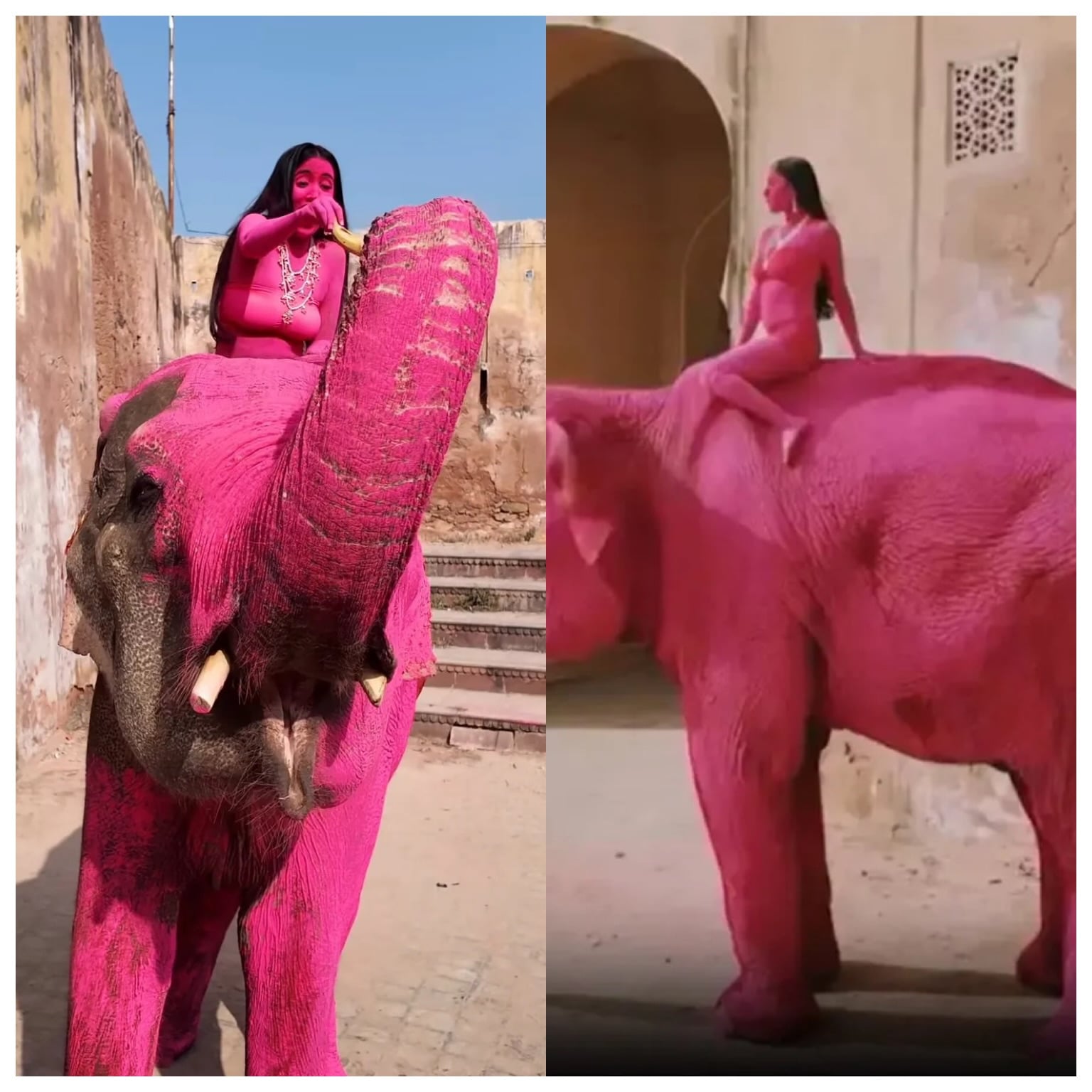
Animal welfare organisations are calling for comprehensive regulatory reforms governing captive elephant treatment in India following the death of a 65-year-old female elephant three months after being covered head-to-toe in bright pink paint for a Russian photographer’s artistic project.
Gajender Kumar Sharma, Country Director of World Animal Protection, condemned the November photoshoot in Jaipur as emblematic of “rampant abuse of captive elephants in Jaipur to cater to tourists’ whims and fancies,” demanding authorities “strictly regulate all close encounters of captive elephants with all tourists, including foreign tourists.”
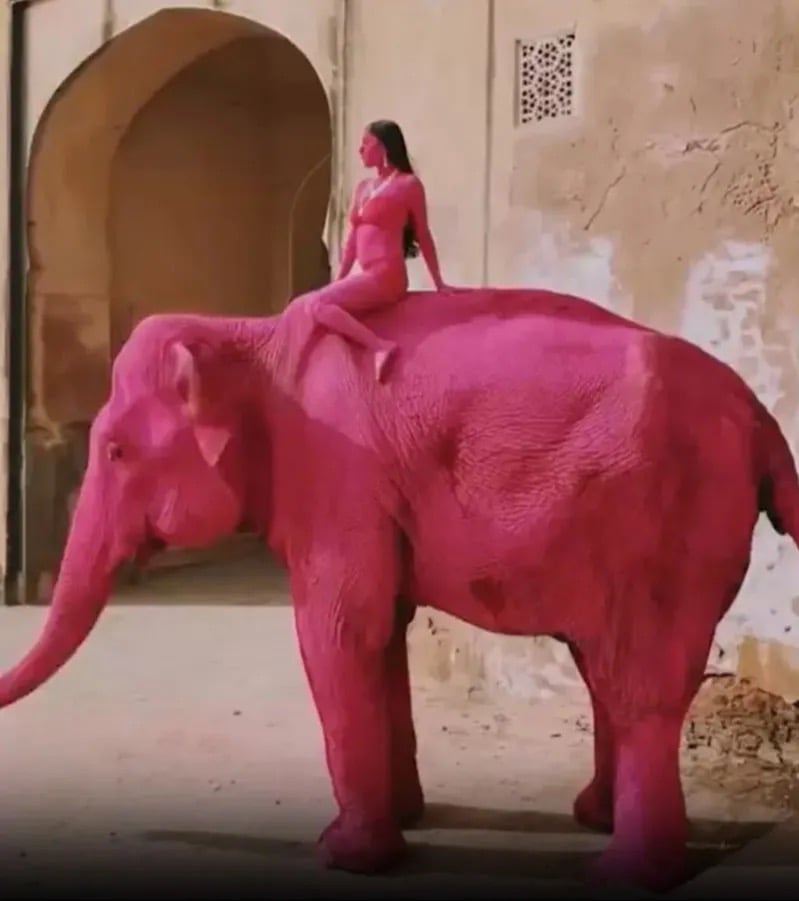
The controversy surrounding Chanchal’s participation in photographer Julia Buruleva’s project exploded across social media following the elephant’s February death, with critics accusing the artist of exploiting the animal as a “prop” purely for Instagram engagement.
Images showing a model straddling the paint-covered elephant sparked fury amongst animal rights activists who characterised the November shoot as “pure ANIMAL ABUSE” rather than legitimate artistic expression. One widely-liked Instagram comment stated: “Let’s go to India and paint elephants so my Instagram can get some likes. This is not art.”
Critics highlighted elephants’ highly sensitive, porous skin as rendering them particularly vulnerable to substances applied across their entire bodies, with multiple commenters branding the project “unethical,” “cruel” and “really disappointing.”
Ms Buruleva has vigorously defended the photoshoot, insisting “a lot of misinformation” surrounded the project and emphasising Chanchal died from old age months after the session. “The photoshoot happened months earlier and had nothing to do with it,” she stated whilst addressing the backlash
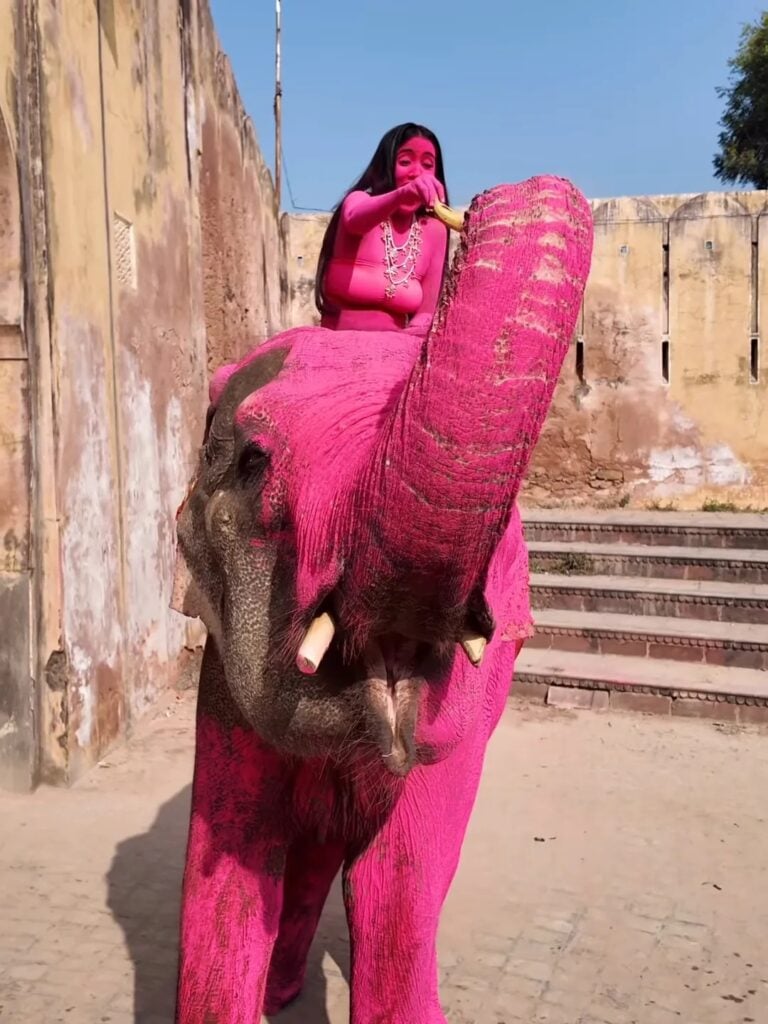
.
The photographer shared behind-the-scenes footage in March demonstrating use of “absolutely safe” organic, locally-produced paint identical to varieties employed during Indian festivals. “We used organic, locally-made paint, the same kind locals use for festivals so it was absolutely safe for the animal,” she explained.
Speaking to LadBible, Ms Buruleva acknowledged welfare concerns possessed validity but argued critics made “assumptions rather than what actually happened,” insisting she collaborated with “an experienced owner whose elephant was clearly well taken care of.”
Chanchal’s owner, Shadik Khan, confirmed the elephant no longer provided tourist rides before her February death, telling local media she had reached advanced age for the species.
Wild Asian elephants in India typically survive 55 to 70 years, with Chanchal having reached the upper boundary of natural lifespan expectations.
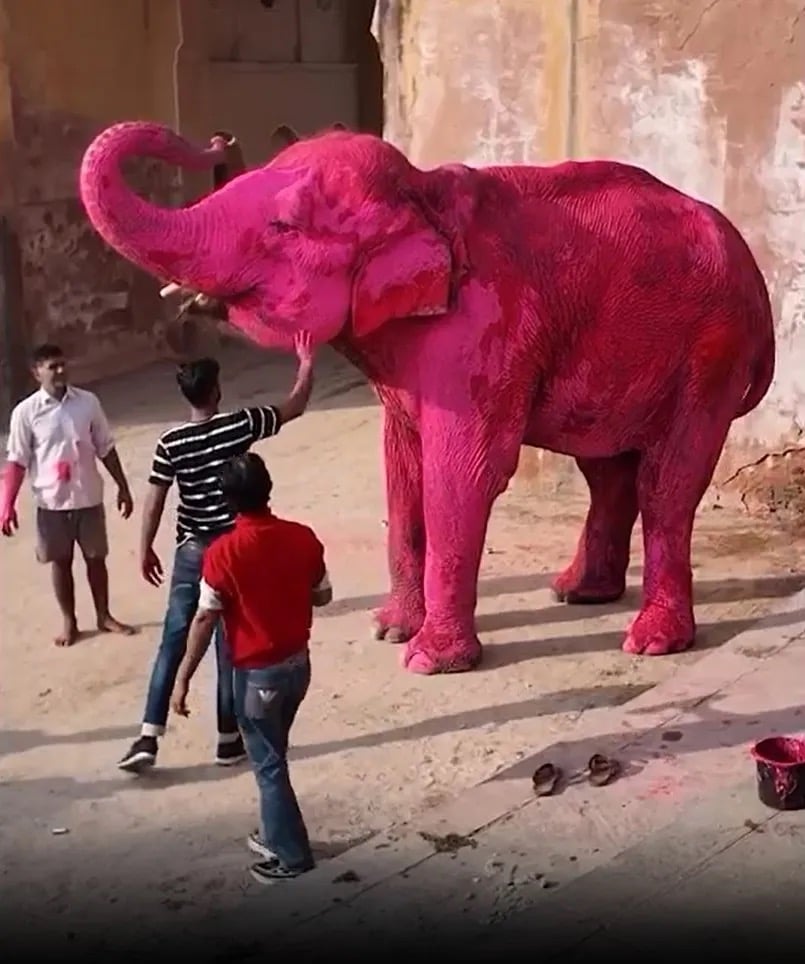
World Animal Protection warned that tourist-focused elephant exploitation conceals widespread suffering, stating: “The scale of abuse and the hidden suffering behind these outings is lost on many.”
Rajasthan’s popularity amongst tourists seeking elephant rides has generated particular concern amongst welfare advocates who argue current regulations inadequately protect captive animals from exploitation.
