



Emmanuel Macron has condemned President Donald Trump’s conduct as falling below acceptable diplomatic standards after the American leader publicly ridiculed him during a White House Easter lunch by referencing viral footage appearing to show the French first lady slapping her husband.
The French president stated on Thursday that Mr Trump’s marriage-related mockery was “neither elegant nor up to standard” as transatlantic tensions reached new heights over European refusal to join military operations aimed at reopening the Strait of Hormuz.
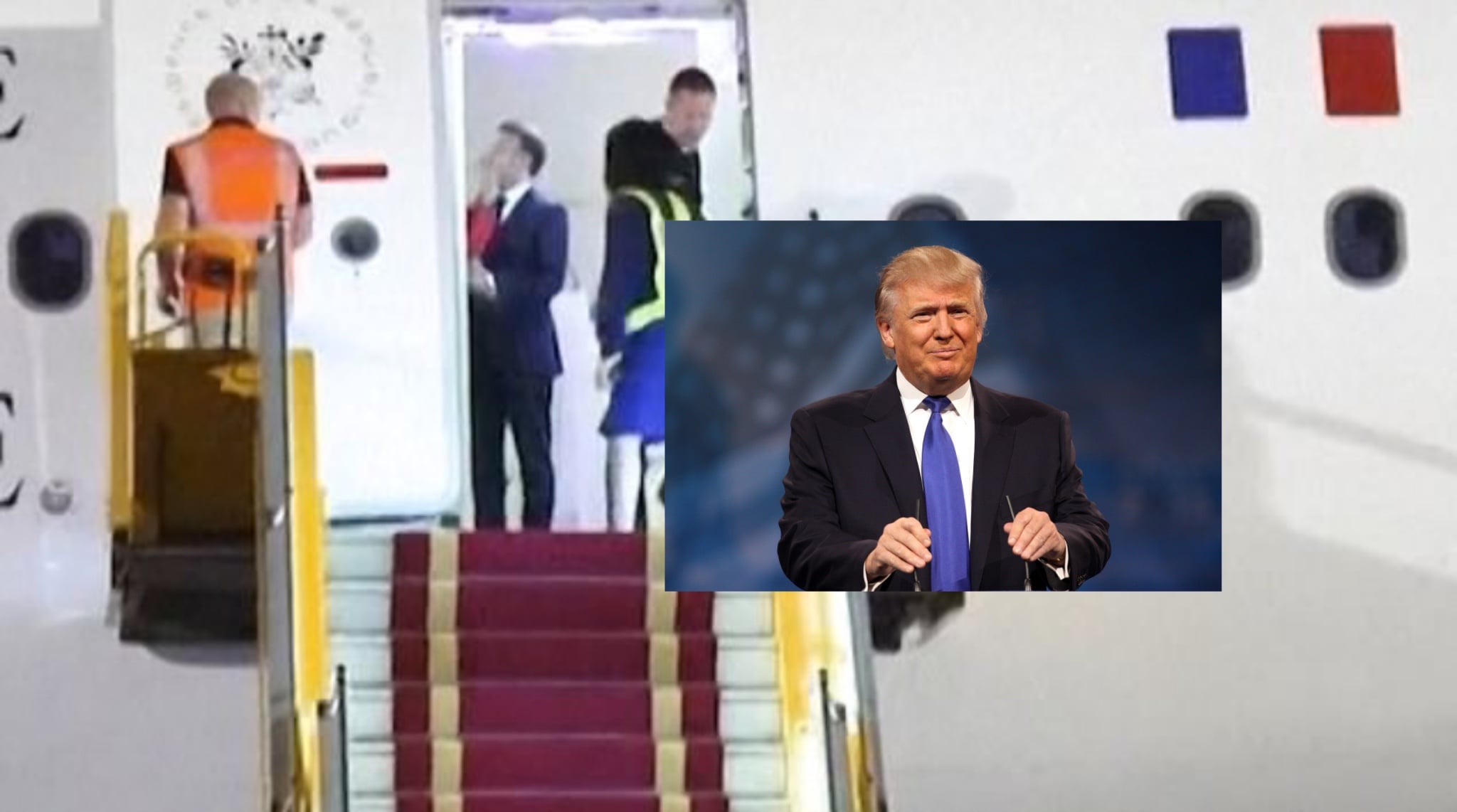
Mr Trump had referenced last May’s widely-circulated video seemingly showing Brigitte Macron pushing her husband’s face as they prepared to disembark from an aircraft in Vietnam, telling guests on Wednesday: “Then I call up France, Macron – whose wife treats him extremely badly – he’s still recovering from the right to the jaw.”
The President proceeded to mock France’s rejection of American requests for naval assistance, adopting an exaggerated French accent to imitate Mr Macron: “No, no, no, I cannot do that Donald, we can do that after the war is won.” Mr Trump responded: “I said: ‘No, no, I don’t need [them] after the war is won, Emmanuel.'”
The extraordinary personal attack sparked widespread French political anger transcending partisan divides. Yael Braun-Pivet, president of France’s lower house of parliament, stated: “We are currently discussing the future of the world. Right now in Iran, this is having consequences for the lives of millions of people, people are dying on the battlefield, and we have a president who is laughing, who is mocking others.”
Even Manuel Bompard, coordinator of the hard-left France Unbowed party typically hostile to Mr Macron, rushed to his defence. “You are aware of the extent of my disagreements with the president, but for Donald Trump to speak to him like that and to speak of his wife in such a manner – I find that absolutely unacceptable,” he told broadcaster BFMTV.
Mr Macron emphasised on Thursday that forcibly reopening the Hormuz waterway through military action remains “unrealistic,” directly contradicting Mr Trump’s demands that European nations “grab and cherish” the strategic passage.
“Some people defend the idea of freeing the Strait of Hormuz by force via a military operation, a position sometimes expressed by the United States, although it has varied,” the French president told reporters during a South Korean visit. “This was never the option we have supported because it is unrealistic. It would take forever, and would expose all those who go through the strait to risks from the guardians of the revolution but also ballistic missiles.”
During Wednesday evening’s televised address, Mr Trump insisted: “The countries of the world that do receive oil through the Hormuz Strait must take care of that passage. They must cherish it. They must grab it and cherish it, they can do it easily.” He urged European allies to “build up some delayed courage” whilst threatening to bomb Iran “back to the Stone Ages” over the coming fortnight.
Tehran’s enforcement of the Hormuz shutdown has triggered the worst oil crisis in history, with prices approaching $200 per barrel and global recession fears mounting as one-fifth of daily petroleum supplies remain blocked.
Mr Trump branded NATO a “paper tiger” and declared American withdrawal was now “beyond reconsideration” during a Telegraph interview, having repeatedly accused European nations of being “cowards” who have done “absolutely nothing” to support his Iran campaign.
US Secretary of State Marco Rubio confirmed Washington will “reexamine” NATO relationships once hostilities conclude, stating: “I think there’s no doubt, unfortunately, after this conflict is concluded, we are going to have to reexamine that relationship.”
The President has similarly derided Britain, dismissing Sir Keir Starmer as “no Winston Churchill” whilst characterising Royal Navy aircraft carriers as “toys compared to what we have.”
Financial Times reports suggest Mr Trump threatened to halt Ukraine weapons supplies via NATO’s Purl initiative to pressure European participation in a Hormuz “coalition of the willing,” prompting NATO secretary-general Mark Rutte to orchestrate an urgent 19 March statement where France, Germany and Britain expressed “readiness to contribute to appropriate efforts to ensure safe passage.”
Conservative French daily Le Figaro described Mr Trump’s marriage mockery as “another controversial outburst” as the transatlantic alliance faces its gravest crisis since formation.
