



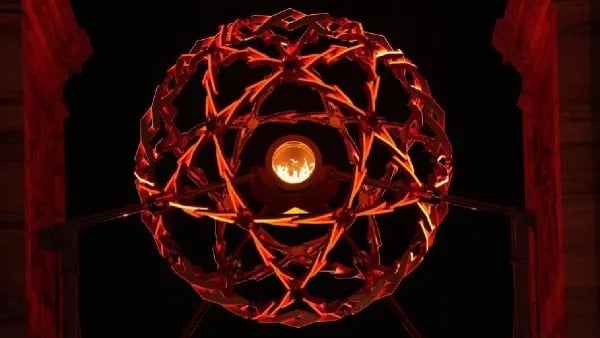
Olympic organisers have faced renewed social media controversy over ceremonial design choices after the Milano-Cortina 2026 Winter Games opening ceremony featured dual cauldrons that critics online claimed contained inappropriate symbolism.
The International Olympic Committee has not issued any confirmation or clarification regarding allegations of satanic imagery in the cauldron design, and no evidence supports the claims being circulated on social media platforms.
The opening ceremony for the 2026 Winter Olympics took place across four different venues in northern Italy on 6 February, with the San Siro Stadium in Milan serving as the main location. The unprecedented multi-venue format required a double cauldron lighting to represent both host cities.
Italian skiing legends Alberto Tomba and Deborah Compagnoni jointly ignited the cauldron at Milan’s Arc of Peace, whilst alpine champion Sofia Goggia lit a second structure in Cortina. The ceremony featured performances from Mariah Carey and Andrea Bocelli under a theme of ‘armonia’, meaning harmony.
Milano Cortina 2026 organisers described the cauldrons as “a powerful symbol of harmony between the two host cities and the territories of the widespread Games.” The structures resulted from a collaborative project by Marco Balich, Lida Castelli and Paolo Fantin.
Constructed from aeronautical aluminium, the giant orb-like installations feature geometrical patterns with diameters expanding from 3.1 metres when closed to 4.1 metres when open. The design integrates 244 pivot points and 1,440 components mounted on pins and bearings.
Official descriptions explain the design as a tribute to Leonardo da Vinci and his famous Knots, with the geometric interlacing symbolizing harmony between nature and human ingenuity. The organisers noted this as “a tribute to Leonardo and his historic connection with Milano, a city that stands as a symbol of creativity and innovation.”
Despite these explanations, social media users posted criticism of the cauldron design. One X user wrote: “Looks like something straight out of hell,” whilst another stated: “This is not a Satanic Ceremony it’s the opening Ceremony of the Winter Olympics, 2026.”
A third claimed to identify “a clearly visible upside down pentagram at the Opening Ceremony of the Olympics,” adding: “This doesn’t look like the ‘Winter Olympics’… It looks like a scene from hell.”
Some observers compared the aesthetic to ‘Hunger Games’ imagery, with one writing: “I can’t believe people still watch this garbage.”
However, many users countered these interpretations. One response stated: “You’ll turn literally anything into somethings it’s not just to fit your narrative. This is desperate and embarrassing.”
The episode illustrates how Olympic ceremonies watched by millions globally, including large audiences in India, face increasing scrutiny and reinterpretation through viral social media narratives rather than official explanations.
The controversy bears resemblance to incidents during Paris 2024 Olympics, where a segment inspired by artistic and mythological themes was misrepresented online. That episode escalated after a fabricated video falsely claimed praise from the Church of Satan, a claim subsequently debunked by fact-checkers.
Whilst Paris organisers eventually apologised for offence caused by their segment, the alleged Church of Satan endorsement itself was proven fake, demonstrating how misinformation can amplify ceremonial controversies.
The Milano-Cortina opening ceremony proceeded with additional elements including giant papier-mache bobble heads and a tribute to the late fashion designer Giorgio Armani, alongside the country parade segments that reportedly included booing for two nations.
No further statements have been issued by Milano Cortina 2026 organisers or the IOC addressing the social media reaction to the cauldron design at this time.
