



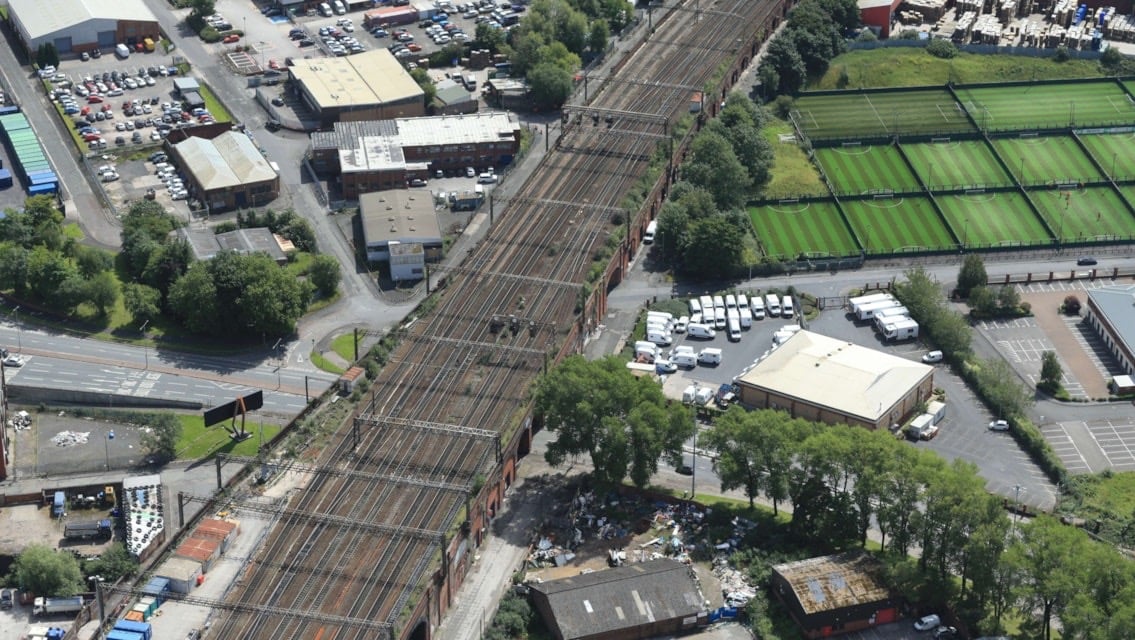
Rail passengers travelling through Manchester face widespread disruption during February half-term as the region’s busiest station undergoes a nine-day closure affecting all main line services from the south and east of the city.
Manchester Piccadilly will shut platforms 1-12 from Saturday 14 February through Sunday 22 February whilst Network Rail and the Central Rail Systems Alliance carry out upgrades to infrastructure some of which dates back to the 1980s. Only limited westbound services will operate from platforms 13 and 14.
Transport for Greater Manchester has arranged for 10 additional buses to run throughout each day on the 192 route to supplement rail replacement services and maintain connectivity during the £7.9 million infrastructure renewal.
The timing coincides with several major events at Etihad Campus including Manchester City fixtures and concerts at Co-op Live. Tram services will continue operating normally, with travel guidance available for event attendees.
Simon Elliott, Network Director Rail at TfGM, characterised the investment as “a crucial step forward in delivering a reliable and resilient railway” supporting the city-region’s economic growth. He urged passengers to plan journeys, check before travelling and allow extra time due to expected high demand on services.
Valid rail tickets will be accepted across numerous Bee Network bus routes and Metrolink tram services in affected areas. Staff will be stationed at Manchester Piccadilly to assist passengers with coordinating bus and tram connections, though the station concourse will remain open to the public throughout the closure.
Train operators warned services will be extremely busy during the essential maintenance period. Passengers are advised to travel with minimal luggage and prepare for potential queuing at stations and on rail replacement buses.
The scale of works spans nearly one kilometre of track and includes replacing 11 sets of points, laying 9,000 metres of new cabling, upgrading timber sleepers to modern concrete alternatives, and installing 5,500 tonnes of fresh ballast alongside signalling improvements.
Rebecca Rathore, Network Rail’s North West route strategy director, acknowledged the partial closure would cause disruption but emphasised the necessity of the upgrades for long-term reliability across Greater Manchester and the wider North West. She recommended anyone travelling between 14 and 22 February consult National Rail Enquiries for journey planning.
Service alterations affect multiple routes. Avanti West Coast and Cross Country trains from the south will terminate at Stockport. Airport services face significant changes, with most replaced by buses though a limited Crewe service will continue. Services from South Wales will end at Crewe with onward connections available.
Eastern routes see stopping services from Sheffield and trains from Glossop and Hadfield terminating at Guide Bridge, whilst fast Sheffield services stop at Stockport. Leeds and Huddersfield trains will only reach Manchester Victoria.
Western and northern services face similar restrictions, with North Wales and Chester trains ending at Manchester Oxford Road via Warrington Bank Quay. Liverpool and Warrington Central services also terminate at Oxford Road. Preston and Bolton trains stop at either Victoria or Oxford Road, whilst TransPennine Express services from Scotland end at Preston.
Comprehensive rail replacement bus services will operate between Manchester Piccadilly and multiple destinations including Stockport, Manchester Airport, and Chesterfield. Additional replacement buses will connect Manchester Airport with Warrington, Preston, Bolton and Huddersfield. Victoria station will have bus links to Guide Bridge and Rose Hill Marple via Romiley.
Passengers requiring Altrincham connections should use Metrolink services. The closure represents one of several major improvement projects Network Rail has scheduled along the West Coast Main Line in coming months.
The investment aims to address reliability issues stemming from aging infrastructure, with faults on this section capable of causing knock-on effects across the entire network. Modernisation should reduce unplanned disruptions for both passenger and freight services for decades ahead.
Updates about the Manchester Piccadilly project are available on Network Rail’s dedicated webpage.
