



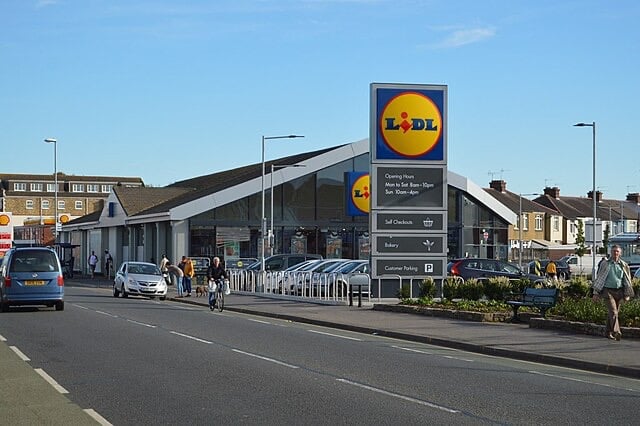
German discount supermarket Lidl GB is investing half a billion pounds in expansion plans set to deliver over 40 new stores this financial year whilst doubling warehouse capacity to meet surging consumer demand for affordable groceries.
The ambitious programme encompasses infrastructure developments including completion of the Belvedere Regional Distribution Centre expansion—which has more than doubled in size—alongside commencement of construction on a brand-new Leeds distribution facility later this year.
Richard Taylor, Lidl GB’s Chief Real Estate Officer, characterised the investment as demonstrating the retailer’s ambition as it “hurtle[s] towards a thousand stores” whilst entering its fourth British decade, having launched operations in the 1990s.
“There are still so many parts of the country crying out for convenient access to a Lidl store,” Mr Taylor stated, welcoming Government planning reforms aimed at removing development barriers and supporting growth.
The discounter published its 2025 site requirements brochure today outlining hundreds of potential locations spanning high streets, retail parks and mixed-use town centre sites across England, Scotland and Wales.
Geographic targets range from Newton Mearns to Dawlish and Builth Wells to Aylsham alongside the London Borough of Barnet, reflecting accelerated expansion responding to customer demand patterns.
Mr Taylor emphasised economic benefits accompanying new openings: “New Lidl stores mean new jobs, new opportunities for British suppliers, and continued investment into local economies. We’re proud to be one of the fastest-growing supermarkets in the country.”
The site requirements brochure identifies areas of interest desirable for development rather than confirmed store plans, representing a long list from which a proportion will eventually progress to operational status.
Lidl’s expansion strategy positions the chain to capitalise on cost-conscious shopping behaviour persisting since inflation peaked, with discount retailers gaining market share against traditional supermarkets through competitive pricing on essential goods.
The investment announcement aligns with Government planning reforms proposed in the Planning and Infrastructure Bill, which Mr Taylor praised for recognising “the urgent need to remove barriers to development.”
Distribution infrastructure represents a critical component enabling the expansion, with warehouse capacity increases essential for efficiently servicing growing store networks whilst maintaining the discount pricing model requiring streamlined logistics.
The Leeds distribution centre project reflects Lidl’s northern England growth ambitions, providing regional supply capabilities reducing transportation costs whilst improving delivery frequencies to stores across Yorkshire and surrounding counties.
Lidl’s fourth British decade ambitions demonstrate continued confidence in the discount retail sector’s growth prospects despite economic headwinds affecting consumer spending across multiple categories.
