



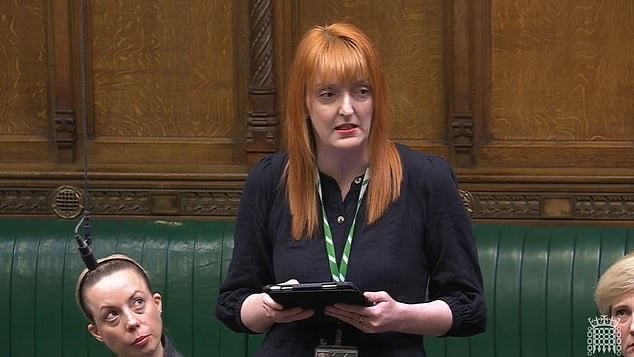
A Labour MP who waived her right to anonymity to reveal she had been raped delivered one of the most powerful parliamentary speeches in recent memory as David Lammy’s controversial plans to restrict jury trials cleared their first Commons hurdle by a majority of 101 votes.
Charlotte Nichols told MPs she had waited 1,088 days for her case to come to trial and had developed PTSD following the attack, which had led to her being sectioned for her own protection. While she acknowledged the scale of the court backlog, she turned the force of her speech against the Justice Secretary himself, accusing him of using survivors’ experiences as “a cudgel to drive through reforms that aren’t directly relevant to them.”
“Don’t say that this bill helps deliver justice for rape victims until it actually materially does,” she told Lammy directly. “In this debate, experiences like mine feel like they’ve been weaponised and are being used for rhetorical misdirection.”
The Courts and Tribunals Bill passed its second reading with 304 MPs voting in favour and 203 against — a majority of 101 — despite significant disquiet on the Labour benches and a threatened rebellion that ultimately fell short. Rebel ringleader Karl Turner abstained rather than vote against, saying he was “more confident now than ever” that the most contentious elements of the Bill would be defeated at the amendment stage. Turner, a former barrister, described the proposals as “unworkable, unjust, unpopular and unnecessary” but said he believed they would not ultimately become law in their current form.
The Bill proposes removing jury trials for cases where the likely sentence is under three years, with those cases instead heard by a single crown court judge. Magistrates would also see their sentencing powers raised from 12 to 18 months.
Lammy argued the reforms were unavoidable, warning that without action the court backlog could reach 200,000 cases within a decade. “Victims are currently worn down, people simply give up, cases collapse and offenders remain free,” he told the Commons, citing research suggesting the changes would reduce trial times by at least 20 per cent.
But opposition came from multiple directions. More than 3,200 lawyers, including 300 senior barristers and retired judges, signed a letter organised by the Bar Council describing the proposals as being “based on little evidence” and warning of risks to a “deeply entrenched constitutional principle.” Former director of public prosecutions Sir David Calvert-Smith was among the signatories. The letter argued that “chronic underfunding” rather than jury trials was responsible for the backlog.
Jo Hamilton, a victim of the Post Office Horizon scandal, wrote to Lammy urging him not to abandon the “safety net of a jury,” with Turner separately noting that none of the 900 sub-postmasters wrongly convicted in the Horizon scandal would have been entitled to a jury trial under the proposed rules.
Labour MPs Stella Creasy and Jon Trickett also expressed serious reservations. Trickett branded the curtailment of jury trials “oppressive” and “authoritarian,” describing jury trials as “a fundamental part of our constitutional system.” Shadow justice secretary Nick Timothy said the government was attacking “an ancient English right” that made the British legal system “the envy of the world.”
The Bill now proceeds to committee stage, where the most contested provisions are expected to face significant amendment attempts.
