



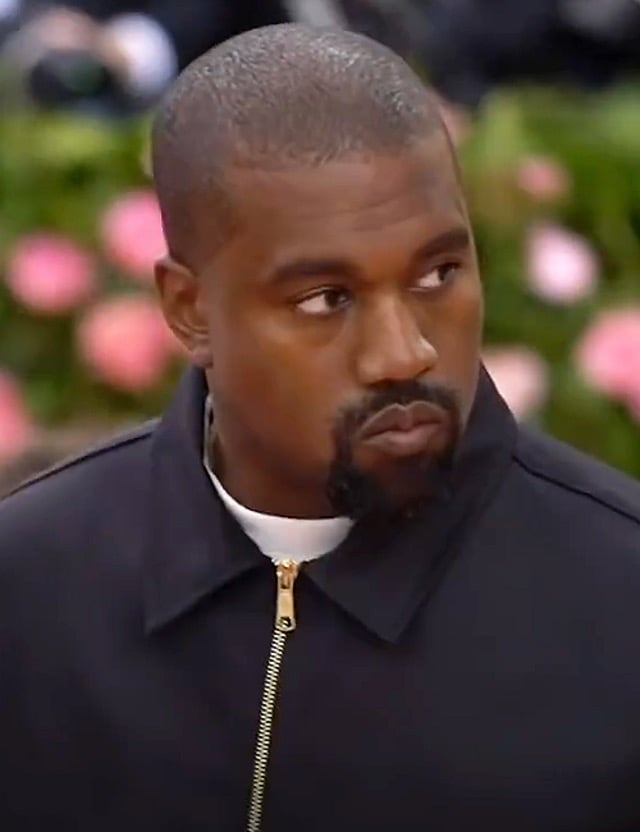
Government ministers are reviewing whether to deploy rarely-used exclusion powers to prevent Kanye West entering Britain this summer, as the rapper’s planned headline performances at London’s Wireless Festival precipitate a mounting crisis for event organisers who have already lost major corporate sponsors and face intensifying political pressure.
Home Secretary Shabana Mahmood possesses legal authority to bar individuals deemed “not conducive to the public good”—a mechanism that requires no criminal conviction and can apply to those whose presence might incite disorder or who have engaged in extremism. Officials confirmed late Monday that whilst no immediate travel plans have been detected, West’s eligibility for UK entry is under ministerial examination.
The scrutiny follows West’s publication of an updated apology letter expressing desire to meet Jewish community representatives in London “to listen” ahead of his July performances at Finsbury Park. Yet the gesture has been met with scepticism from both political leaders and community organisations, who point to a pattern of antisemitic conduct including a song titled “Heil Hitler” and merchandise featuring swastikas sold as recently as February.
Health Secretary Wes Streeting delivered perhaps the most pointed governmental response, telling BBC Radio 4’s Today programme: “If he wants forgiveness, it’s not my forgiveness that he needs, it’s the forgiveness of Jewish communities and I don’t think he’s done anything to earn it.”
What Sponsors’ Withdrawal Signals About Reputational Risk
The commercial consequences arrived swiftly. Pepsi and Diageo—two of Wireless Festival’s principal sponsors—have withdrawn support following the announcement of West as headline act across all three festival nights. Rockstar Energy has reportedly followed suit, whilst PayPal confirmed it will not feature in future promotional materials, leaving organisers scrambling to replace revenue streams weeks before the July event.
The exodus reflects corporate calculations about brand association in an environment where antisemitism has become a defining social and political flashpoint. West’s conduct extends beyond isolated remarks: he released music glorifying Nazi ideology, sold swastika-emblazoned clothing through official channels, and made statements dismissing the 400-year experience of slavery as “like a choice”—a comment that alienated both Jewish and Black communities.
Phil Rosenberg, president of the Board of Deputies of British Jews, noted in his response that West’s latest album contains a track originally titled “Gas Chamber,” released even as the rapper claimed to be demonstrating remorse. “The Jewish community will want to see a genuine remorse and change before believing that the appropriate place to test this sincerity is on the main stage at Wireless Festival,” Rosenberg stated.
His organisation offered conditional engagement: they would meet West “as part of his journey of healing” only after he agrees not to perform at Wireless this year—effectively making withdrawal from the festival a prerequisite for dialogue rather than a potential outcome of it.
Why the Bipolar Defence Has Intensified Rather Than Deflected Criticism
West has repeatedly attributed his inflammatory statements to bipolar disorder, which he claims developed following injuries sustained in a car crash 25 years ago. The explanation features prominently in his apologies, including statements declaring “I am not a Nazi or an anti-Semite” alongside professions of love for Jewish people.
Yet this defence strategy appears to have backfired, drawing particular criticism from Health Secretary Streeting, who condemned what he characterised as exploitation of mental illness to justify deliberate conduct. “Does using bipolar disorder as an excuse to write and release a song called Heil Hitler and plaster it across T-shirts, does bipolar disorder really justify that? Or is it an excuse to justify rotten behaviour?” Streeting asked.
The minister’s intervention carries particular weight given his portfolio responsibilities for mental health policy. His framing suggests governmental concern that West’s public association of bipolar disorder with antisemitic conduct risks stigmatising those living with the condition whilst providing cover for behaviour that appears calculated rather than impulsive.
This interpretation finds support in the pattern of West’s actions: producing merchandise, releasing music through commercial channels, and publishing paid advertisements all require sustained planning and multiple opportunities for reflection—inconsistent with claims of uncontrolled episodes.
The controversy unfolds against a backdrop of rising antisemitic incidents across Britain, including an arson attack last month that destroyed four Jewish community ambulances outside a north-west London synagogue. Three men have been charged in that incident, which authorities are treating as a suspected hate crime.
Shadow Home Secretary Chris Philp wrote to Ms Mahmood on Monday urging deployment of exclusion powers, arguing that West’s presence would send “entirely the wrong message” at a moment when Jewish communities face heightened threats. “This is not a one-off lapse, but a pattern of behaviour that has caused real offence and distress,” Philp wrote, noting that previous apologies had been retracted.
Prime Minister Keir Starmer described the planned performances as “deeply concerning,” though stopped short of explicitly calling for West’s exclusion—likely reflecting the complex legal considerations involved in such decisions and the government’s desire to avoid accusations of political interference in visa determinations.
West’s letter, published as a full-page advertisement in The Washington Post in January and now updated, states his goal is “to come to London and present a show of change, bringing unity, peace, and love through my music.” The appeal to demonstrate transformation through “actions” rather than “words” has thus far failed to persuade either community representatives or political figures that the 48-year-old rapper has undertaken the sustained reflection and public accountability his conduct demands.
As ministerial review continues, the Home Office faces a decision that balances free expression principles against public order considerations and the government’s stated commitment to confronting antisemitism—with the outcome likely to establish precedent for how Britain handles controversial figures whose presence generates both commercial and social controversy.
