



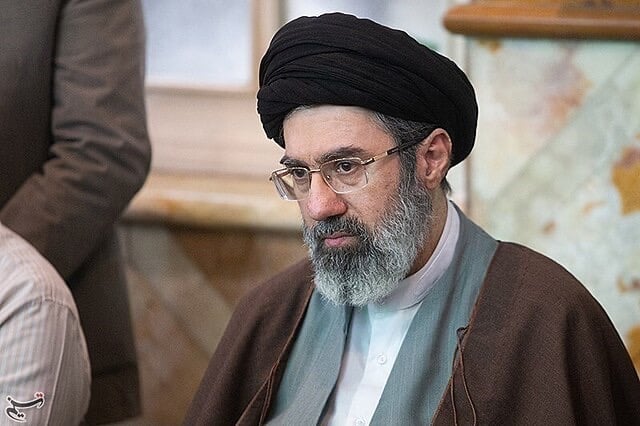
American and Israeli intelligence assessments have disclosed that Iran’s Supreme Leader Mojtaba Khamenei is receiving medical treatment in Qom for injuries leaving him “unconscious and unable to be involved in decision making,” raising fundamental questions about Tehran’s leadership during ongoing Washington negotiations.
The Times obtained classified documentation circulated amongst allied nations confirming the 56-year-old leader’s severe condition whilst revealing preparations for “a large mausoleum in Qom” accommodating multiple graves—fuelling speculation both father and son may be interred together following the 28 February airstrikes that killed Ali Khamenei.
“Mojtaba Khamenei is being treated in Qom in a severe condition, unable to be involved in any decision making by the regime,” the intelligence memo states, confirming long-circulating rumours the leader sustained catastrophic injuries during the initial American-Israeli bombardment that claimed his father, wife and son.
The Supreme Leader has not appeared publicly since assuming power through early March “elections,” with Tehran instead releasing two written statements purportedly authored by Mojtaba alongside an artificial intelligence-generated video showing him in a warm room assessing Israeli nuclear facilities—unconvincing attempts officials acknowledge have merely intensified international scrutiny.
US War Secretary Pete Hegseth questioned the written statement format during a press conference lambasting Iranian military capabilities. “He put out a statement yesterday. A weak one, actually, but there was no voice. And there was no video. It was a written statement,” Hegseth mocked.
“Iran has plenty of cameras and plenty of voice recorders. Why a written statement? I think you know why. He’s scared, he’s injured, he’s on the run and he lacks legitimacy. It’s a mess for them. Who’s in charge? Iran may not even know.”
Intelligence assessments suggest Mojtaba lost at least one leg during February’s strikes whilst sustaining severe internal injuries potentially affecting his stomach or liver, with sources describing him as “severely disfigured” and comatose—conditions Iranian officials have obliquely acknowledged whilst maintaining the facade of functional leadership.
The leadership vacuum raises critical concerns about Tehran’s negotiating authority as President Donald Trump claims talks remain ongoing despite admitting he lacks direct communication with the Supreme Leader himself.
Washington’s uncertainty about genuine Iranian leadership complicates diplomatic efforts to reopen the Strait of Hormuz, with Trump extending deadlines whilst threatening to “obliterate” Iranian infrastructure if agreements fail to materialise.
The mausoleum preparations for dual burials suggest Iranian authorities anticipate Mojtaba’s condition may prove terminal, potentially triggering another succession crisis within weeks of the previous transition.
