



Development at Euston station could inject £41 billion into the UK economy over the next three decades as work progresses on bringing the high-speed rail line into central London.
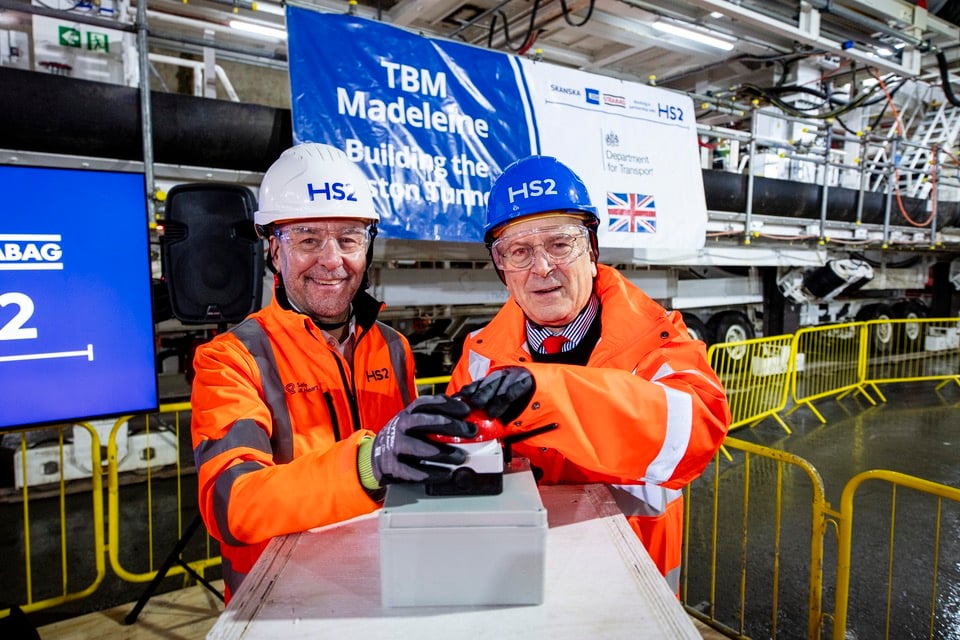
A massive 1,624-tonne tunnel boring machine named ‘Madeleine’ began excavating a 4.5-mile passage from Old Oak Common to Euston on Monday, representing a significant step towards completing the railway’s final stretch into the capital.
Camden Council estimates suggest the station redevelopment will support 34,000 new jobs alongside a mix of residential and commercial construction, whilst west London is projected to see £10 billion in economic activity over the next decade.
The boring machine, named after former Women’s Engineering Society president Madeleine Nobbs, simultaneously excavates earth and constructs the tunnel by placing concrete segments as it progresses. A second machine will follow to create parallel tunnels for HS2’s two-way service.
Chief Secretary to the Prime Minister Darren Jones and Rail Minister Lord Hendy attended Old Oak Common station alongside HS2 Ltd CEO Mark Wild and Transport for London Commissioner Andy Lord to activate the tunnelling equipment.
The project expects to create 22,000 additional homes and nearly 19,000 new jobs across west London, with over 33,000 people currently employed in constructing the high-speed railway between London and Birmingham.
HS2 Ltd has already completed 23 miles of tunnels, 19 bridges and two viaducts along the route from central London to Birmingham, with Monday’s launch marking progress on the final section into Euston.
Lord Hendy described taking the railway into central London as “crucial to unlocking its full potential to deliver more jobs, more homes and a long-term boost to the whole British economy.”
Mr Jones noted the milestone builds on six major rail tunnel and road achievements completed ahead of schedule last year, stating the government aims to boost connections between major cities “to create more opportunities for people to trade, meet and socialise with each other.”
The excavation will remove over 1.5 million tonnes of material and install more than 8,000 pre-cast concrete rings manufactured at a dedicated facility in Hartlepool. All tunnel segments and excavated earth will be transported by rail through a logistics hub, eliminating approximately 70,000 lorry journeys from local roads.
HS2 Ltd CEO Mark Wild is leading a comprehensive project reset to ensure delivery between London and Birmingham “at the lowest reasonable cost.” He expressed confidence the tunnelling start demonstrates HS2 “will be built into central London and kickstart economic growth.”
The government plans to establish the Euston Delivery Company, a new body that will oversee construction of an integrated transport hub including the HS2 station, existing station redevelopment and London Underground upgrades, alongside commercial development across the Euston campus.
Transport for London is coordinating with partners to ensure smooth passenger interchange between Underground, bus, HS2 and National Rail services once the station opens.
Separately, the government is advancing legislation to create Great British Railways, a publicly owned body that will oversee the railway network, whilst implementing the first fare freeze in 30 years.
