



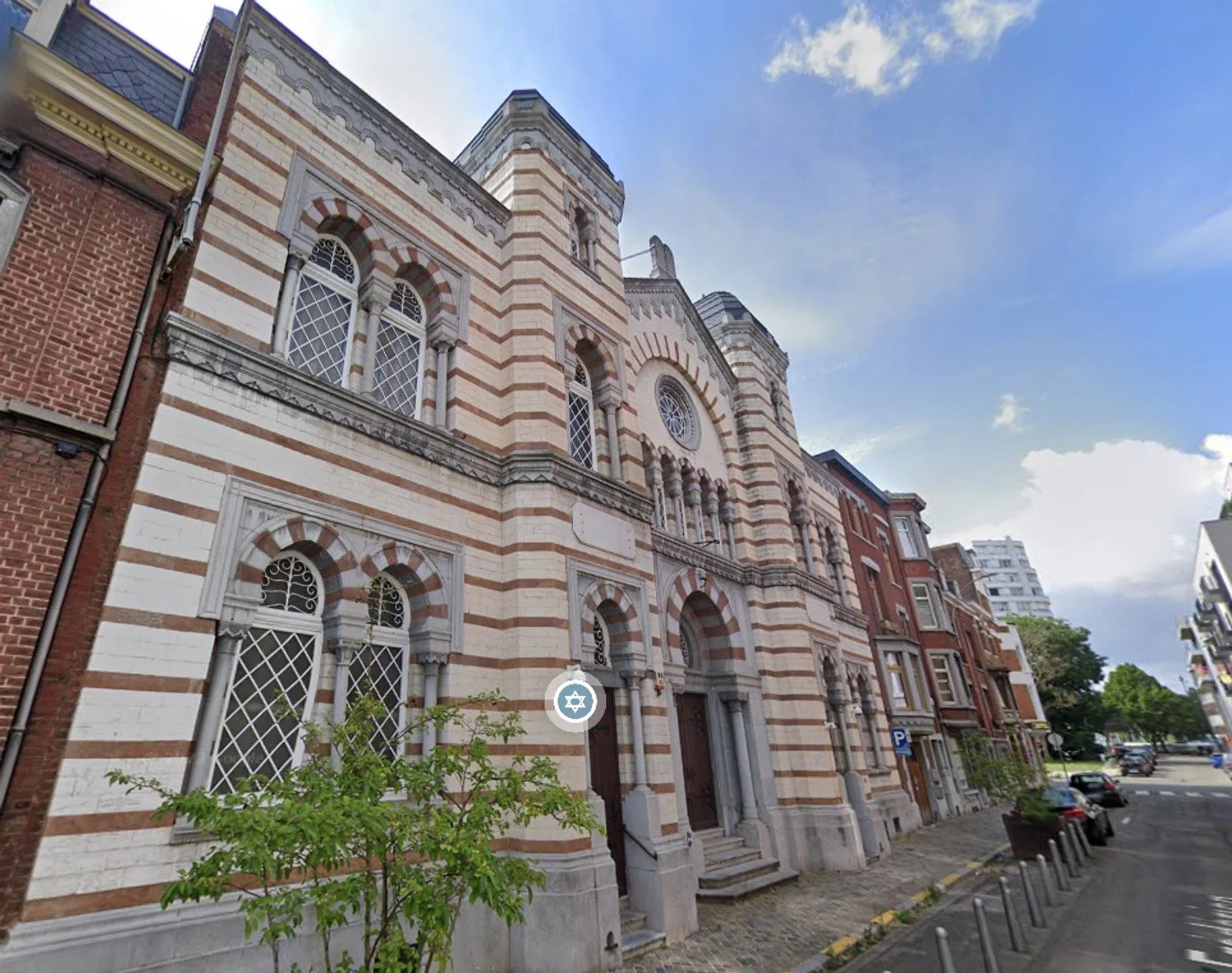
A 19th-century synagogue in the Belgian city of Liège has been damaged in a suspected explosion in the early hours of Monday morning, with the city’s mayor describing it as a “violent act of antisemitism” as counter-terrorism police launched an investigation.
The blast, which occurred at around 4am, caused significant material damage to the synagogue — a building dating back to 1899 that serves as a museum documenting the history of the city’s Jewish community. Windows in buildings across the road were also blown out by the force of the explosion. No injuries have been reported. Authorities have established a security perimeter around the site as investigations continue into the cause of the blast.
Liège Mayor Willy Demeyer condemned the incident in strong terms, speaking on local radio. “From the information communicated to me, there is little doubt,” he said, adding that the investigation would need to formally establish the cause. “It is unacceptable that we import conflicts from outside into our city.” The Mayor has also been in contact with Belgium’s Minister of the Interior regarding the next steps.
The president of the Committee of Jewish Organizations of Belgium, Yves Oschinsky, described the incident to the Belga news agency as “an extremely worrying, serious and concerning anti-Semitic act.”
The incident comes against a backdrop of rising antisemitic incidents across Europe and the United Kingdom. In Britain, the Community Security Trust recorded 3,700 anti-Jewish hate incidents in 2025 — a four per cent increase on the previous year — with a particularly sharp spike following a deadly attack on the Heaton Park Synagogue in Manchester on 2 October, when Jihad Al-Shamie drove into the synagogue gates before launching a knife attack while wearing a fake suicide belt. Two worshippers, Melvin Cravitz and Adrian Daulby, were killed in what police confirmed was the first fatal antisemitic terror attack in Britain since the CST began recording incidents in 1984.
CST recorded 40 incidents on the day of the Manchester attack and a further 40 the following day — the highest daily totals of 2025. The organisation noted that more than half of the incidents logged in the immediate aftermath were direct reactions to the killings. Cases involving damage or desecration of Jewish property rose 38 per cent in 2025 to 217 recorded incidents.
CST chief executive Mark Gardner described the Manchester attack as the culmination of “two years of intense anti-Jewish hatred.” National policing lead for hate crime Mark Hobrough said recorded levels were “unacceptably high” and that tensions appeared “deeper and more entrenched than in previous years.”
The cause of the Liège explosion has not yet been formally confirmed, and the counter-terrorism investigation is ongoing.
