




A 24-year-old university graduate has built an artificial intelligence platform that allows members of the public to vote on every piece of legislation passing through the UK Parliament — and within days of launching, it had already attracted tens of thousands of users and endorsements from some of the country’s most prominent political commentators.
Charlie Jobson, a recent University of Durham graduate, spent three months building House of the People after quitting his previous work in August last year. The platform went live to considerable public response, with its X page growing from 22 followers to more than 25,900 in a matter of days. Prominent political journalists including Camilla Tominey and Allison Pearson were among those who endorsed it. Since going live, 60,000 votes have been cast across a range of legislative issues.
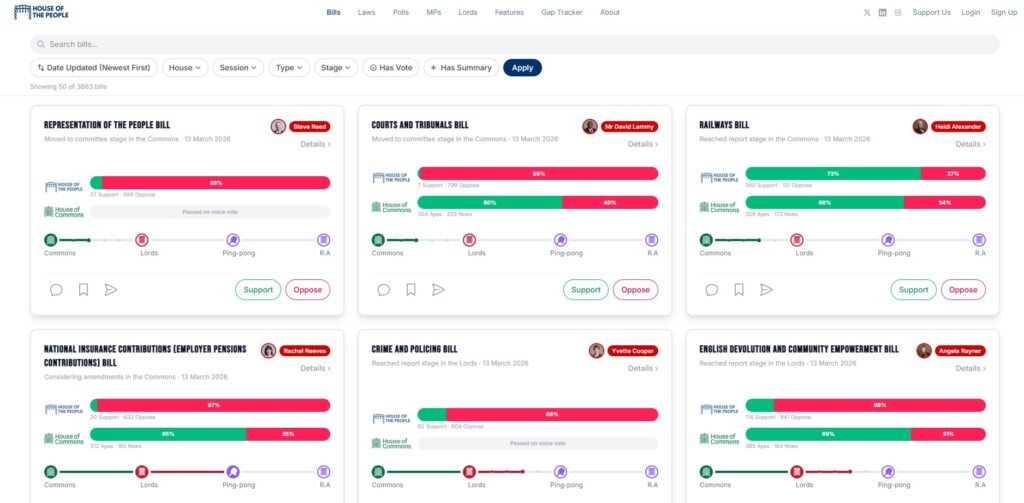
The platform tracks every piece of legislation as it moves through Parliament, from its introduction in the House of Commons through to Royal Assent. Users can access explanations of parliamentary terminology, view documents linked to each piece of legislation, monitor their MP’s voting record, track participation rates and party loyalty, and view their representative’s registered interests.
The gap between parliamentary votes and public sentiment has already been illustrated in stark terms by the platform’s early data. David Lammy’s Courts and Tribunals Bill, which proposes reserving jury trials for only the most serious cases, passed its second reading in the Commons with 304 votes — representing 60 per cent of MPs who voted. House of the People found that 800 of its users opposed the bill, revealing a 59 per cent disparity between the parliamentary outcome and the public response recorded on the site.
Jobson told GB News he had noticed “a slight deficit in the representation of the people” and wanted to create “a more direct line from the people to the people that represent us.” In a statement on the website, he wrote that he had been motivated by a sense that democratic conversations were taking place behind closed doors, with insufficient regard for public opinion. “The platform exists because the gap between public will and parliamentary action should be visible,” he wrote.
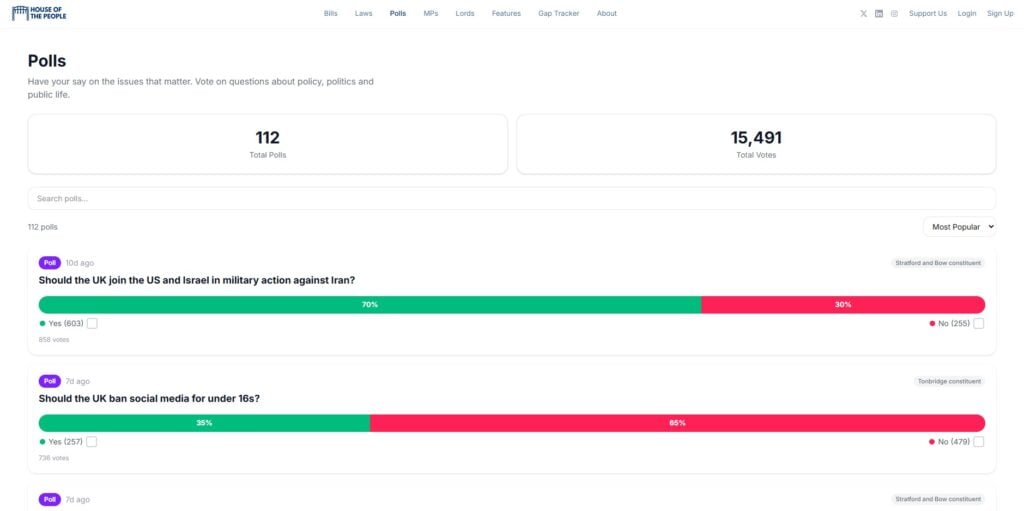
On 8 March, Jobson posted on social media that within 24 hours the platform had become “one of the biggest platforms for democracy in the UK,” adding that the response suggested people had “been waiting for something like this.”
Following the initial reception, House of the People has confirmed it will launch an app by the end of the month. Jobson has also indicated his longer-term ambition to develop a comparable platform for voters in the United States.
