



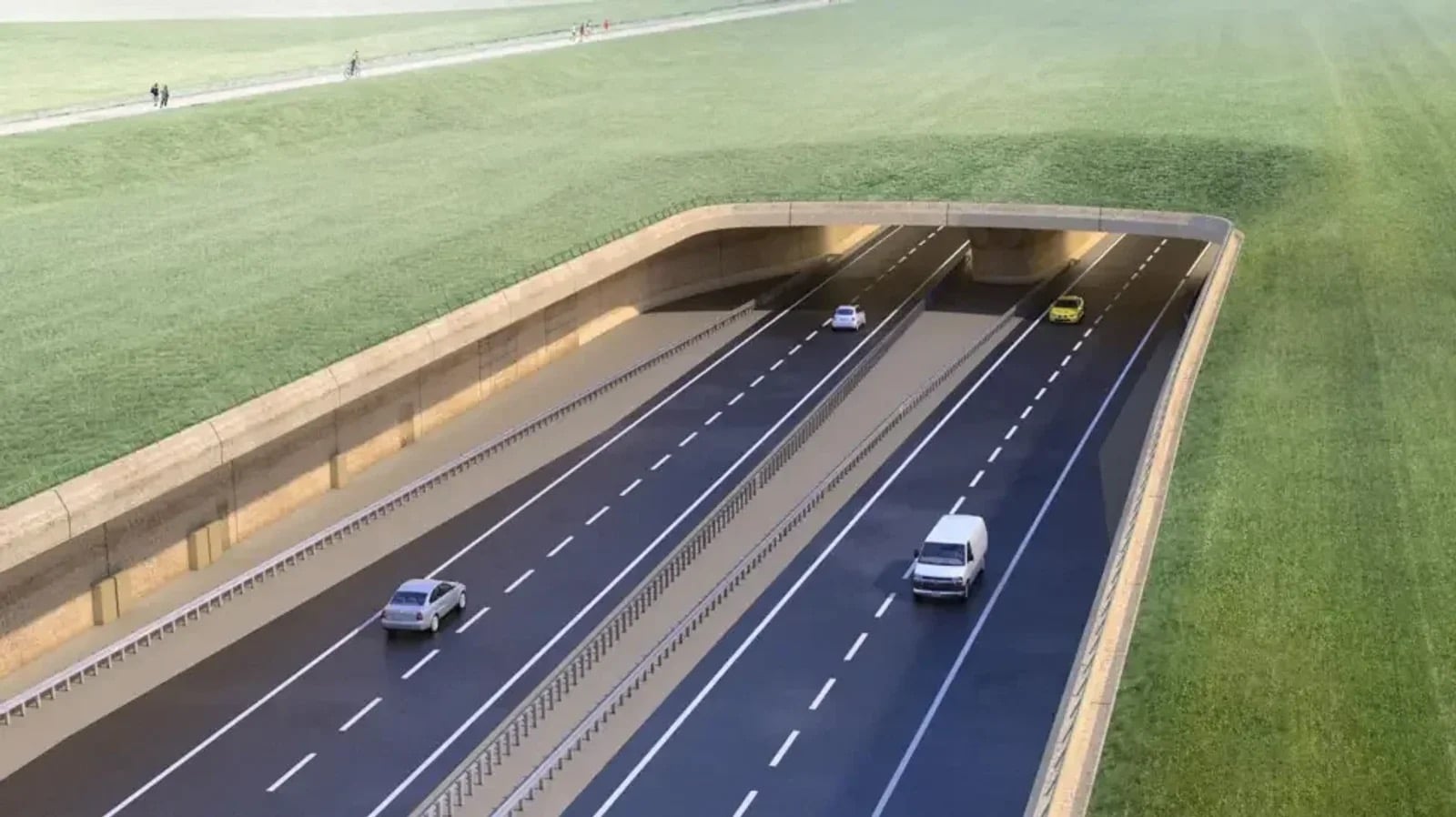
Nearly two decades of planning, consultation and £179 million of public money have come to nothing after the Government formally revoked the development consent order for the long-contested A303 tunnel near Stonehenge, drawing the curtain on one of Britain’s most divisive infrastructure projects.
Transport Secretary Heidi Alexander made the decision to formally withdraw consent following what the Department for Transport described as a “substantial change in the scheme’s deliverability.” Officials said the project “no longer aligns with current strategic policy objectives” and confirmed that alternative infrastructure plans would now be developed in its place. The department cited “exceptional circumstances” as justification for the revocation.
The scheme had already been effectively shelved in 2024 due to financial pressures, despite receiving planning permission in 2023. The original proposals centred on a bored tunnel passing beneath the World Heritage Site, accompanied by two new junctions and a northern bypass. Its formal cancellation brings to a definitive end a project that had been contentious from the outset.
Reaction to the decision split sharply along familiar lines. Wiltshire Council expressed considerable frustration, with highways lead Martin Smith calling it “a huge blow.” Council leader Ian Thorne had previously warned that scrapping the scheme would be “completely unacceptable,” arguing it represented a once-in-a-generation opportunity to address one of the South West’s most congested road corridors. Critics of the cancellation pointed to the absence of any agreed alternative to tackle gridlock and the rat-running of traffic through surrounding villages.
For heritage campaigners, however, the outcome represented the conclusion of a lengthy fight. Stonehenge Alliance acting chairman Mike Birkin said the project would have caused “enormous damage” to a landscape containing prehistoric monuments of “incalculable value.” He noted the scheme had been condemned by both planning inspectors and UNESCO experts, yet had initially been pushed through regardless. Birkin suggested the funding freed up by the cancellation could instead be redirected toward improving rail connections serving communities across the South West.
The £179.2 million already spent on the project covers preparatory and development work carried out before the scheme was halted. What form the promised alternative infrastructure proposals will take, and on what timeline, has not yet been set out by the Department for Transport.
