



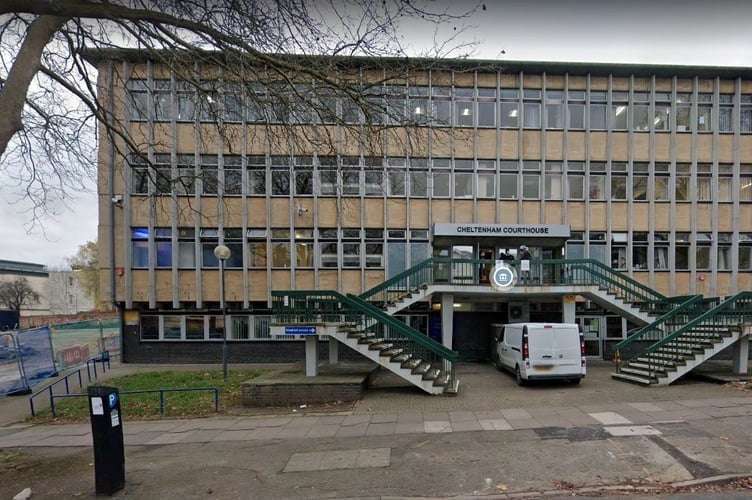
A woman who fraudulently claimed more than £70,000 in benefits over six years has avoided an immediate prison sentence after magistrates in Cheltenham took account of her significant mental health conditions, dyslexia and caring responsibilities.
Donna Palmer, 48, of Hygrove Residential Park in Minsterworth near Gloucester, admitted a series of offences relating to false claims for Employment and Support Allowance, Housing Benefit and Universal Credit. The total amount fraudulently obtained came to £70,430.05, with the offending spanning from January 2017 to November 2023.
The court heard that Palmer had originally applied for ESA in 2017, declaring she was single and living alone in Gloucester. She was informed at the time that the benefit would not be payable if a working partner was living with her and was reminded to report any changes to her circumstances. Despite this, the Department for Work and Pensions received an anonymous tip-off in 2022 alleging that her partner, Stephen Wheeler, had been living with her for five years while in employment. The same report alleged Palmer had also been working at a local pub without declaring the income.
Investigators concluded the couple had been cohabiting throughout the period in question, rendering Palmer ineligible for £26,780.96 in income-related ESA and £42,184.19 in Housing Benefit. A further £1,464.88 was claimed through a joint Universal Credit application with Wheeler between December 2023 and May 2024, in which the couple included the child element for Palmer’s daughter — despite investigators finding the daughter had been living with her father for several years and had left school in 2023 to begin work. Wheeler was previously dealt with through an out-of-court disposal for his part in the joint Universal Credit claim.
In mitigation, defence solicitor Blaise Shervington told magistrates his client suffered from significant mental health conditions and took eight different medications daily, including treatments for anxiety, depression and bipolar disorder, as well as medication to reduce the risk of heart attacks and strokes. He said Palmer had attended a special educational needs school, often struggled to manage administrative matters independently and had relied heavily on her partner to handle official paperwork. He described her as deeply remorseful and frightened by the proceedings.
The court also heard Palmer is the primary carer for one of her daughters, who suffers from the bone condition osteitis fibrosa.
Magistrates acknowledged the difficulties Palmer faced but emphasised that £70,000 represented a significant sum of public money. She was handed a six-month prison sentence, suspended for 18 months on the condition she commits no further offences. She was also ordered to complete 20 rehabilitation activity days and will be subject to an 18-month mental health treatment requirement. A further £50 was added to existing financial penalties.
Palmer currently receives approximately £2,200 a month in benefits, from which repayments and fines will be deducted over time. The DWP confirmed it believes the money can be recovered.
