



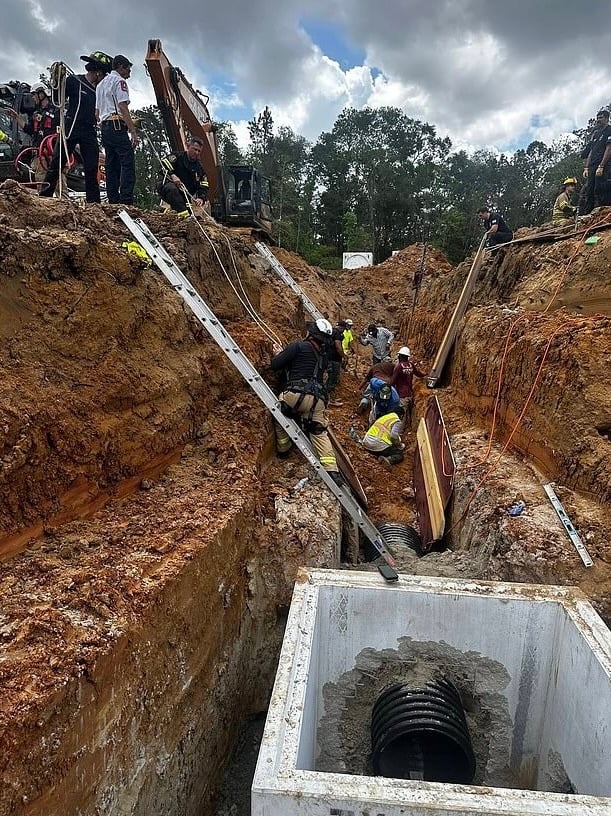
Federal workplace safety regulators have launched an investigation into construction practices at a Houston-area housing development after a drainage trench collapse Saturday killed one worker and critically injured another—a preventable tragedy that exposes persistent failures to implement basic protections against one of the construction industry’s most predictable and lethal hazards.
The fatality occurred at the Marygold Homes project in Conroe, Texas, where marketing materials promise future residents they will “know you’re right where you belong” in a community offering “hassle-free lifestyle” complete with “stunning landscaping” and “sparkling pool.” Those amenities are being constructed at a cost measured not merely in capital investment but in workers’ lives—the unnamed victim becoming the latest casualty in an industry where trench collapses kill dozens annually despite decades of safety regulations designed to prevent precisely such incidents.
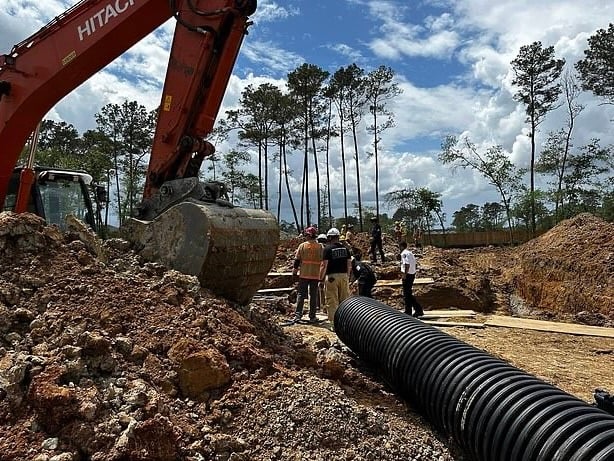
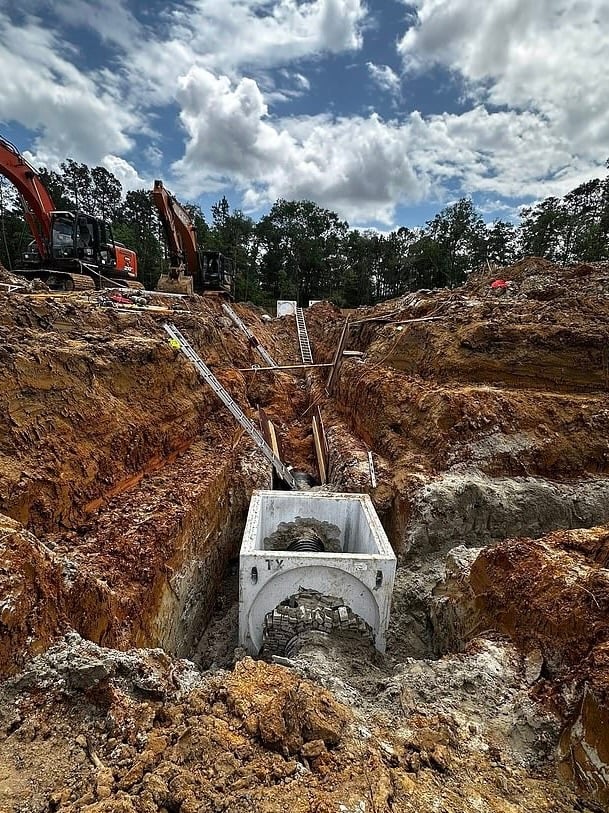
Two construction workers became buried when dirt cascaded into the utility trench where they were installing drainage infrastructure Saturday morning, according to the Conroe Fire Department. Colleagues on site immediately began digging frantically to extract their trapped co-workers, successfully recovering one man alive before emergency services completed the challenging access to the location situated approximately 1,000 feet from the nearest road.
“The construction workers on site were determined to dig their co-workers out and were successful in digging one co-worker out alive,” Conroe Police Sergeant Sergio Jasso told the Houston Chronicle. “Unfortunately, when the other co-worker was dug out, he was deceased.”
The survivor was transported to nearby hospital in critical condition just before 1pm, whilst the second worker was pronounced dead at the scene roughly 15 minutes later after recovery efforts proved too late to prevent asphyxiation from the soil that had engulfed him. A third construction worker suffered a medical emergency during the chaotic rescue operation, receiving on-site paramedic treatment before release.
What the 67-Minute Response Window Reveals About Rescue Challenges
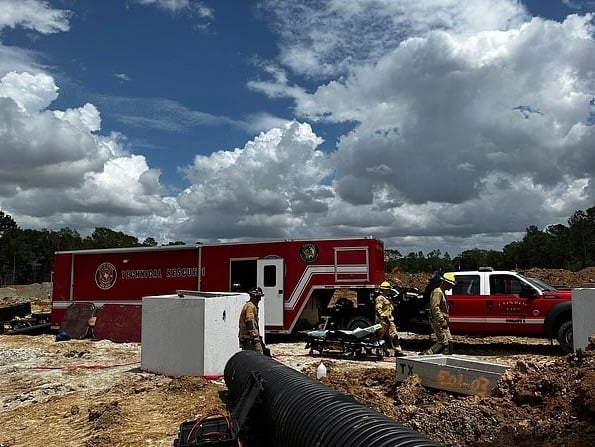
Emergency dispatchers received the initial distress call at 11:55am Saturday, with firefighters arriving on scene by 12:02pm—a seven-minute response time that would typically be considered rapid for suburban deployment. Yet the workers’ location deep within the construction site created access obstacles that delayed actual rescue commencement, with crews struggling to navigate difficult terrain whilst transporting specialized extraction equipment required for trench collapse scenarios.
The temporal gap between emergency notification and successful victim recovery illustrates how construction site geography compounds trench collapse dangers. Unlike workplace accidents occurring in accessible locations where paramedics can immediately begin treatment, victims buried in remote excavations face extended periods without oxygen whilst rescuers navigate obstacles—delays that transform survivable injuries into fatal asphyxiation.
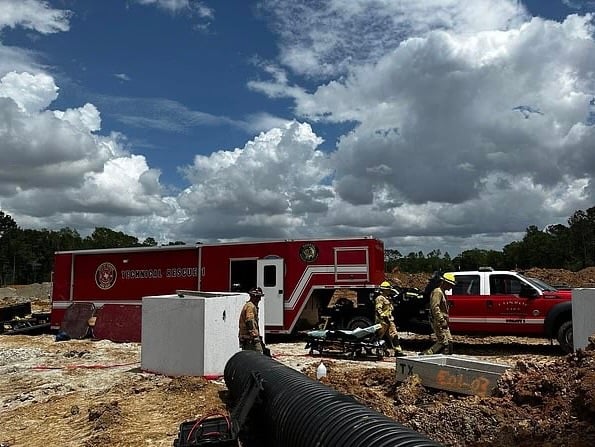
Multiple agencies participated in the operation including Montgomery County Emergency Service Districts 9 and 1, The Woodlands Fire Department and the Montgomery County Office of Emergency Management—a mobilization scale reflecting the technical complexity and resource intensity that trench rescue operations demand. The deployment of specialized equipment suggests rescuers followed protocols designed to prevent secondary collapses that could bury additional workers, necessarily slowing extraction but protecting emergency personnel from becoming victims themselves.
The successful recovery of one worker alive whilst his colleague perished despite occurring in the same trench at the same time likely reflects the randomness of how collapsing soil distributes—some victims become completely buried under impenetrable weight whilst others retain partial air pockets enabling survival until extraction. The critical condition of the survivor suggests he suffered substantial injuries beyond oxygen deprivation, with trauma from crushing forces or aspirated soil potentially complicating his recovery prospects.
Why OSHA Investigation Will Focus on Preventable Safety Failures
The Occupational Safety and Health Administration’s notification following the incident signals federal scrutiny of whether the construction site maintained proper safety equipment and procedures designed specifically to prevent trench collapses—failures that industry data suggests cause the majority of such fatalities.
OSHA regulations require trench shoring, shielding, or sloping when excavations exceed five feet in depth, mandating protective systems that prevent soil from cascading onto workers below. The agency’s investigation will examine whether such protections existed at the Marygold Homes site, whether they were properly installed and maintained, and whether workers received adequate training in recognizing collapse hazards and evacuation procedures.
Trench collapses represent particularly preventable workplace deaths because the hazards are well-understood, the protective technologies are readily available and relatively inexpensive, and regulatory frameworks clearly establish safety requirements. Unlike novel industrial processes where risks emerge unexpectedly, trench work has killed workers for centuries with dynamics that engineering solutions can reliably mitigate when implemented.
The persistence of trench fatalities despite comprehensive regulatory frameworks reflects enforcement challenges and economic pressures that incentivize contractors to skip safety measures that slow work and increase costs. Proper shoring requires additional labour, materials, and time—investments that reduce profit margins on competitively-bid projects where undercutting rivals often determines contract awards.
Chief Jon Buckholtz of the Conroe Police Department has pledged a “thorough investigation” whilst extending condolences to the deceased worker’s family—standard official responses that typically precede findings about regulatory violations and safety failures that created conditions enabling preventable deaths. Whether that investigation produces criminal charges, civil penalties, or merely recommendations for improved practices depends partly on evidence discovered and partly on prosecutorial appetite for holding construction industry actors accountable for workplace safety lapses.
The Marketing Irony and Human Cost of Suburban Development
Artemis One Development, the company behind Marygold Homes, promotes the 19-acre condominium project on Loop 336’s eastern portion as offering residents the ability to “relax, stay active, or socialize” whilst enjoying “exceptional amenities.” The marketing language—”hassle-free lifestyle,” “right where you belong”—targets affluent buyers seeking suburban comfort without maintenance burdens that traditional homeownership entails.
That comfort is being constructed by workers whose safety apparently rated lower priority than schedule and budget considerations, if OSHA’s investigation confirms that required protective systems were absent or inadequate. The unnamed victim who died Saturday will never enjoy the “stunning landscaping” or “sparkling pool” he was helping create for future residents whose “hassle-free” existence depends on workers accepting hazards that marketing brochures never mention.
It remains unclear which construction firm Artemis One Development hired to complete the build, with neither the development company nor local authorities publicly identifying the contractor responsible for site safety. This opacity—common in construction industry incidents where multiple subcontractors and labour providers create diffuse accountability—complicates efforts to assign responsibility and implement corrective measures preventing future fatalities.
The incident occurred at a moment of explosive suburban growth around Houston, where housing developments consume agricultural land at rates driven by population influx and relatively permissive zoning regimes. That rapid construction creates economic pressures favouring speed over safety, with contractors competing on price and timeline whilst regulatory enforcement struggles to maintain oversight across thousands of active sites.
The Conroe Police Department and OSHA continue their parallel investigations, with authorities promising to release additional details as they become available. Whether those details include identification of safety violations, assignment of legal liability, or imposition of penalties sufficient to modify industry behaviour patterns remains uncertain—as does whether the worker who survived his burial will recover sufficiently to return to the construction industry that nearly killed him.
For the deceased worker’s family, the investigation’s findings matter less than the irreversible reality that their loved one left for work Saturday morning and never returned—another name added to construction industry fatality statistics that regulatory frameworks have reduced but not eliminated despite decades of safety improvements and enforcement efforts.
