



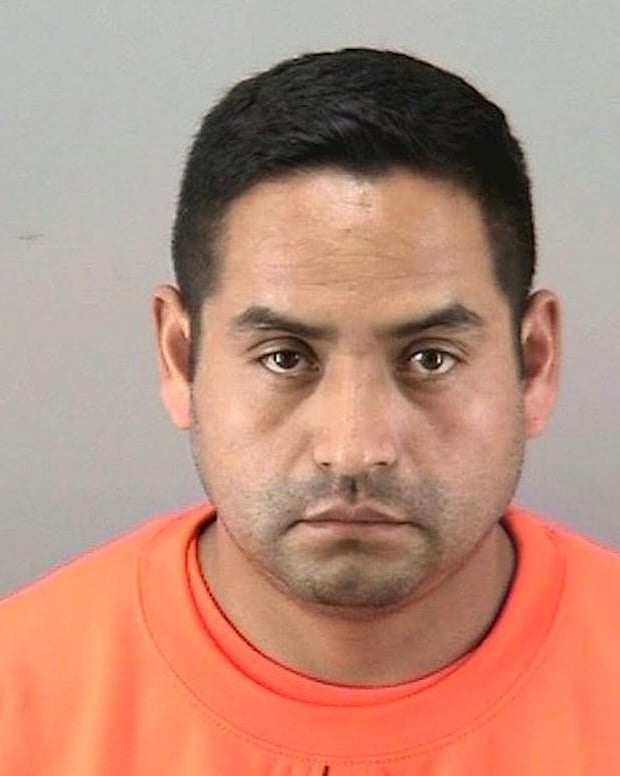
An undercover police surveillance team’s patient observation of suspicious vehicle movements near San Francisco nightclub districts culminated in the capture of a serial rapist who exploited rideshare company branding to assault women at knifepoint over five years.
Orlando Vilchez Lazo, 44, was convicted on Friday following a 12-week trial encompassing two kidnapping with intent to commit rape charges, three kidnapping counts, four rape by force or fear offences and two sexual penetration with foreign object charges—crimes potentially resulting in 100 years-to-life imprisonment when sentencing occurs late April.
San Francisco District Attorney Brooke Jenkins praised victims’ “courage and conviction” enduring defence questioning that accused them of “horrific things like consenting to this conduct or seeking for it to happen” during testimony against the Peruvian national residing illegally in the United States.
The July 2018 arrest followed surveillance officers spotting a vehicle matching earlier rape descriptions circling Howard and Second Street with rideshare stickers for over an hour without collecting genuine fares—behaviour sufficiently suspicious to warrant intervention that ended Vilchez Lazo’s predatory pattern.
DNA evidence proved crucial linking him to assaults commencing in 2013, though the case faced years of delays through multiple postponements, legal challenges over genetic material admissibility and complexity of reconstructing events across numerous victims.
Investigators discovered multiple mobile phones Vilchez Lazo confiscated from victims “so that they could not call for help” at his residence, whilst “some of the victims were able to identify Mr. Vilchez Lazo out of a lineup,” Jenkins confirmed.
Uber stated Vilchez Lazo never drove for their platform, whilst Lyft confirmed he had worked for them after falsifying immigration status during application processes—revelations prompting both companies to overhaul safety protocols.
“How many women had to be reminded at that time to be sure to check license plates when they were getting ready to enter a rideshare?” Jenkins questioned, noting passengers learned to avoid stating names until drivers identified them first.
The attacks followed consistent patterns: Vilchez Lazo displayed rideshare decals whilst positioning near nightclub exits, confirmed victims’ names falsely when they entered, confiscated phones, drove to Mansell Street’s industrial isolation, and threatened compliance using knives or “metal objects” pressed against necks.
His February 2018 assault saw him separate a 22-year-old woman from her companion by claiming to offer both rides, stopping less than a block away ordering the friend to exit for water before speeding away with the victim.
A June 2018 attack involved cutting a 21-year-old woman “in different places around her body” with a “sharp object” before she escaped to nearby residents who contacted police—the final assault before surveillance teams identified his vehicle.
US Immigration and Customs Enforcement confirmed Vilchez Lazo committed all offences whilst residing illegally in America.
