



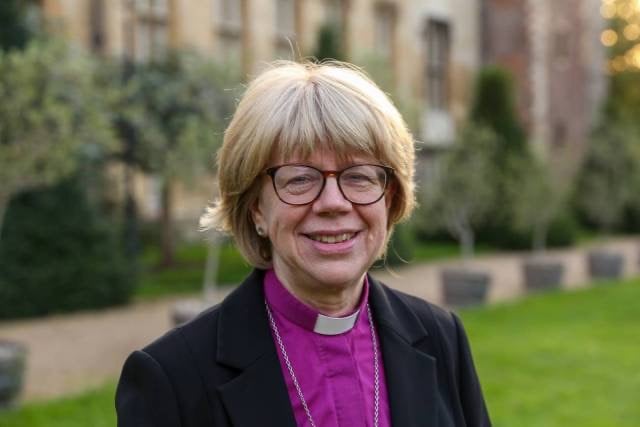
Dame Sarah Mullally has been enthroned as the 106th Archbishop of Canterbury at a historic ceremony in Canterbury Cathedral, becoming the first woman to lead the Church of England in its nearly five centuries of existence and the first female spiritual leader of Christianity in England in over 1,400 years.
Around 2,000 people attended the service, including the Prince and Princess of Wales, Prime Minister Sir Keir Starmer, Conservative leader Kemi Badenoch and representatives from other faiths, charities, healthcare and schools. The King, who congratulated Dame Sarah on her appointment last October, was not present, though as head of the Church he played a role in her selection. Wednesday marked the first occasion she delivered a sermon in the role.
The ceremony reflected the breadth of the worldwide Anglican Communion, with songs sung in Urdu, a Gospel reading in Spanish and a prayer delivered in the Bemba language of Zambia. In a tribute to Dame Sarah’s former career in healthcare — she served as the youngest chief nursing officer in the country at the age of 37 — NHS nurses and workers from hospitals and hospices were among those invited to witness the historic occasion.
Dame Sarah said her appointment carried a message for women and girls that it was “entirely possible for you to follow your dream and what you want to do.” She acknowledged, however, that she had “always understood that people may find my appointment as a woman difficult in the Church.”
Ahead of the enthronement, she completed a six-day walking pilgrimage from London to Canterbury alongside around 100 companions — a symbolic journey toward the ancient cathedral city where her ministry formally begins.
Her appointment follows the resignation of Justin Welby in November 2024, who stepped down over his handling of an abuse scandal. Dame Sarah has been direct about the challenge this legacy presents, using her first presidential address at the Church’s Synod to describe safeguarding as a “fundamental, non-negotiable responsibility” and acknowledging a “legacy of deep harm and mistrust” left by prior failures. Speaking to the BBC ahead of the ceremony, she said the Church was working to become “more trauma informed” and committed to listening to victims and survivors, adding that “a light should be shone on all our actions.”
Her confirmation as Archbishop was marked at a ceremony at St Paul’s Cathedral in January, after which she spoke with the King about their shared hope for a Church that is “confident, and one that speaks to the Christian hope.”
