



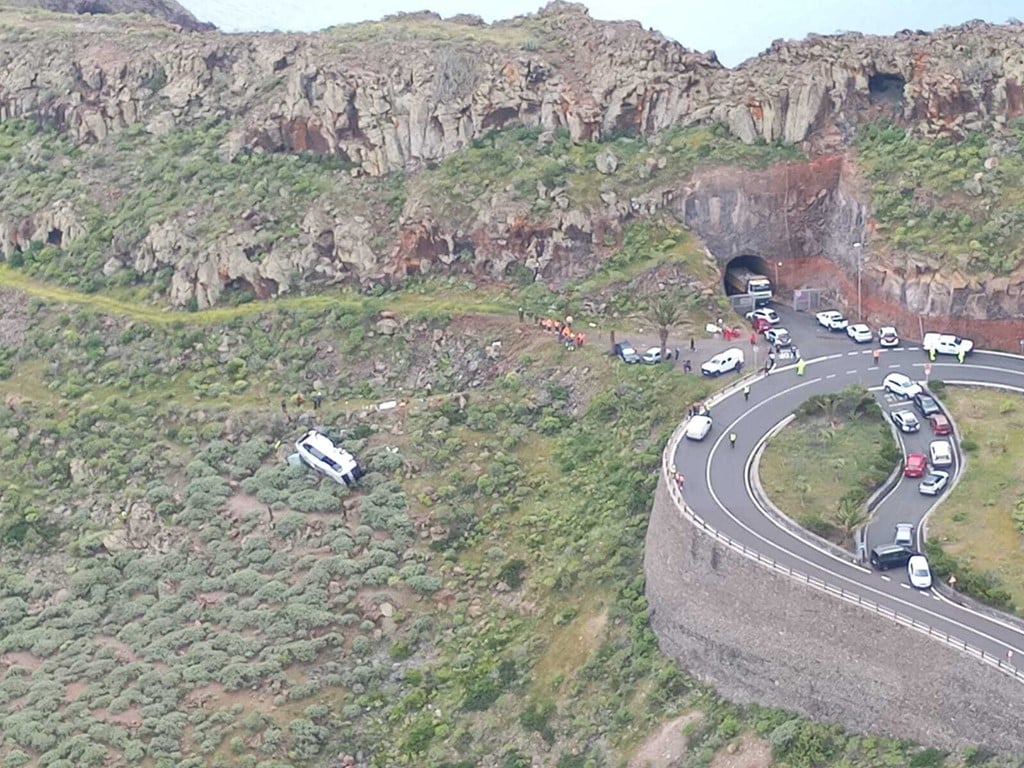
Emergency services deployed a medicalised helicopter alongside five ambulances and specialist medical teams to La Gomera following a catastrophic tourist coach accident that claimed one British life and left 14 others injured after the vehicle lost control on Friday afternoon.
The coach carrying 28 occupants—comprising 24 adult passengers, three minors and the driver—plunged down a ravine whilst travelling along the GM-2 road around 1.15pm local time, with local reports indicating all passengers aboard were British nationals.
A regional emergency response coordination centre spokesman confirmed the casualty toll: “One person has died, three people are seriously injured and 11 others have suffered moderate injuries.”
The Canary Islands Emergency Service mobilised extensive rescue resources including nurses and medical personnel to the remote crash site on the Spanish island, which lies approximately 32 kilometres west of Tenerife in the Atlantic archipelago.
La Gomera’s mountainous terrain and winding coastal roads present challenging driving conditions, with the GM-2 route traversing steep gradients and sharp bends popular amongst tourists exploring the island’s dramatic volcanic landscapes and laurel forests.
Authorities have not yet disclosed the circumstances causing the driver to lose control, with investigations focusing on whether mechanical failure, road conditions or human error contributed to the vehicle departing the carriageway before tumbling into the ravine.
The three seriously injured casualties likely received priority airlift evacuation via the medicalised helicopter to larger medical facilities on neighbouring Tenerife, where hospitals maintain advanced trauma capabilities exceeding La Gomera’s limited healthcare infrastructure.
Those sustaining moderate injuries would typically be transported by the five ambulances deployed to the scene, with medical teams stabilising patients before transferring them to appropriate treatment centres across the archipelago.
The Foreign, Commonwealth and Development Office has not yet commented on the incident, though British consular officials in the Canary Islands would typically provide assistance to injured nationals and coordinate with Spanish authorities regarding the deceased Briton’s repatriation arrangements.
Tourist coach accidents remain relatively uncommon across the Canary Islands despite the archipelago hosting millions of British visitors annually, with most incidents involving rental vehicles rather than commercial passenger transport.
La Gomera attracts fewer tourists than larger neighbours Tenerife and Gran Canaria, though its UNESCO-listed Garajonay National Park and dramatic coastal scenery draw visitors seeking alternatives to the archipelago’s busier resort destinations.
The investigation will examine the coach operator’s safety record, driver qualifications, vehicle maintenance history and road conditions at the time of the crash as Spanish authorities determine accountability for the tragedy.
