


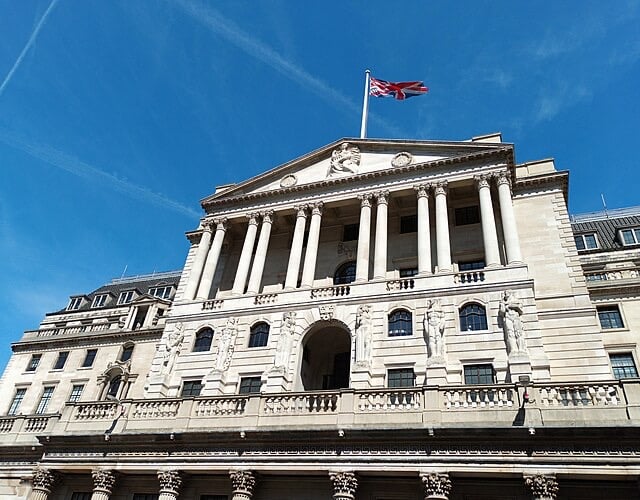
The Bank of England is expected to hold interest rates at noon on Wednesday as the escalating Middle East conflict drives oil and gas prices sharply higher, raising fears that any prospect of relief for mortgage holders has been pushed firmly into the distance.
Just a fortnight ago, a rate cut had appeared a realistic possibility. That outlook has now reversed dramatically. Traders are placing a 60 per cent probability on a rate rise by June, as Iranian strikes on Gulf energy infrastructure send shockwaves through global markets and threaten to push UK inflation well above the Bank’s two per cent target.
The economic backdrop has darkened rapidly overnight. Two Kuwaiti oil refineries — including Mina Al-Ahmadi, one of the largest in the Middle East — were struck by Iranian drone attacks, with the Kuwait Petroleum Corporation confirming its Mina Abdullah Refinery in the south of the country was also hit. A projectile struck a ship off the Qatar coast, and firefighters tackled a blaze at a major LNG facility following further Iranian attacks. European gas prices jumped by more than 30 per cent amid fears of oil reaching $200 a barrel and an economic fallout lasting years.
The strikes came in response to an Israeli attack on Iran’s South Pars gas field, the world’s largest. Donald Trump, posting on Truth Social, claimed the United States had no prior knowledge of the Israeli operation and warned Washington would take “unprecedented action” if Tehran continued striking Gulf energy infrastructure. “I will not hesitate to strike back,” he wrote, while adding he did not want to authorise further violence given its long-term implications for Iran.
Bank of England Governor Andrew Bailey’s words at noon will be closely scrutinised by analysts assessing the damage to the UK economy. Official figures published Wednesday showed unemployment has remained at a five-year high of 5.2 per cent, with youth unemployment at 14.5 per cent — a level not recorded since early 2015. The energy price cap, which had offered households some protection, is widely expected to rise significantly when it expires in July.
Susannah Streeter of Wealth Club warned the knock-on effects of higher energy prices would have “toxic repercussions worldwide,” with food prices, freight costs and semiconductor supplies — reliant on helium from the region — all potentially affected. Economic adviser Joe Nellis of MHA said rates were “unlikely to fall anytime soon and could even rise again,” adding that the Bank would “not be afraid to hike interest rates if necessary to prevent spiralling inflation.”
The Office for Budget Responsibility has already warned that UK inflation could increase by one percentage point this year if the current energy price spike persists. The US Federal Reserve left its own rate unchanged on Tuesday in the range of 3.5 to 3.75 per cent, with Fed chairman Jerome Powell acknowledging that “no one” yet fully understands the conflict’s economic consequences.
Trump’s nominated successor to lead the Fed, Kevin Warsh, will inherit the task of navigating inflationary pressures from the war while the President continues to press publicly for rate cuts.
