



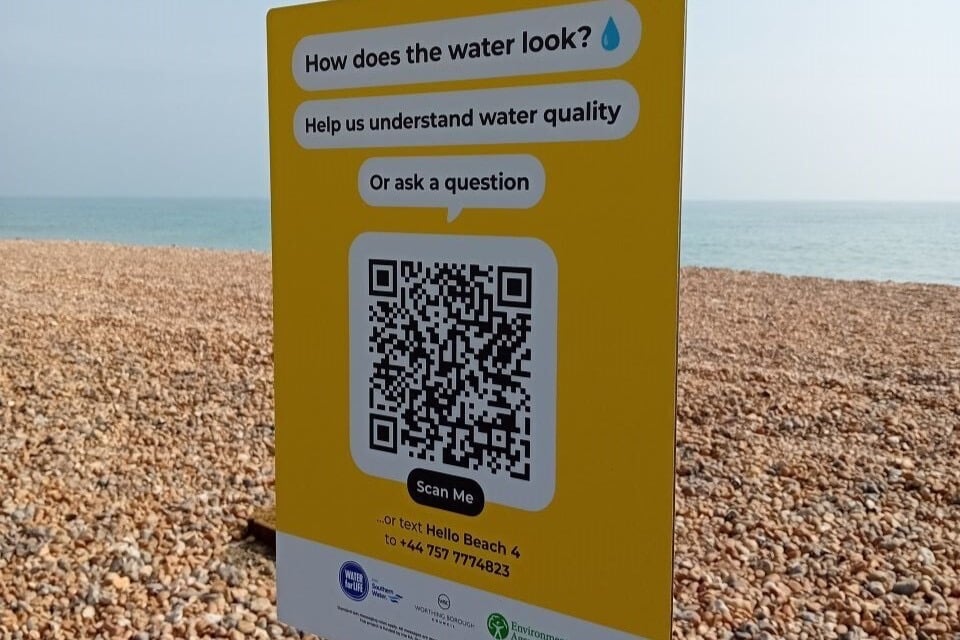
Two beaches in Worthing have become the latest to adopt AI-driven smart signage that allows visitors to ask questions about bathing water quality and report live conditions directly from the shoreline.
The signs, which take the form of QR codes mounted on posts near routine water sampling points at Goring Beach and Worthing Beach House, use Hello Lamp Post technology funded by the Environment Agency. Scanning the code with a mobile phone connects visitors to an artificial intelligence system capable of answering questions about water quality and flagging any current concerns. The same system also gathers real-time information from beachgoers, asking about conditions such as the number of swimmers in the water, seaweed levels or the presence of animal waste that could affect water quality.
Photos can be uploaded directly to the AI to illustrate concerns or share positive observations, with images moderated to remove anything that could identify an individual. Visitors are also directed to the Environment Agency’s 24-hour incident hotline for urgent matters.
Cat Fuller, the Environment Agency’s area director for Solent and South Downs, said the signs went well beyond traditional static information boards. “They give verified facts you can trust and pick up real-life information from those who use the beaches,” she said. “Local knowledge married to monitoring expertise is a win-win for our waters.”
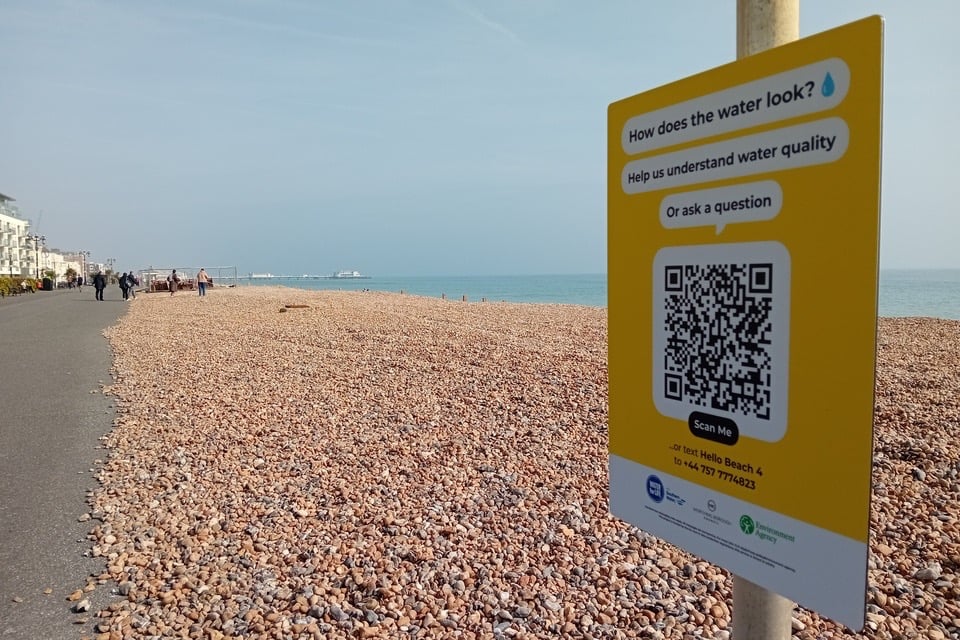
Worthing Borough Council’s cabinet member for environmental services, Councillor Vicki Wells, said the initiative gave residents and visitors “easy, on-site access to share what they’re seeing in real time,” supporting broader efforts to improve coastal water quality.
The timing of the rollout follows an improvement in water quality at Worthing and Goring Beach, both of which have recently been classified as “Good” by the Environment Agency — a step up credited to the repair of drainage misconnections and closer collaboration between the council, the Environment Agency and Southern Water. Worthing Beach House currently holds a “Poor” classification, and the new signage is intended to support improvement efforts there.
Across England, the Environment Agency monitors water quality at more than 400 designated beaches and inland waters, classifying each annually as Excellent, Good, Sufficient or Poor based on four years of sampling data. Worthing joins a growing network of smart sign locations that includes sites on the River Dart in Devon, the Rivers Teme and Severn in the West Midlands, the River Nidd in Yorkshire, Edisford Bridge in Lancashire and Windermere in Cumbria, with signs due to arrive at Ravensbourne in London shortly.
Those unable to visit in person can access the Environment Agency’s BluePrint AI platform online for the latest bathing water information from any location.
