



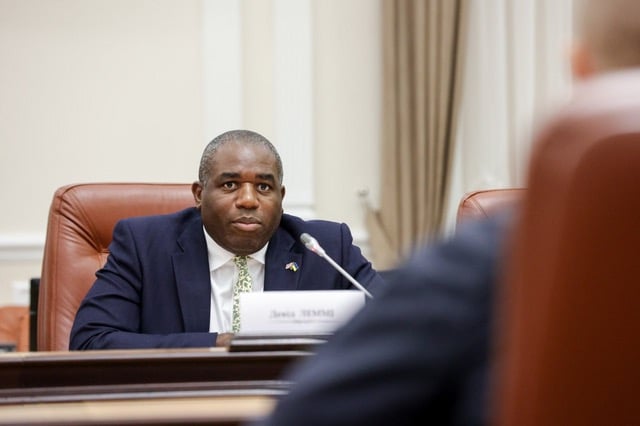
David Lammy has invoked collective responsibility to apologize for Peter Mandelson’s appointment as Britain’s ambassador to the US, whilst the government confirmed it cannot publish files related to the former diplomat until police complete their investigation.
The Foreign Secretary stated he was subject to collective responsibility for the Cabinet decision to appoint Mandelson, despite the former Chief of Staff taking responsibility and standing down over the matter. Lammy made the admission whilst speaking on court reforms, addressing the appointment that has engulfed the government in scandal.
“The Prime Minister has apologised for the appointment of Peter Mandelson,” Lammy began. “His former Chief of Staff stood down and took responsibility for that appointment. As Foreign Secretary at the time, of course, I was subject to collective responsibility, and I am sorry that that decision was made.”
Collective responsibility requires government ministers to publicly support and take responsibility for Cabinet decisions regardless of private disagreements. Lammy’s invocation of this constitutional convention places responsibility on the entire Cabinet for the controversial diplomatic appointment.
Lord Mandelson was sacked from the top diplomatic role in September last year after details of his relationship with Jeffrey Epstein came to light. More details subsequently emerged, leading to his arrest and bail on suspicion of misconduct in public office on Monday.
The government’s inability to publish files has created additional controversy, with Sir Chris Bryant confirming material needed for police inquiries cannot be released until officers are satisfied. Trade minister Bryant told the Commons: “As the police have rightly said, it is absolutely crucial that the integrity of their investigation is protected, and now these proceedings are under way, it would be wrong of me to say anything that might prejudice them.”
Bryant continued: “Nor will the Government be able to put into the public domain anything that is required by the police for them to conduct their inquiries, unless and until the police are satisfied.”
The file publication issue extends beyond Mandelson, with Colum Eastwood, the Social Democratic and Labour Party MP for Foyle, requesting files concerning Andrew Mountbatten-Windsor when he was a trade envoy. Eastwood stated: “I have asked that the Government release the files concerning whatever his new name is, Andrew Mountbatten-Windsor, when he was a trade envoy. That request has been refused.”
Eastwood asked Bryant to “review that decision and to ask that all of these files in the new spirit of openness and transparency, that those files are open for all to see.”
Sir Chris replied: “I agree with him that is the direction of travel that we’re going in and that’s why we agree with the humble address today as it’s been presented. We’re not standing in the way. We will do everything we can to comply with that as fast as we possibly can.”
However, Bryant’s later comments clarified the police investigation takes precedence over transparency commitments, with material remaining confidential until investigators complete their work and authorize release.
The apology from Lammy represents a significant admission from the Foreign Secretary, who was serving in that role when the Mandelson appointment was made. His reference to the Prime Minister’s apology and the Chief of Staff’s resignation indicates multiple levels of accountability for the decision.
The sacking of Mandelson in September followed revelations about his Epstein connections, but the subsequent arrest on Monday suggests additional information emerged beyond what was known at the time of his dismissal from the diplomatic position.
The government faces pressure to balance transparency demands with protecting the integrity of ongoing police investigations into both Mandelson and Andrew. The refusal to release Andrew’s trade envoy files despite requests from MPs demonstrates the extent to which active investigations constrain government disclosure.
The timeline for file release remains unclear, contingent on police satisfaction that publication would not compromise their inquiries. The government has committed to complying with transparency requests “as fast as we possibly can” once police constraints are removed, but has not provided specific timeframes.
The collective responsibility defence employed by Lammy may not satisfy critics who argue individual ministers should be held accountable for specific decisions beyond general Cabinet solidarity. The departure of the Prime Minister’s Chief of Staff suggests some individuals have accepted personal responsibility beyond collective Cabinet accountability.
